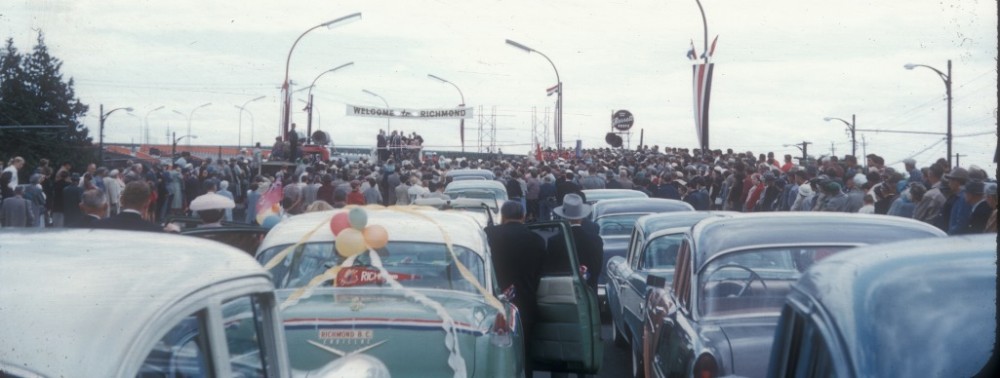
Focus on the Record – The Eric Rathborne fonds.

The Eric Rathborne fonds at the City of Richmond Archives consists mainly of black and white photographs of aviation activities at the newly opened Vancouver Airport on Sea Island, taken ca. 1935 to 1960.
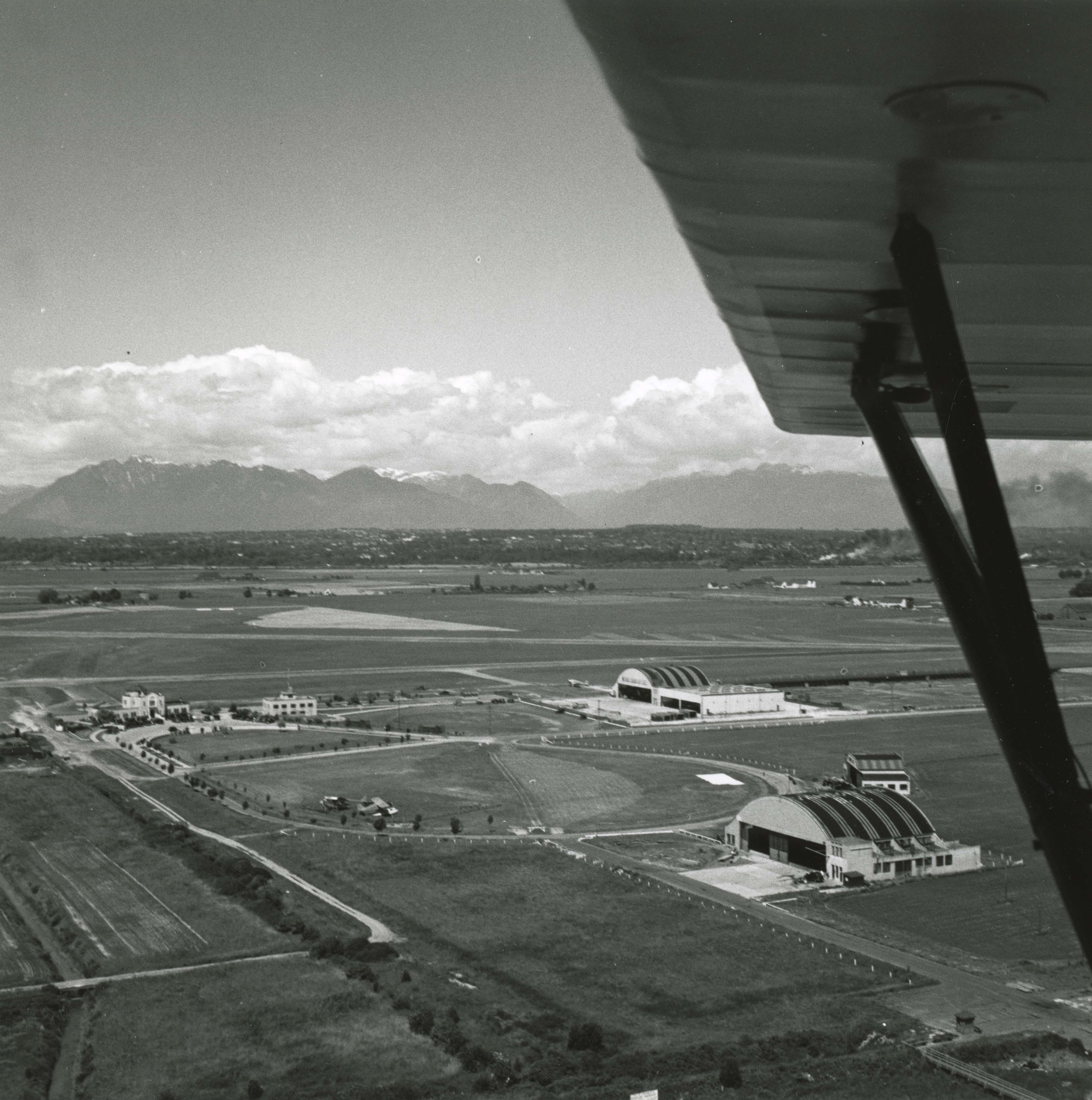
1997 5 5 This aerial view of Vancouver Airport shows the hangars, administration building and radio building, ca. 1939. City of Richmond Archives photograph 1997 5 5.

Donald Eric Dalby Rathborne was born in England on December 18, 1907. He had his first ride in an airplane in 1924 which sparked a lifelong passion for aviation. He, with his family, emigrated to Windsor Ontario in 1926 when he was 18 years old. In 1930 Mr. Rathborne moved to Victoria in 1930 and then to Vancouver in 1933.

1997 5 107 Eric Rathborne sits in the cockpit of an open biplane, ca. 1936. City of Richmond Archives photograph 1997 5 107.


1997 5 68 An unidentified aviator wearing a sheepskin flying suit poses on the wing of an aircraft, possibly a Junkers A50, ca. 1936. City of Richmond Archives photograph 1997 5 68.

In his spare time Eric did odd jobs around the Vancouver Airport in exchange for flying lessons, achieving his private pilot’s license in 1936. In 1939 he took a full time job as a maintenance man with Trans Canada Airlines, the precursor of Air Canada, his duties including loading food, oxygen and mail onto aircraft, refueling and engine servicing.
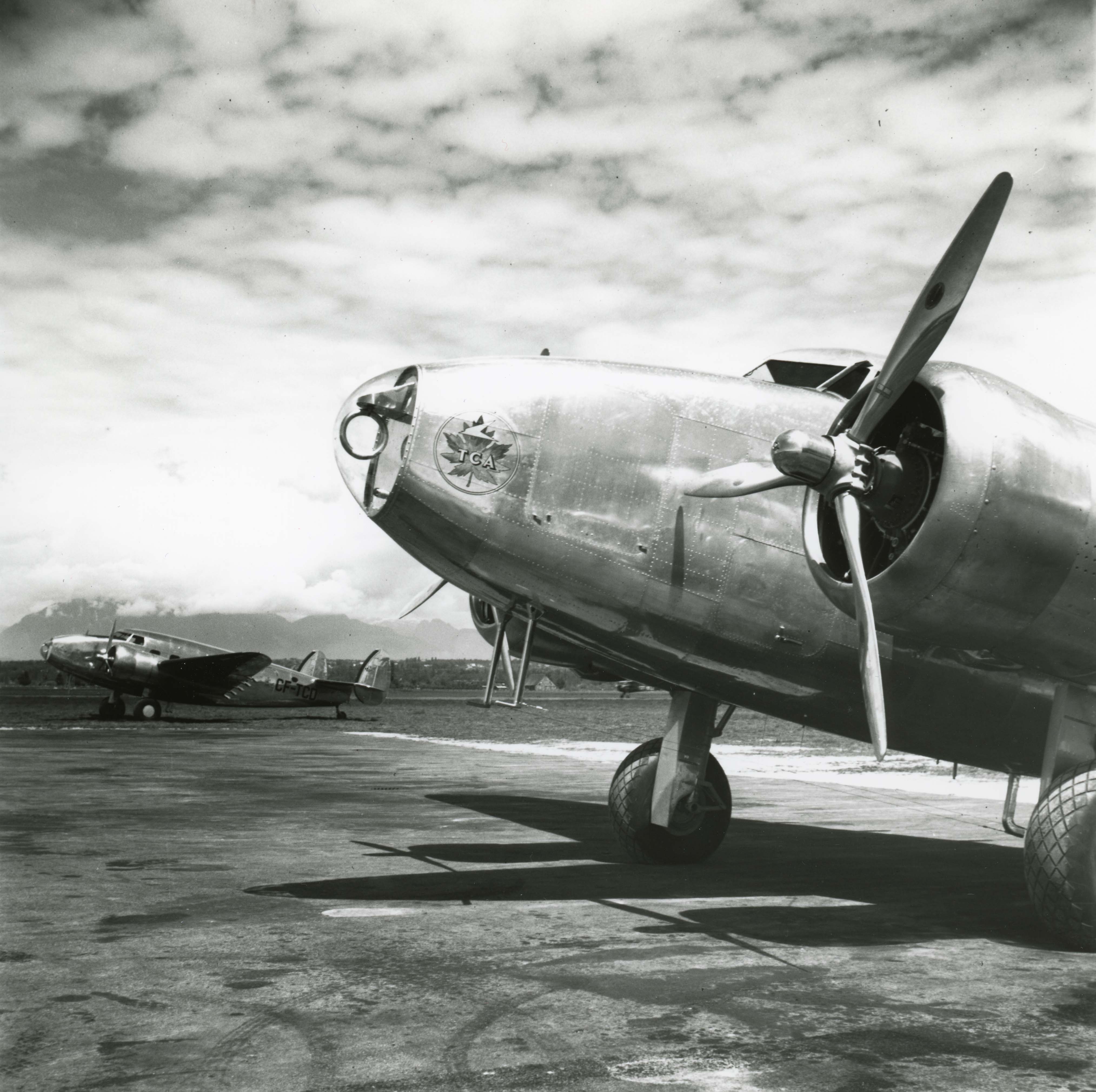
1997 5 33 Two Trans Canada Airlines Lockheed 14H-2 aircraft rest on the tarmac at Vancouver Airport. City of Richmond Archives photograph 1997 5 33.


1997 5 19 The public lines up to see the interior of the United Airlines “Mainliner” Douglas DC-3, on display at Vancouver Airport at the time of the introduction of this type of aircraft into commercial service, ca. 1938. City of Richmond Archives photograph 1997 5 19.

In May 1941 he earned his commercial pilot’s license and then joined the British Commonwealth Air Training Plan as a staff pilot. The BCATP was the organization responsible for training thousands of Commonwealth pilots and air crew during the Second World War.
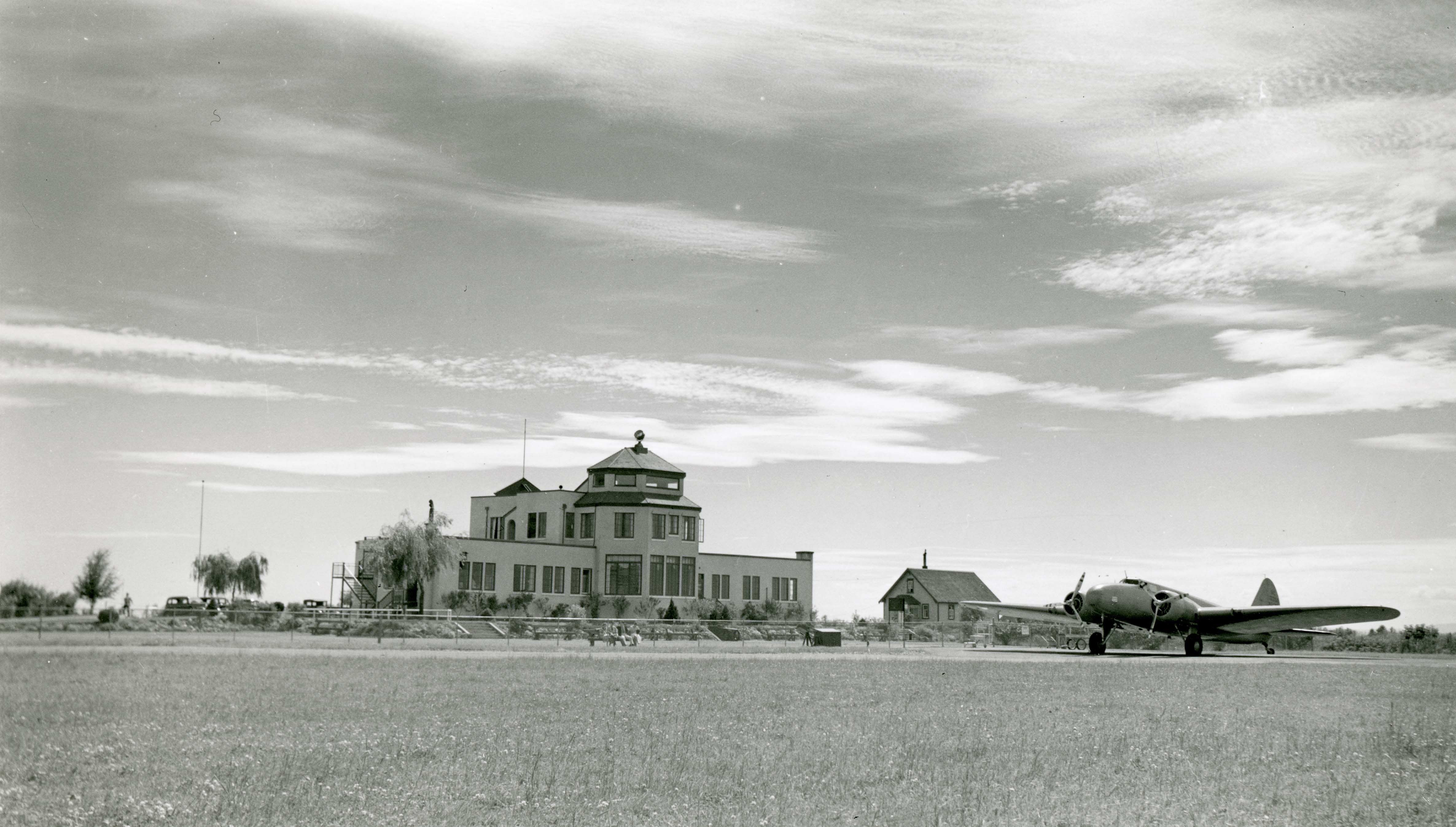
1997 5 26 A United Airlines Boeing 247D airliner sits in front of the Vancouver Airport terminal and administrative building in this photo, ca. 1936. City of Richmond Archives photograph 1997 5 26.


1997 5 38 Ruth Alm poses on the observation deck at the Vancouver Airport in the flight attendant’s uniform of Trans Canada Airlines, ca. 1939. The airfield is in the background. City of Richmond Archives photograph 1997 5 38.


1997 5 82 WWII aircraft mechanic, pilot and career flight attendant Ruth Johnson poses beside the Aero Club of BC’s De Havilland Tiger Moth DH82c at the Vancouver Airport, ca. 1946. City of Richmond Archives photograph 1997 5 82.

After his wartime service Mr. Rathborne was, at 37 years old, deemed too old to work as a commercial airline pilot, so he flew as a private pilot and worked occasionally as a pilot for local airlines while making his living as a commercial photographer for over 30 years.

1997 5 93 A young Don Rathborne points to a sign for Brisbane Flying Shcool Air Tours in this photo ca. 1949. Nearly 30 years later he saw an airport themed display put on by the City of Richmond Archives at Lansdowne Mall and contacted the Archives to see if they were interested in copying his father’s collection. These images and the rest of the collection will now be preserved, illustrating Vancouver Airport during the Golden Age of Flight and the post War years. City of Richmond Archives photograph 1997 5 93.

That Rathborne made his living as a commercial photographer is evident in the quality and composition of the photographs he has left documenting the early years of Vancouver Airport on Sea Island. Eric Rathborne died on November 30, 1990 at the age of 82.

The full collection of photographs from the Eric Rathborne fonds can be viewed at: https://bit.ly/2HvXxdb

What’s in a Name – Brighouse

Brighouse is a name that has been associated with Richmond’s main retail and business district since the days before there was any retail or business done there. There is no question that the name Brighouse comes from Sam Brighouse, once the owner of the property on which City Hall and Minoru Park are now located but why did the area, part of Richmond’s City Centre, get and keep that name?

This 1976 aerial view shows most of the Brighouse lands, extending from Granville Avenue toward the river. The Brighouse subdivision can be seen at centre. City of Richmond Archives photograph 2008 36 3 79.

Samuel Brighouse, ca. 1860. City of Richmond Archives photograph RCF 32.

Samuel Brighouse was an prominent early settler, land owner, farmer and businessman in the Lower Mainland. He was born in Yorkshire in 1836 and at the age of 26 years sailed from Milford Haven with his cousin John Morton to New York and then to Panama, to San Francisco and then to New Westminster, a trip of almost two months.The two men made their way to the Cariboo gold fields and, finding prospects poor there, made their way back to New Westminster, making the trip both ways on foot.

Brighouse and Morton partnered with William Hailstone in November of 1862 and purchased 555 acres of land in what is now the West End of Vancouver, some of the most valuable land in the country today. The three men, who became known as “The Three Greenhorns”, built a cabin and spent a couple of years clearing trails and living on the property. In 1864 Brighouse, who had been looking at farmland in the Fraser Valley and speculated that it may become quite valuable, acquired 697 acres of land on Lulu Island, some preempted and some purchased from original preemptors. The property today is bounded on the east by No.3 Road, on the west by No.2 Road, on the south by Granville Avenue and on the north by the river.

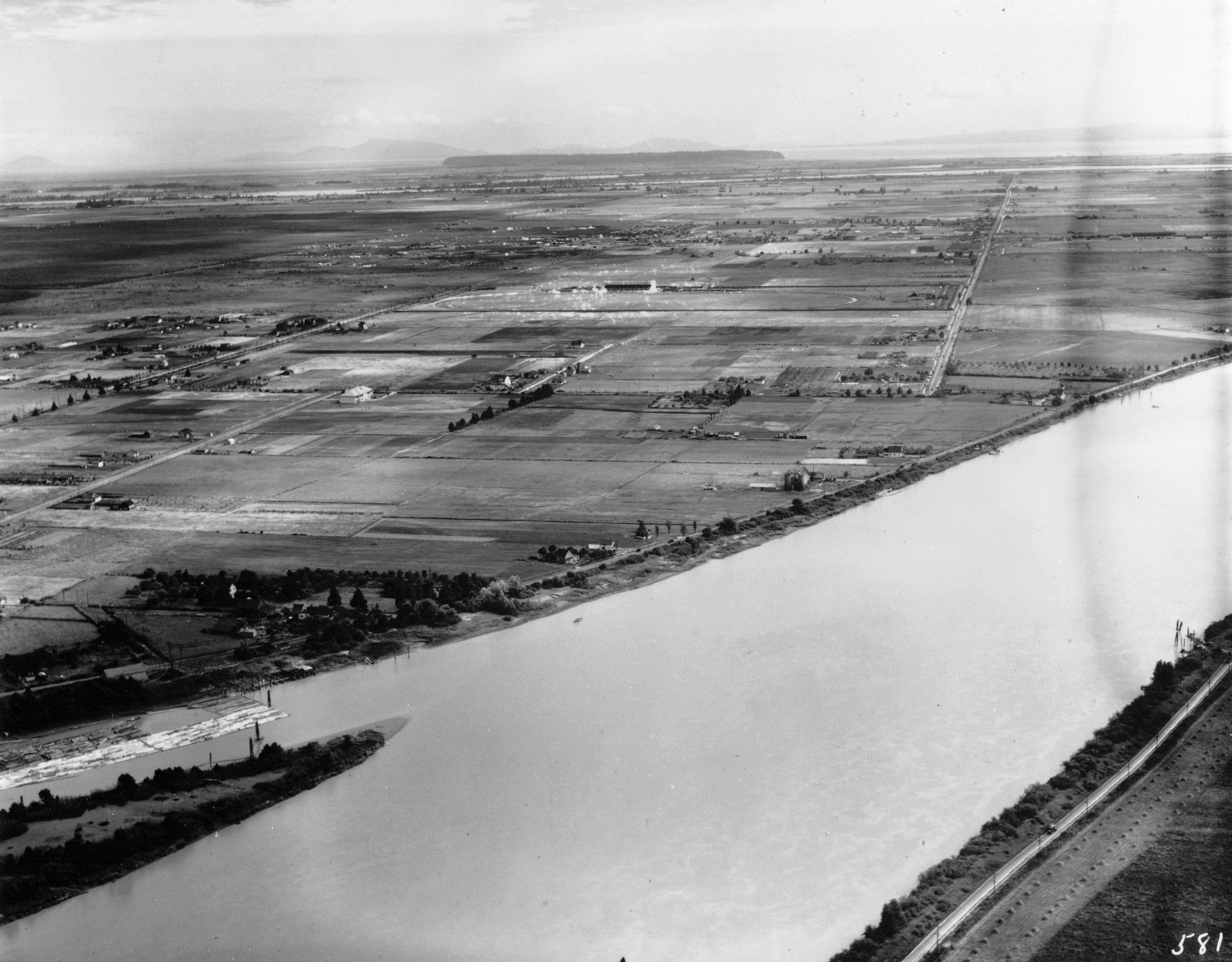
This aerial view looking south, ca. 1925, shows a portion of the Brighouse property on the right, extending east to No.3 Road and south from the Richmond United Church to Brighouse Racetrack on the south. City of Richmond Archives photograph 1985 166 1.

Brighouse farmed crops and livestock on the property, building a successful operation and erecting the largest barn on the Fraser River. He purchased another property near New Westminster called Rose Hill, building a dairy farm there. He operated both of his ventures until 1881, when he leased out his farms and returned to his property on Burrard Inlet.

An old barn on the Brighouse lands, ca. 1973. City of Richmond Archives photograph 1977 16 13.

Brighouse was one of the signatories on the petition for the incorporation of  the Township of Richmond and he served briefly on Richmond Council in 1883, although he no longer lived there. He served two terms as one of the first Councillors in Vancouver. Sam Brighouse focused his attention on Vancouver and its development after leaving Lulu Island and made a fortune selling his property there after the arrival of the Canadian Pacific Railway. He retained a great deal of his wealth by never selling his Richmond farmland, instead leasing it to other farmers.

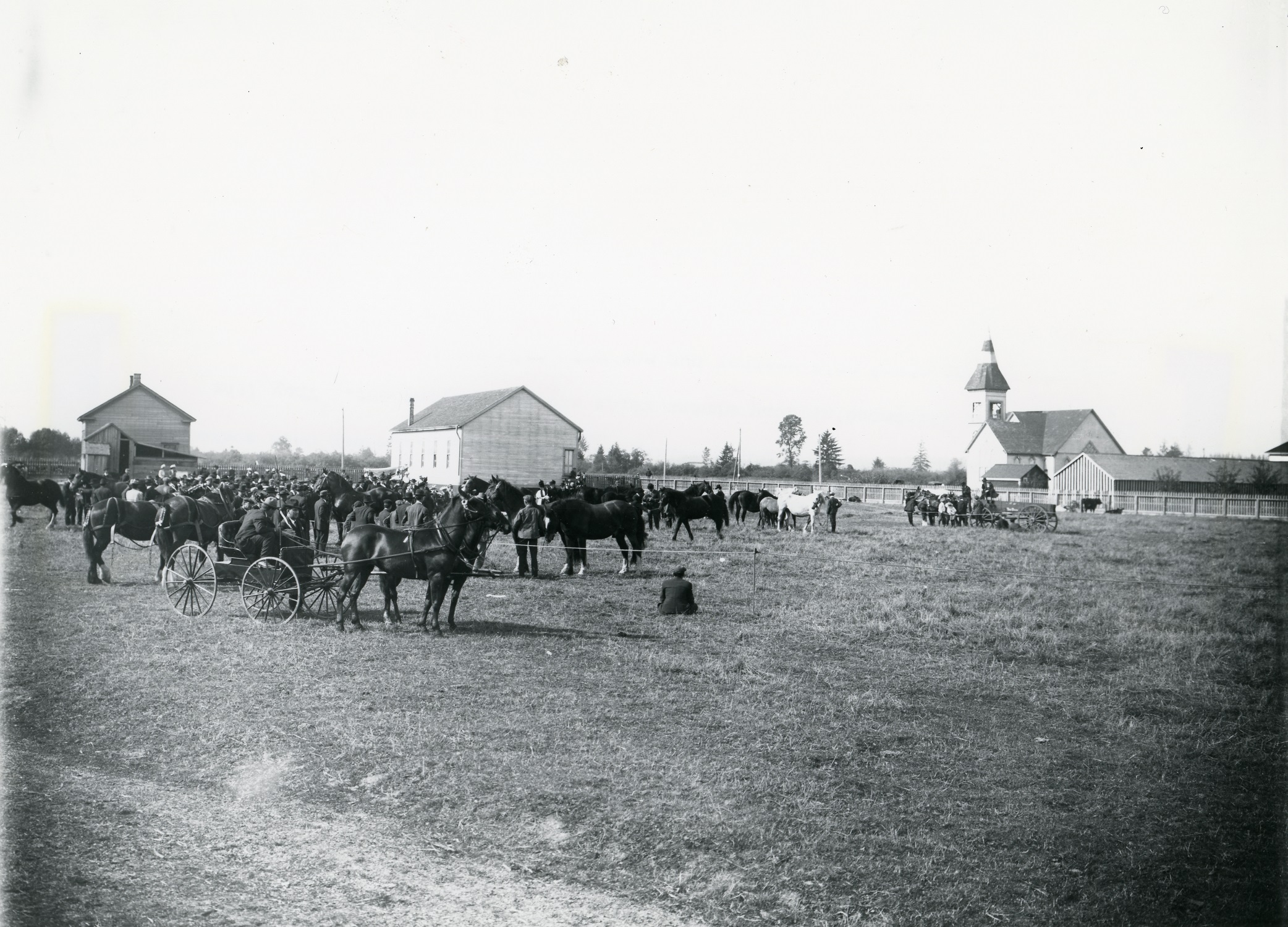
Richmond’s first Municipal lands were purchased from Sam Brighouse for $400 in 1880. Shown are the Town Hall, left, the Agricultural Hall, centre, and the Richmond Methodist Church, now Minoru Chapel, at its original River Road at Cambie location. City of Richmond Archives photograph 1977 9 18.

In 1880 Brighouse sold five acres of his Lulu Island property at the present intersection of River and Cambie Roads to the fledgling Corporation of the Township of Richmond where the first Town Hall was built. Sam Brighouse’s later life was marked by ill health and he returned to his native Yorkshire in 1911 where he passed away in 1913.

Michael Wilkinson Brighouse, Sam Brighouse’s nephew and Heir. City of Richmond Archives photograph 2001 9 3.

Brighouse was joined by his nephew Michael B. Wilkinson in 1888 who helped his uncle with the running of his farms as well as investing in canneries. He changed his name to Michael Wilkinson Brighouse, a condition of his uncle’s will, and became Sam’s heir. In 1909 Sam Brighouse sold a portion of his land to a group who built Richmond’s first racetrack, Minoru Park, named for the 1909 Epsom Derby winner. The track went out of business in 1914 with the First World War and the property was bought back by Michael Brighouse and reopened as Brighouse Park Racetrack in 1920.

Michael W Brighouse kept the Brighouse name in the public consciousness through his business and political activities. He served two terms as a Richmond Councillor in 1894 and 1895 and one term as Reeve in 1900. In 1919 he traded the five acres of land purchased from his uncle by the Township for four acres of land at the present City Hall site. Wilkinson Brighouse passed away in 1932, leaving the property to his heirs who sold it to the Corporation of the Township of Richmond in 1962. Until its sale, Wilkinson Brighouse and his heirs continued to lease out their farmland to local farming families such as the McClellands, Shaws, Fishes and Zellwegers.

The CPR train , “The Sockeye Limited”, at Steveston, ca. 1902. City of Richmond Archives photograph 1977 2 38.

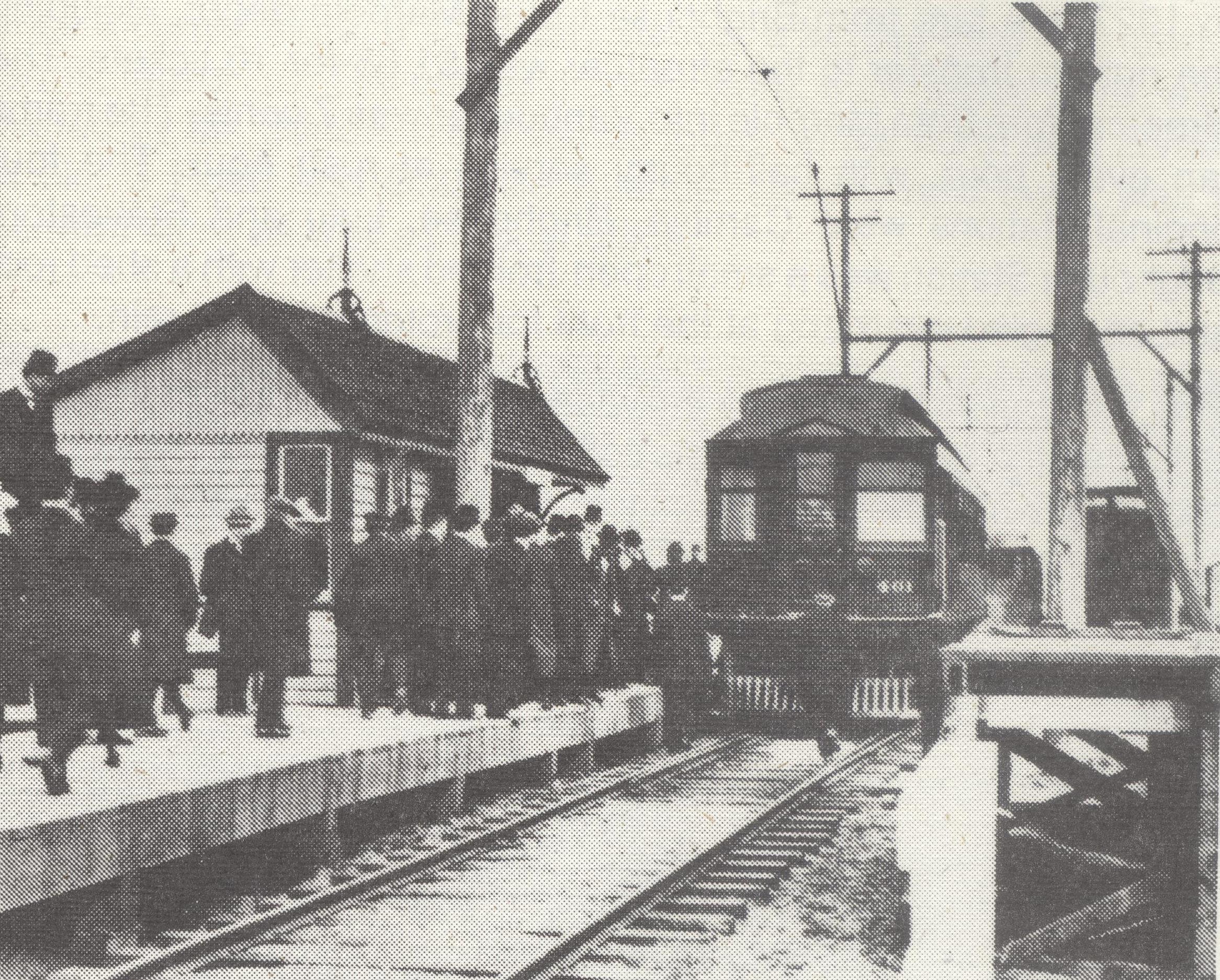
So the Brighouse name was very well known in Richmond throughout its early years, but how did that part of town retain the name over  the names of some of the other pioneer property owners in the area? One explanation is because of the Canadian Pacific Railroad and the construction of the Vancouver and Lulu Island Line, the “Sockeye Limited” in 1902. Eyeing freight and passenger revenues from the canneries of Steveston and the farms which dotted Lulu Island, the CPR built the railway from the depot in Vancouver to Eburne (Marpole), spanned the North Arm of the Fraser with a bridge and built an eight mile track to Steveston where they built a large train station. Along the line where it crossed a road, still a rarity in Richmond at the time, three smaller stations were erected. At No.2 Road “Lulu Station” was built. At No. 20 Road “Cambie” Station, named for Civil Engineer and CPR Executive Henry J. Cambie, was built. Where the track crossed No.3 Road near the southeast corner of the Brighouse property, owned by the man who had sold large amounts of his Vancouver property to the CPR and its officers, “Brighouse” Station was put up.

Brighouse Station, ca. 1909. Photograph from “Richmond, B.C., Brighouse District Self-Guided Historical Tour” (1992), City of Richmond Archives GP 614

It is often the case where railroad stations are placed, the surrounding area takes on the name of the stop and the Brighouse name was even further imprinted on the area in 1922 when the Brighouse Post Office was opened at the train station. By this time the second Richmond Town Hall had opened across No.3 Road from the station and its address became “The Corporation of the Township of Richmond, Brighouse, B.C.”.

Detail of an envelope showing the return address for the Richmond Town Hall, 1922. From the personal collection of H.S. Steves.

Businesses took on the name of the area and names like Brighouse Grocery, Brighouse Cafe and Brighouse Hardware let customers know their location and that they were near the tram station. As years passed Brighouse Subdivision was built on the old farm, served by Samuel Brighouse Elementary School. Brighouse Industrial Estates provided homes for large companies. Today the Richmond Olympic Oval occupies space near the river and condo towers rise where once Sam Brighouse built dykes to protect his farm.

The Brighouse Cafe, shown here before 1940, was one of a multitude of businesses, services, organizations and retailers that used and continue to use “Brighouse” in their names. City of Richmond Archives photograph 2001 10 3.

The name Brighouse has become synonymous with the commercial and administrative centre of Richmond and although the original train and tram station is long gone, a new Brighouse Station opened down No.3 Road from the original one in 2009 as the terminus of the Canada Line further connecting the name of Sam Brighouse to the history of Richmond.


Focus on the Record – The Ted Clark Photograph Collection

Long time Richmond resident Edwin Herbert Clark (1930-1997), known as Ted Clark, was born in Vancouver, British Columbia on March 2, 1930. Mr. Clark grew up in the Dunbar area of Vancouver and attended Lord Kitchener Elementary School and then Lord Byng High School.

1999-4-3-1892

Passengers chat while waiting for the tram at the Marpole Station. The tram schedule is visible on the station wall behind them.

He left high school to complete a five-year apprenticeship as a Machinist, but upon completing the apprenticeship, discovered that there were no available jobs in his field. Mr. Clark pursued a number of different job options before going to work at Hi-Hope Kennels, a business established and operated by his sister. At Hi-Hope Kennels, Mr. Clark did woodwork and built items for resale.

1999-4-2-220

Mr. Clark’s images not only capture the tram and streetcar system, they also show images of the Lower Mainland from an earlier time. This image, ca. 1950, shows car 412 in Victory Square,Vancouver, operating on the No. 14 Hastings East – Dunbar line. The Marine Building can be seen in the centre rear of the photograph. City of Richmond Archives photograph 1999 4 2 220.

From a very young age, Mr. Clark was interested in streetcars and trams. During his childhood, he spent his weekends and summer days riding trams and streetcars, visiting the car barns, and talking to people who worked in the trade.

1999-4-2-1043

Mr. Clark’s collection also includes the different types of rolling stock operated by the BC Electric Railway such as this freight locomotive and box car shown on the siding at Brighouse, 1952. City of Richmond Archives photograph 1999 4 2 1043.

1999-4-2-390

The popular sightseeing cars which gave tours of Vancouver. City of Richmond Archives photograph 1999 4 2 390.

He took pictures at every opportunity, gradually developing a significant collection of prints, negatives, and slides that was admired by traction enthusiasts across Canada.

1999-4-3-702

Advertising along the railway lines tended to be large as seen in this image of interurban tram cars 1205 and 1202 in front of the Continental Hotel, Vancouver, July 1951. The cars are operating on the Vancouver-Steveston Line. City of Richmond Archives photograph 1999 4 3 702.

1999-4-3-1189

A large billboard advertises women’s undergarments as car 107 passes at Broadway and Arbutus, Vancouver, April 21 1951. The car is working the No. 3 Main Line. City of Richmond Archives photograph 1999 4 3 1189.

Ted Clark’s collection of images depict streetcars, trams and trains in various locations in and around Vancouver, Richmond, North Vancouver, Squamish, New Westminster, Burnaby and Chilliwack. Also included are a several images of trains in other parts of Canada, and in the United States.

1999-4-2-656

One of the problems of street level transit systems is the interaction with cars, as shown in this image of interurban tram car 1218 which collided with a Ford Prefect in Marpole en route to Steveston, August 1951. Bystanders gather around to survey the damage. City of Richmond Archives photograph 1999 4 2 656.

Mr. Clark also built models from scratch, creating his own blueprints based on photographs and measurements he took of different cars. He traveled to cities with streetcar and/or tram lines, and his collection of photographs reflects some of these travels.

1999-4-2-284

The tram and streetcar system was gradually phased out under a program called “From Rails to Rubber”, replacing lines with bus routes. This sign was probably used to promote the cessation of one of the BCER lines around 1952. City of Richmond Archives photograph 1999 4 2 284.

On September 11, 1981, he married May Leishman. They lived in Surrey until Hi-Hope Kennels was sold, after which they moved to Nelson, British Columbia where they remained until Mr. Clark’s death on November 6, 1997.

1999-4-2-334

Most of the cars of the BCER paid the ultimate sacrifice after removal from service. This image shows car 367 being burnt at the Kitsilano Yard, Vancouver, April 22 1955. Another car is also being burnt, as a worker inspects the ashes. City of Richmond Archives photograph 1999 4 2 334.

In 1998, concerned that Mr. Clark’s work be kept intact and in his community, his  sister Frances Clark and his widow May Clark donated the whole of the collection to the City of Richmond Archives.

1999-4-2-139

A few cars survived to serve in another form. This is a picture of car 712 that has been converted into the Red Racer Restaurant at Penticton, August 1955.

In 2014 Mr. Clark’s collection of more than 5000 still images and one reel of movie film was digitized in a project jointly funded by the City of Richmond and the Friends of the Richmond Archives. It can now be searched and viewed on the Archives website at http://archives.richmond.ca/archives/interurban/.


What’s in a Name – Lulu Island

The City of Richmond is an island city, built on islands formed over millennia by the action of the Fraser River. The largest of these islands is Lulu Island, home to the great majority of the city’s population, farmland and industry. Even though it has been part of the Corporation of the Township of Richmond since 1879, people who were born and raised on the island will tell you that they are from Lulu Island, not Richmond, the name appearing on birth certificates, in telephone books up into the 1960s, in business names and even as an official mailing address through the 1950s. Where did this likeable if somewhat whimsical name come from?

colonel-moody-map-1860

This map was sent by Col. Moody to BC Governor James Douglas and was dated June 29, 1860. It shows trails that were existing at the time, trails that were under construction and trails and roads that Moody recommended be built. It also shows the names of Lulu and Sea Islands, added at a later date in different handwriting. (City of Richmond Archives digital files)

The person responsible for naming Lulu Island, and many other features of the Lower Mainland of British Columbia, was Colonel Richard Clement Moody, a pivotal figure in the history of British Columbia. Moody was made the Commander of the British Columbia detachment of the Royal Engineers in 1858 and was sworn in as the Chief Commissioner of Land and Works and Lieutenant-Governor of the Crown Colony of British Columbia in 1859. Under his command the Royal Engineers located and surveyed defendable town sites, surveyed country lands, built roads,  examined harbours, and reported on mineral deposits, fisheries and other resources. Although police work was not part of the detachment’s mandate, they also took on the task of ensuring that the rule of law was upheld in the fledgling colony.

a-01722_141

Colonel Richard Clement Moody, Royal Engineers, one of the most influential people in early BC history. (BC Archives photo A-01722)

Moody selected New Westminster as the site of the Colony’s capitol, mostly due to its strategic location on the north bank of the river, defendable from an attack from the United States and able to be resupplied from Burrard Inlet through North Road, which was also built by the Engineers. By 1858 the New Westminster town site had been cleared and the streets were not even finished being laid out before town lots were being sold. No frontier town would be complete if some enterprising individual did not open a saloon, and so Mr. J.T. Scott opened the Pioneer Saloon in New Westminster, to which he soon built an addition “in the shape of an extended wooden shack” and called it the Pioneer Theatre. Into this rough frontier town in 1860 came the Potter Dramatic Troupe, who were dropped off on Burrard Inlet and had to walk to New Westminster along the trail which would become North Road, carrying all their costumes and set materials with them. The company’s leader, John S. Potter, was a well-known figure in early American theatre, having opened theatres and managed dramatic companies in virtually every corner of the United States. From 1855 to 1865 he operated in the Northwest, from California to British Columbia, and from October 1860 to May 1863 he was the most important figure in theatre in Victoria.

1977-2-25

Moody’s capital, New Westminster, ca. 1864. A frontier town on the river. (City of Richmond Archives photo 1977 2 25)


bcolonist-1861-2-11

Travelling theatre troupes often had to operate on a shoestring budget. Potter was held in custody in Victoria for an unpaid bill of $250 he left in Sacramento. A benefit performance for the relief of his debt was held, featuring members of the Stark Theatrical Troupe as well as members of his own company, including Lulu Sweet, and her mother and father. (The British Colonist, Feb 11, 1861)

Travelling theatrical troupes in the frontier lived a rigorous and hazardous existence. They performed in some of the most primitive theatres one can imagine, in front of audiences consisting of pioneers who were starved for entertainment, often well lubricated at the saloon to which the theatre was often attached. The troupes lived temporarily in boarding houses and cheap hotels, often had to eat poor food and were subjected to the social prejudice that was associated with theatrical people, especially actresses, during that time period. Travel was usually difficult, time consuming, and all the equipment for the shows had to be carried with them, leading to standardization of sets and costumes. A company would carry several sets, painted on canvas, such as a landscape, a fancy interior, a plain interior or a street scene. Costumes would also be adapted to serve for many roles with little attention to historical accuracy. Even the actors would play stereotypical characters for which they had developed a talent for portraying, regardless of the age or gender of the person.

Potter’s troupe played in the Pacific Coast States and Washington Territory, appearing in Vancouver Washington, Portland Oregon and many small California towns. They also performed in theatres in San Francisco and in 1860 made the sea voyage to Victoria, where the troupe boasted about “Being composed of Fifteen Ladies and Gentlemen of acknowledged talent and respectability, they are enabled to present a better series of legitimate entertainments than ever yet attempted in this city.”

The star of Potter’s troupe was young Lulu Sweet, “The Beautiful Juvenile Actress, Songstress and Danseuse.” Lulu, who was born around 1844, was accompanied in her travels with the troupe by her mother, Mrs. E. Sweet who was also an actress, and her father, Dr. John D. Sweet, a physician. Starting around age 12 Lulu was a child actress in the San Francisco Theatre circuit, performing with a company of 27 “juvenile comedians.” She had joined the Potter troupe by 1860, traveling to the western states with them and then to Victoria, where they performed to good reviews for several weeks before taking the trip to New Westminster for a three week engagement. Music for the production was taken care of by the Royal Engineers Band and performances were attended by all the local dignitaries, including Colonel Moody, who was apparently quite a fan of Miss Sweet’s.

rcf-21_page-24

Lulu Sweet, ca. 1865, actress, singer and dancer who gave her name to Lulu Island. (City of Richmond Archives photo RCF 21)

The Potter Troupe played in Victoria and made three trips to New Westminster during their stay in the colonies. It was on the trip back to Victoria on the steamer Otter in January 1861 that Lulu Sweet asked Colonel Moody the name of the large island they were passing. He told her that it had no name and then exclaimed that he would name it after her, and Lulu Island it has been ever since. It appears that Moody had second thoughts about the name he had chosen. A map he sent to the Colonial Office that same year had the name “Lulu” overwritten with the name “Palmer”, most likely hoping to rename the island after one of his officers, Lieutenant Henry Spencer Palmer but Lulu Island it remained.


lulu1863

This photo of Lulu Sweet was taken in 1863 at a studio beside Maguires Opera House in San Francisco, a theatre in which she performed for many years. She never returned to BC after leaving Victoria, and never set foot on the Island that was named for her. (Image from the City of Richmond Biography Files)

Lulu Sweet and the Potter Dramatic Troupe left the colonies in 1863 and returned to San Francisco where she continued to act, sing and dance in venues such as Maguire’s Opera House. She was a successful actress whose name shows up in many playbills and newspaper ads for theatres in San Francisco through 1865 as well as later newspaper articles about the history of theatre in San Francisco. Around that year it appears that she married a Mr. Smith, had four children, later divorcing. She lived with her daughters in Burlingame, a suburb of San Francisco until her death in 1914.


Aida Knapp – A Life in Dance

Aida Knapp was a dance teacher in Richmond who taught many hundreds of students ballet, tap, jazz, modern and ballroom dance for 40 years in her studio on Railway Avenue and in various halls and auditoriums in Brighouse, Steveston, Ladner and Marpole.

2003 28 19

Aida Knapp outside her dance studio 1965. City of Richmond Archives photograph 2003 28 19.

Born in Providence, Rhode Island in 1911, she was an only child to parents Frank and Amy Trueman. The family moved to China in 1917 when her father, a textiles engineer, was sent there by his company. Aida was introduced to dancing while attending an American boarding school at Kuling in the Lushan District. Her first ballet lessons were in the Russian method of dance taught by an Australian instructor, Madame Kelly. Aida loved dancing and took as many lessons as she could, determined to be a professional dancer someday.

Aida and her family left China after she completed her high school education, around 1928. They settled first in Vancouver, where she resumed her dance lessons with the Duncan Barbay School of Dance, and then on Lulu Island. She financed her lessons by working in various theatres and clubs in Vancouver where she got her first break into show business when a travelling road company from England played a theatre where she was working. They needed some girls to dance in their production and Aida eagerly accepted the offer to go on the road with the company.

2003 28 13

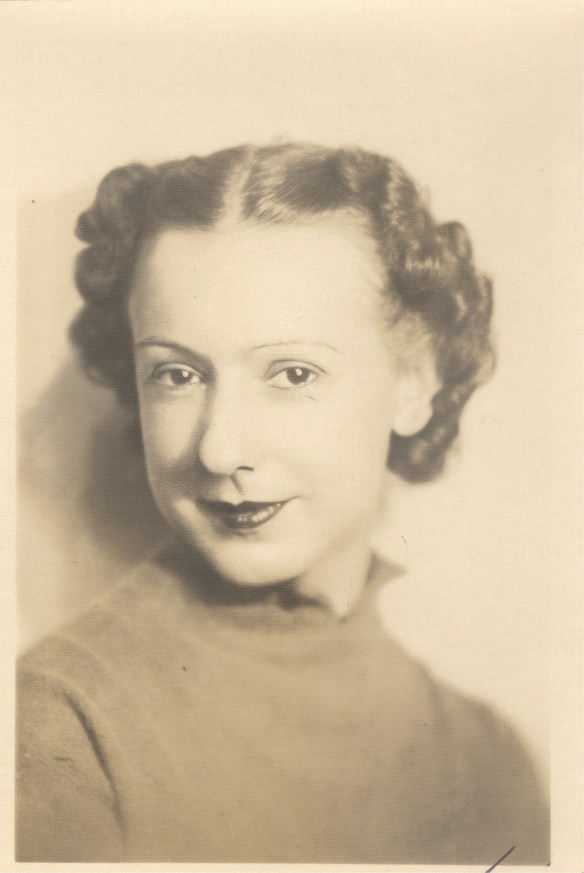
Aida Trueman, photo taken in Paris in 1934. City of Richmond Archives photograph 2003 28 13.

Aida’s job was to travel ahead of the company, training new sets of dancers in each town, thereby reducing the need to travel with a large group of dancers and lessening expenses. The cost cutting measures were ineffective however as the company went bankrupt, stranding Aida in Ottawa.

Undaunted by this, Aida got on a train to Rhode Island where she stayed with her aunts and worked as a dancer in a Chinese Restaurant, making enough money to take more dance classes. She moved to New York where she attended auditions for dance companies and theatre productions, eventually landing a job in Atlanta Georgia at a luxurious hotel and theatre.

2003 28 14

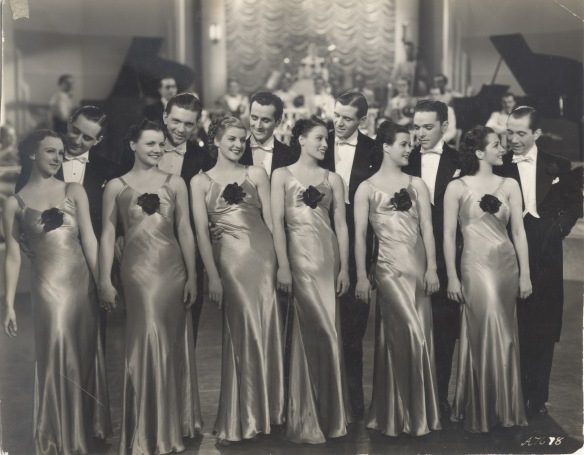
The Twelve Aristocrats in a scene from the movie, “Calling All Stars”, London 1936. Aida Trueman on the far left. City of Richmond Archives photograph 2003 28 14.

It was in Georgia that Aida was asked to join an act called “The Twelve Aristocrats”, a very successful dance troupe known for their versatility and the variety of their dance styles. The Twelve Aristocrats played all over the United States and Europe in the years leading up to World War II and took part in the filming of a musical movie called “Calling All Stars” while in England. An excerpt from the movie on YouTube, at https://www.youtube.com/watch?v=YehBT1MFIxY , shows Aida performing with the Twelve Aristocrats.

2003 28 15

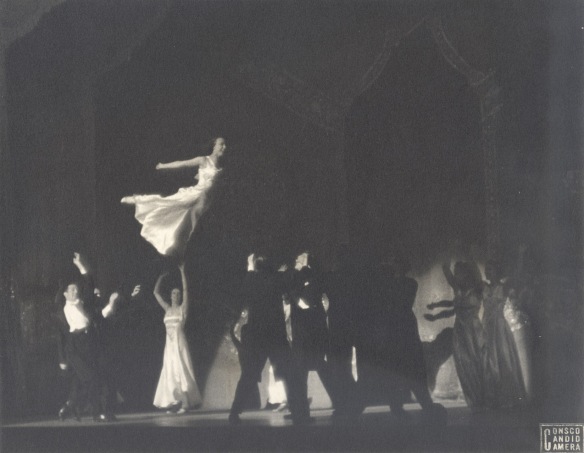
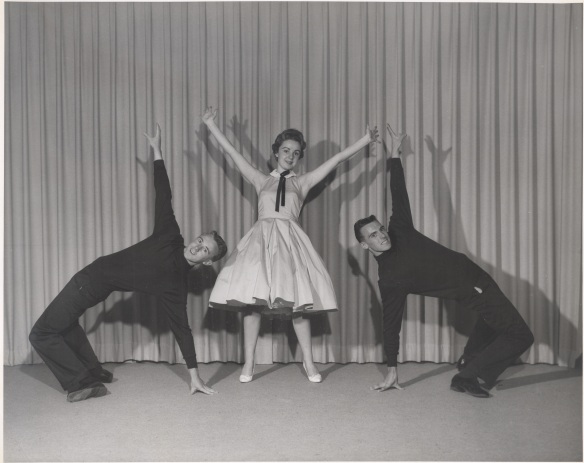
Aida Trueman flies through the air during the Twelve Aristocrats’ dance routine. Photo taken in Indianapolis in 1936. City of Richmond Archives photograph 2003 28 15

As World War II grew nearer, the Twelve Aristocrats split up, some settling in London and others in New York. Aida returned to Lulu Island where her parents still lived. She was hired as the choreographer for the Palomar Theatre where she helped several girls get their start, including a young Yvonne de Carlo who went on to become a star in film and television.

2003 28 20

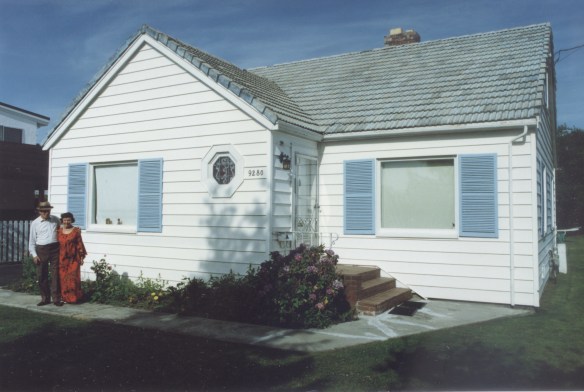
Aida and Al Knapp outside their home on Railway Avenue in 1992. City of Richmond Archives photograph 2003 28 20.

It was during this time that Aida met her future husband, Elwood (Al) Knapp, who was working as a horse trainer at Brighouse Racetrack. In late 1939 they were married. Al built a house at 928 Railway Avenue where they lived and raised two sons, Wesley and Frank. Aida decided to start a small dance school to help make ends meet, moving the furniture out of their kitchen every day to make room for a small dance floor. As her school grew the space became too small and she rented space in halls in Brighouse and Steveston to hold her classes.

2003 28 18

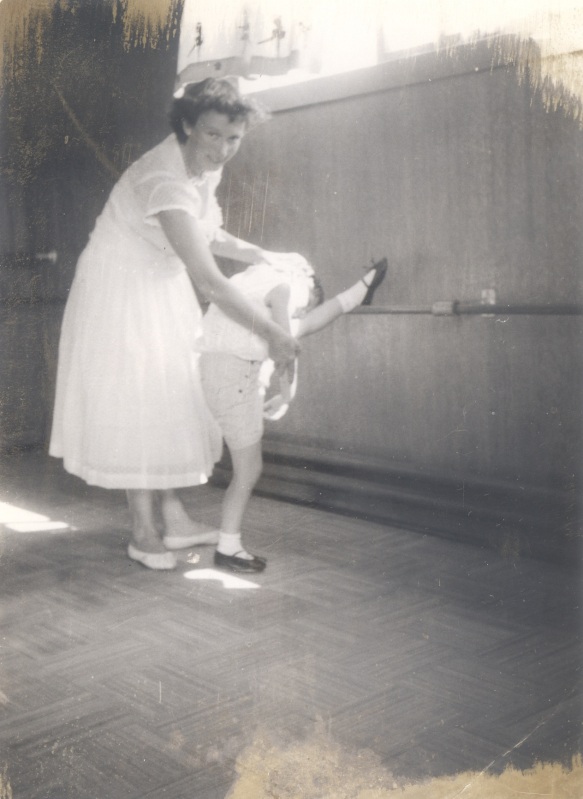
Aida Knapp with a student inside her dance studio, 1956. City of Richmond Archives photograph 2003 28 18.

In 1950 Al built Aida a dance studio behind the family home. The dance school became a full-time job for Aida with as many as 200 students attending lessons six days a week. During her career Mrs. Knapp continued with her own education, attending dance workshops and conventions where she took additional training as well as giving instruction to other teachers.

2003 28 22

Aida Knapp with a group of young dance students in her studio, 1968. City of Richmond Archives photograph 2003 28 22

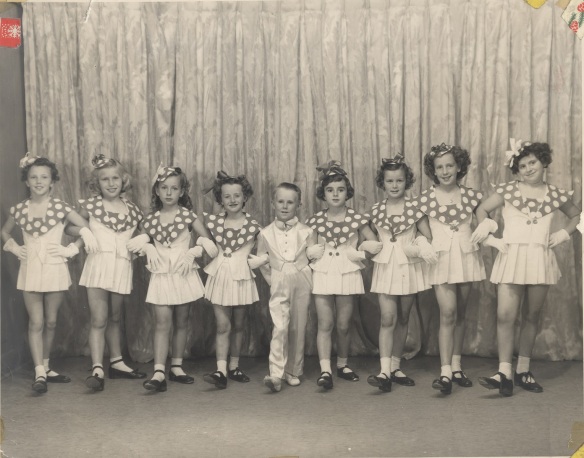
Every June Aida would put on a dance recital where her students would perform the routines that they learned during the year. Costumes were made by the student’s mothers, and the events were eagerly attended by parents, grandparents, friends and neighbours. Proceeds from the recitals always went to benefit a variety of community activities, such as in 1948 when the funds were given to the Fraser River Flood Relief program in Richmond.

2003 28 21

Dancers from the Aida Knapp School of Dance strike a pose prior to their annual recital. Shown here are, L to R, Margaret Parker, Linda Dixon, Louise McMath, Beverly Bull, Frankie Knapp, Sharon Michaud, Marilyn Gates, Patsy Marshal and Elsie Brad. City of Richmond Archives photograph 2003 28 21.

Her students performed at many venues in Richmond and around Greater Vancouver, such as the Kitsilano Showboat, the PNE, the Queen Elizabeth Theatre, as well as in senior’s centres, for various community service organizations, etc.

2003 28 16

Aida Knapp’s two sons, Frank (L) and Wes (R) pose with Sharon Michaud in this photo from 1958. City of Richmond Archives photograph 2003 28 16.

While some of her students went on to pursue dance in professional and semi-professional ways, most ended their dance instruction as teens, but with a great appreciation for the art of dance and with love and fond memories of the woman who taught them.

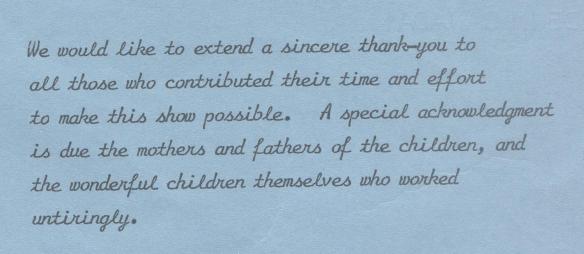
Excerpt

The acknowledgment from the end of program from one of Aida Knapp’s annual dance recitals, “Frolics of ’64”. City of Richmond Archives 2003 28.

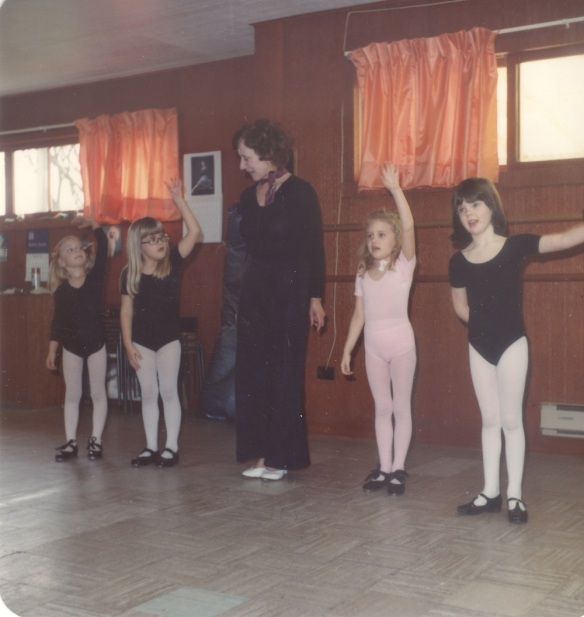
Aida taught dance until 1984 when she was in her 70s. The dedication and love that she demonstrated for the art of dance and for her students have made her a Richmond legend, remembered sentimentally by the generations of young dancers that she instructed. She passed away in 1998 at the age of 87 having left a legacy of contribution to her community that lives on long after her passing.