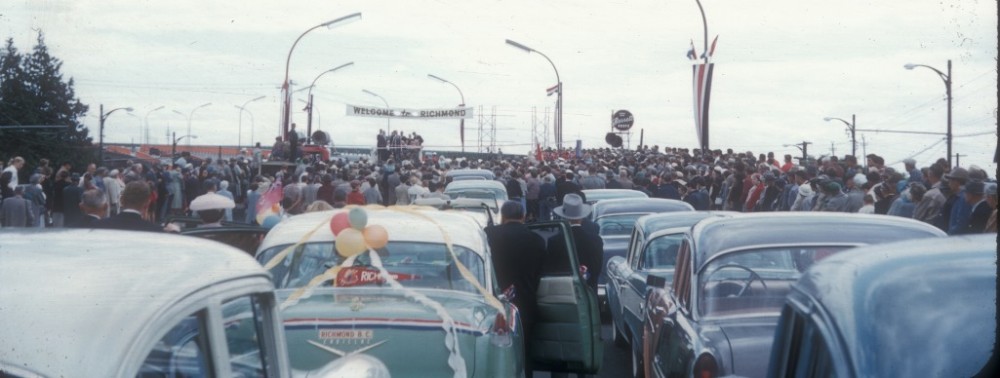
Today, with Federal and Provincial Ministries and Municipal departments in charge of response to emergencies and most people carrying devices which can alert them in real time, it’s hard to remember a world when this kind of coordination did not exist. In Richmond the most basic kind of emergency response, fire protection, was established around 1912 in Steveston with a full time Fire Chief in charge of about 24 men. The canneries also took part, providing equipment, like a hand pump, and support, but by 1920 the Steveston fire Brigade had disbanded.
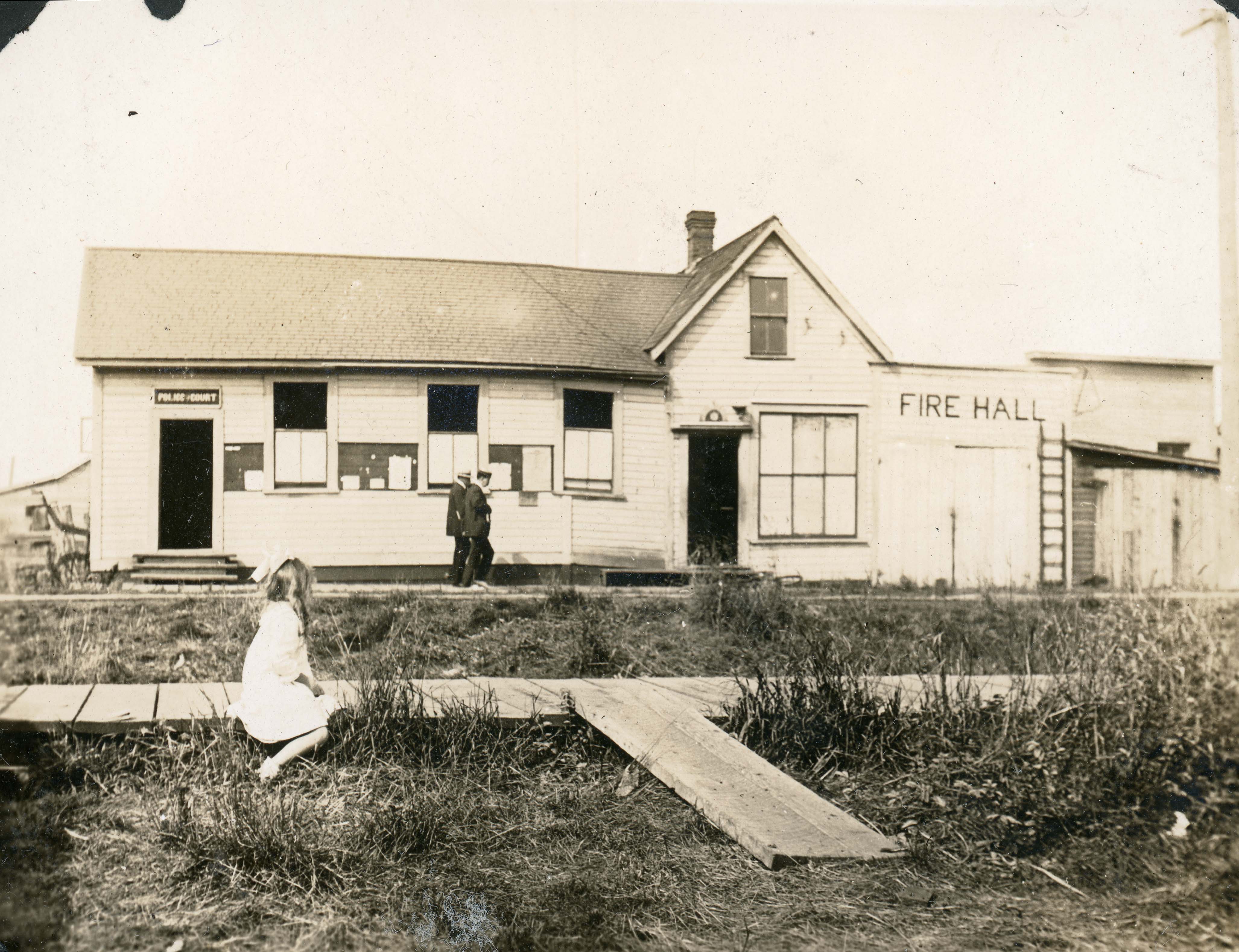
City of Richmond Archives photograph 2006 39 64, Chilton Family fonds.
In 1922 a volunteer fire brigade was established in Brighouse under Fire Chief E.W. Ackroyd. The unit, consisting of about 10 men, raised money for equipment, used the police telephone to receive fire calls and responded quickly to calls as two of the members owned vehicles. Despite the department being well run and funded, in 1929 it too disbanded leaving Richmond with no fire department and dependent upon Vancouver Halls to respond to fires.
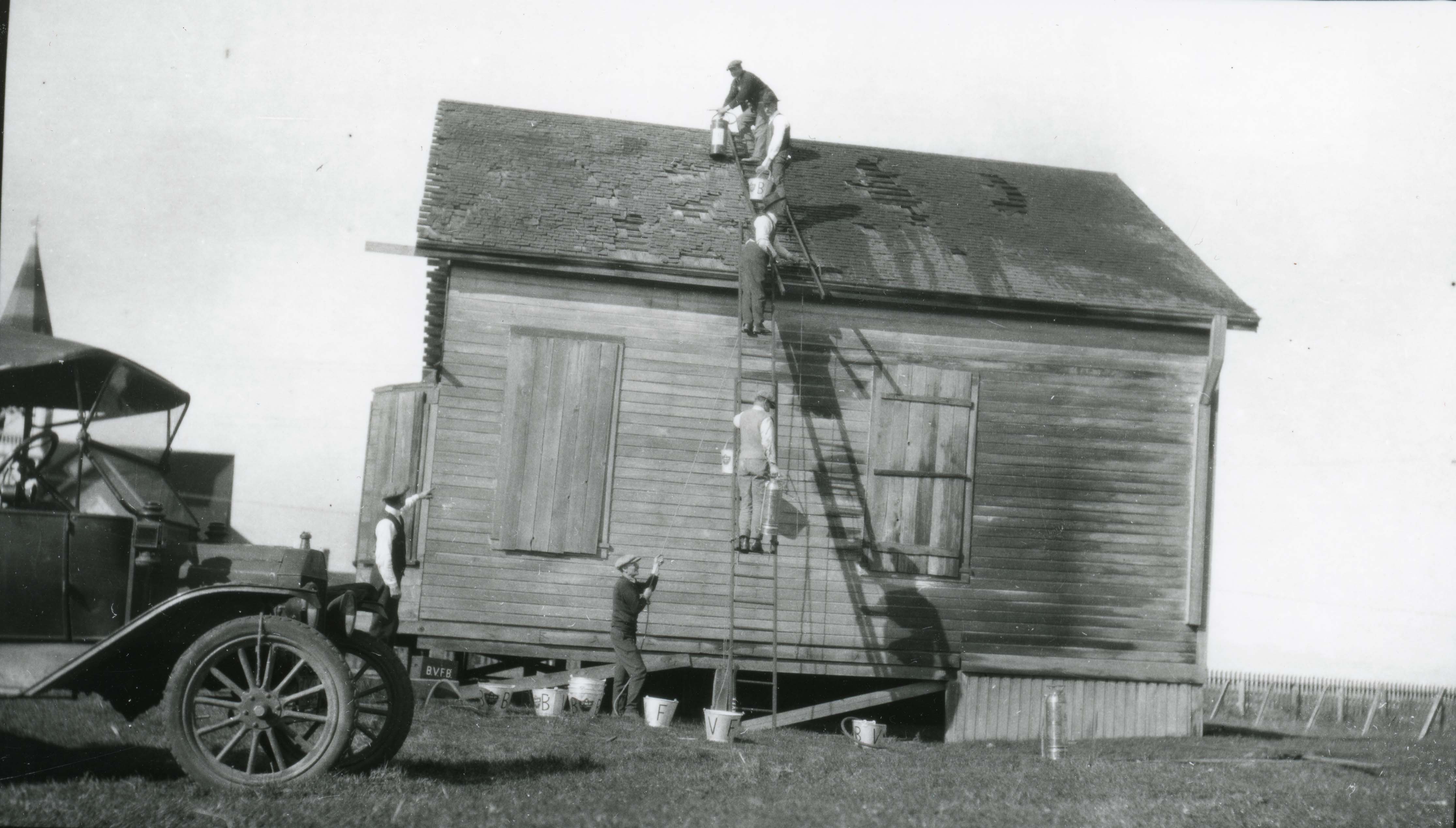
This was the case until the onset of the Second World War when a Federally mandated Civil Defence program was organized. It was developed to protect civilian populations and minimize damage to materials and infrastructure from the effects of an attack from the air. This was accomplished with the formation of Air Raid Precautions Units of civilian volunteers who received training in preparedness, fire protection, rescue, first aid and evacuation. The Greater Vancouver region was divided up into 28 A.R.P. Districts, each led by a District Chief Warden and a Deputy Chief. Richmond was covered under District 21 and soon had a large cadre of volunteer wardens.
Air Raid Precautions Wardens wore distinctive uniforms with arm bands and steel helmets and received specialized training. In addition to fighting fires, they were tasked with warning the public of potential attack using sirens, whistles and noise makers. They enforced night time black-outs, making sure no light escaped from houses and industrial buildings and that vehicles were equipped with the proper headlight hoods. They distributed gas masks and stirrup pumps and trained civilians in their use. Public firefighting demonstrations were put on along with displays dealing with gas attacks and how to extinguish incendiary bombs.
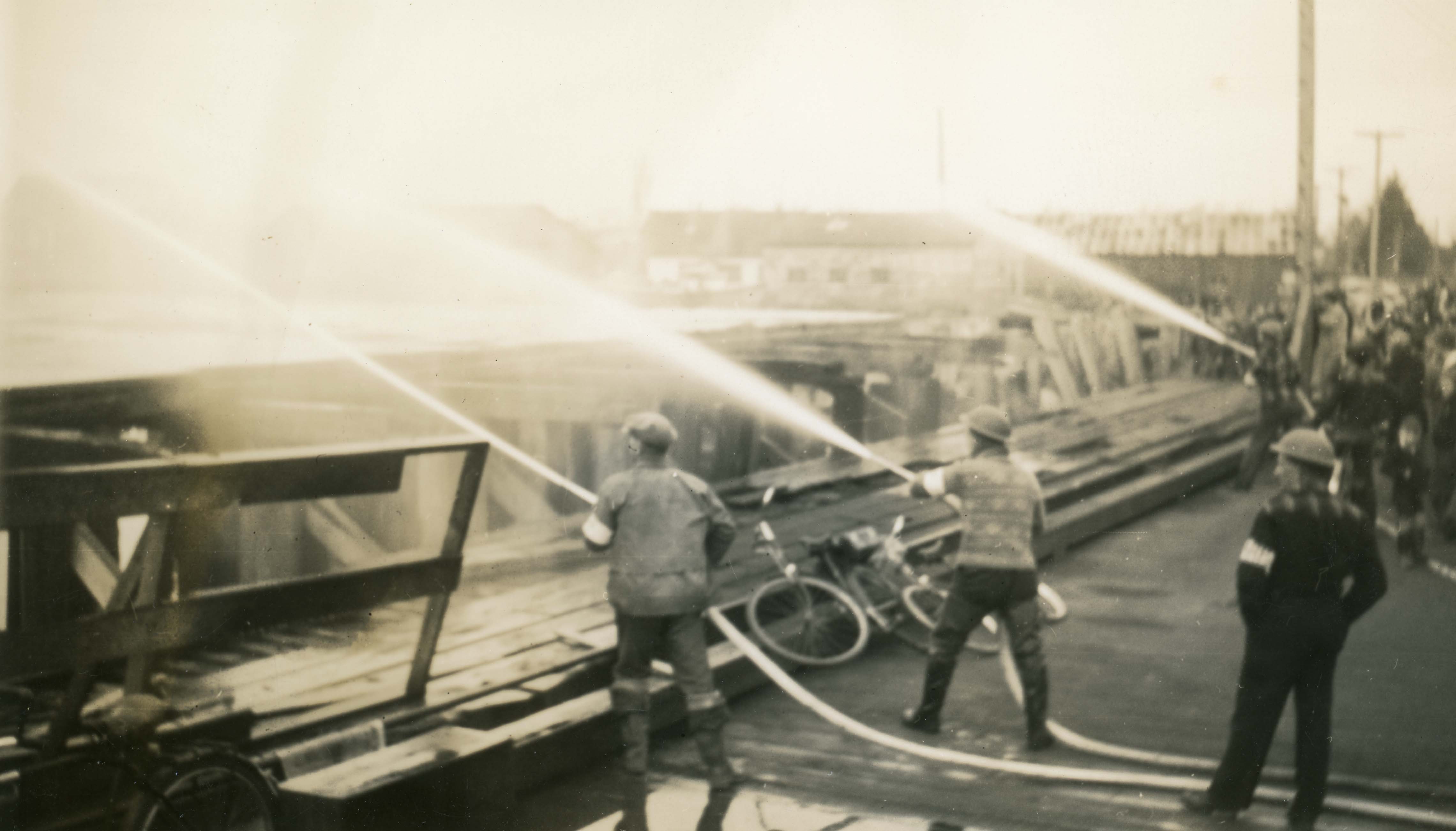
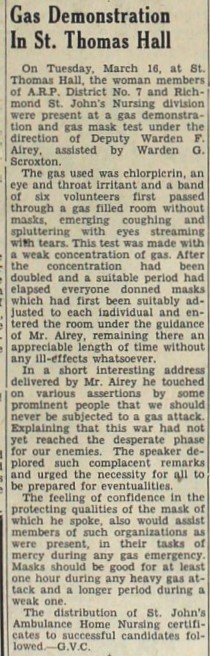
Women’s A.R.P. groups were trained in all aspects of first aid through the St. John’s Ambulance Brigade and the Canadian Red Cross Society and took on the responsibility of setting up first aid stations, caring for casualties, raising funds and providing food and refreshments. They also took part in demonstrations and training in the use of gas masks.
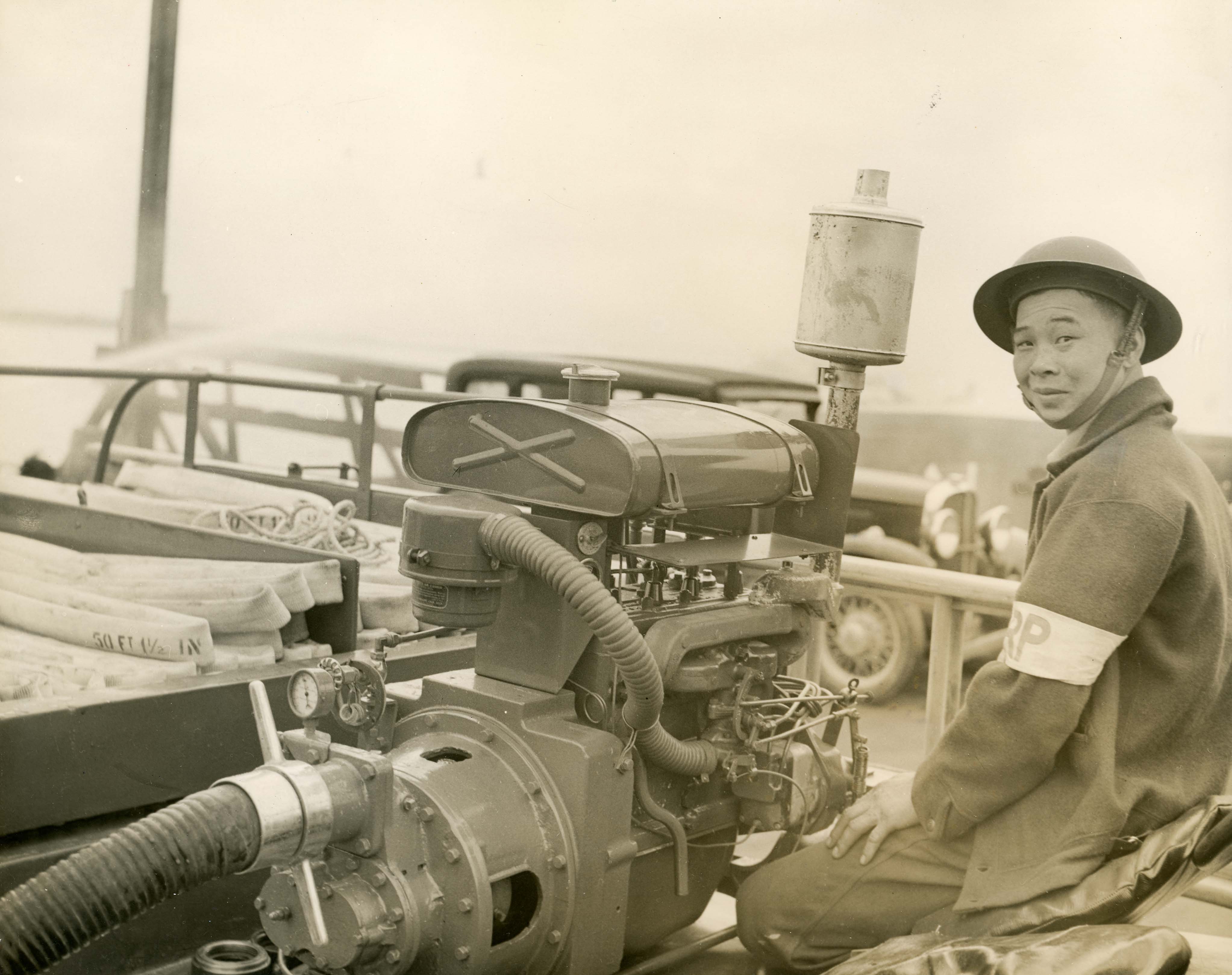
The creation of the A.R.P. resulted in the first coordinated fire protection to cover all of Richmond. The Municipality was divided into six local districts, Steveston, Brighouse, Bridgeport, Sea Island, East Richmond and Mitchell Island and A.R.P. Brigades were assembled in each, receiving some equipment but responsible for funding and building their own fire trucks. These were assembled from purchased farm trucks or large passenger cars, stripped down to their chassis, rebuilt as needed, and fitted with gasoline powered pumps of either 150 or 500 gallons per minute mounted behind the driver’s seat. The bodies were rebuilt with mounted hose, ladder and tool carrying fittings. A rivalry ensued with the different brigades, each trying to complete their vehicle first.
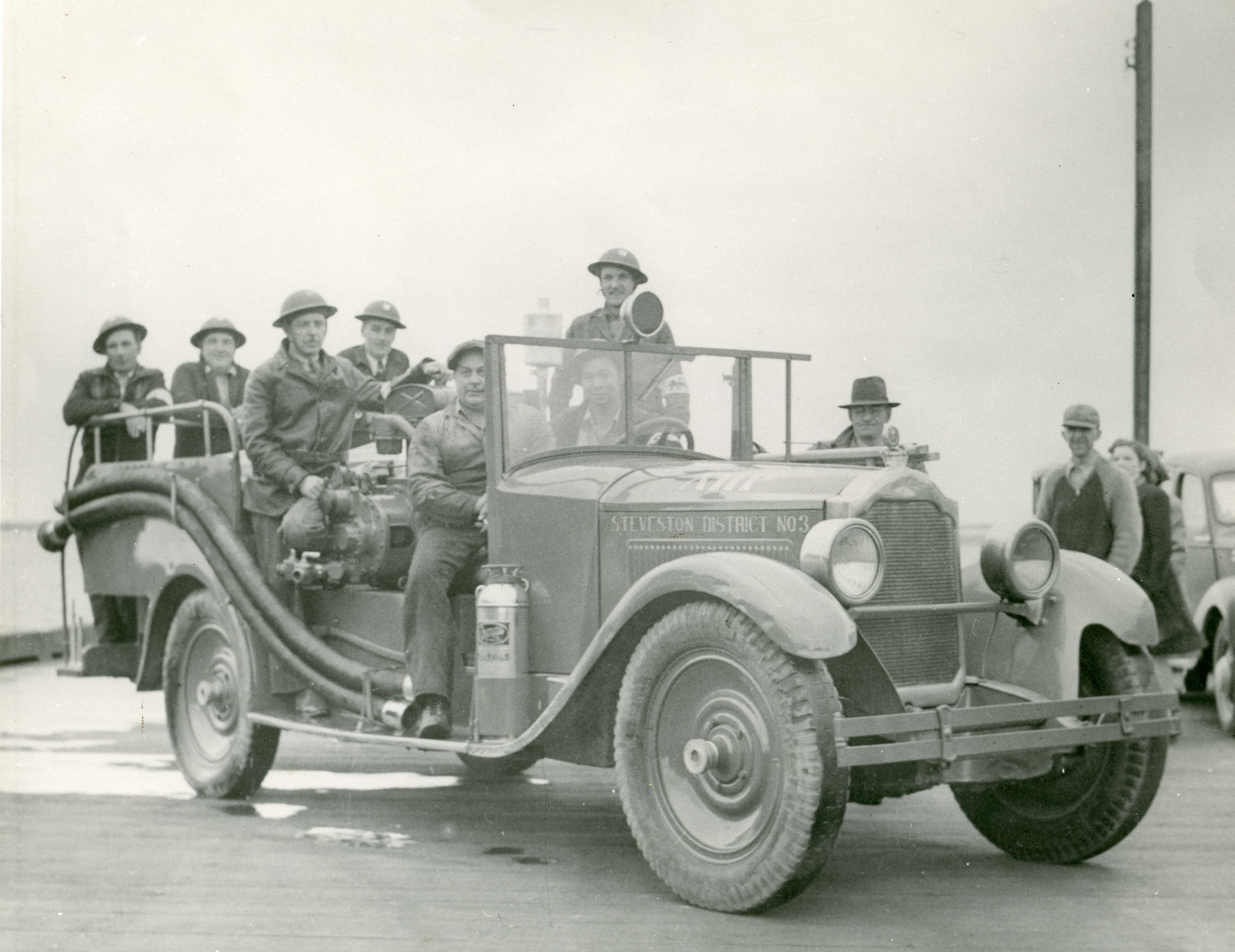
The first truck completed was by the Steveston group who were declared to be the first mobile A.R.P. unit in Canada. It was built with volunteer labour by Harry Hing, Jack Gollner and others at the Steveston Service Station at No.1 Road and Steveston Highway. There being no fire hall yet, the truck was kept at the service station, often with a volunteer sleeping there to be ready in case of a call. As reported in the April 15, 1942 Marpole-Richmond Review, “One watching the realistic looking fire engine streak down the road, siren shrieking, crew aboard hanging on for dear life, would never guess that this efficient looking unit had a short time ago been a 1925 Packard sedan purchased in North Vancouver for the big sum of $25.” Where no hydrant was available to supply the pump with water, the suction line could be dropped into a handy ditch or the river, providing a source for the three hoses.
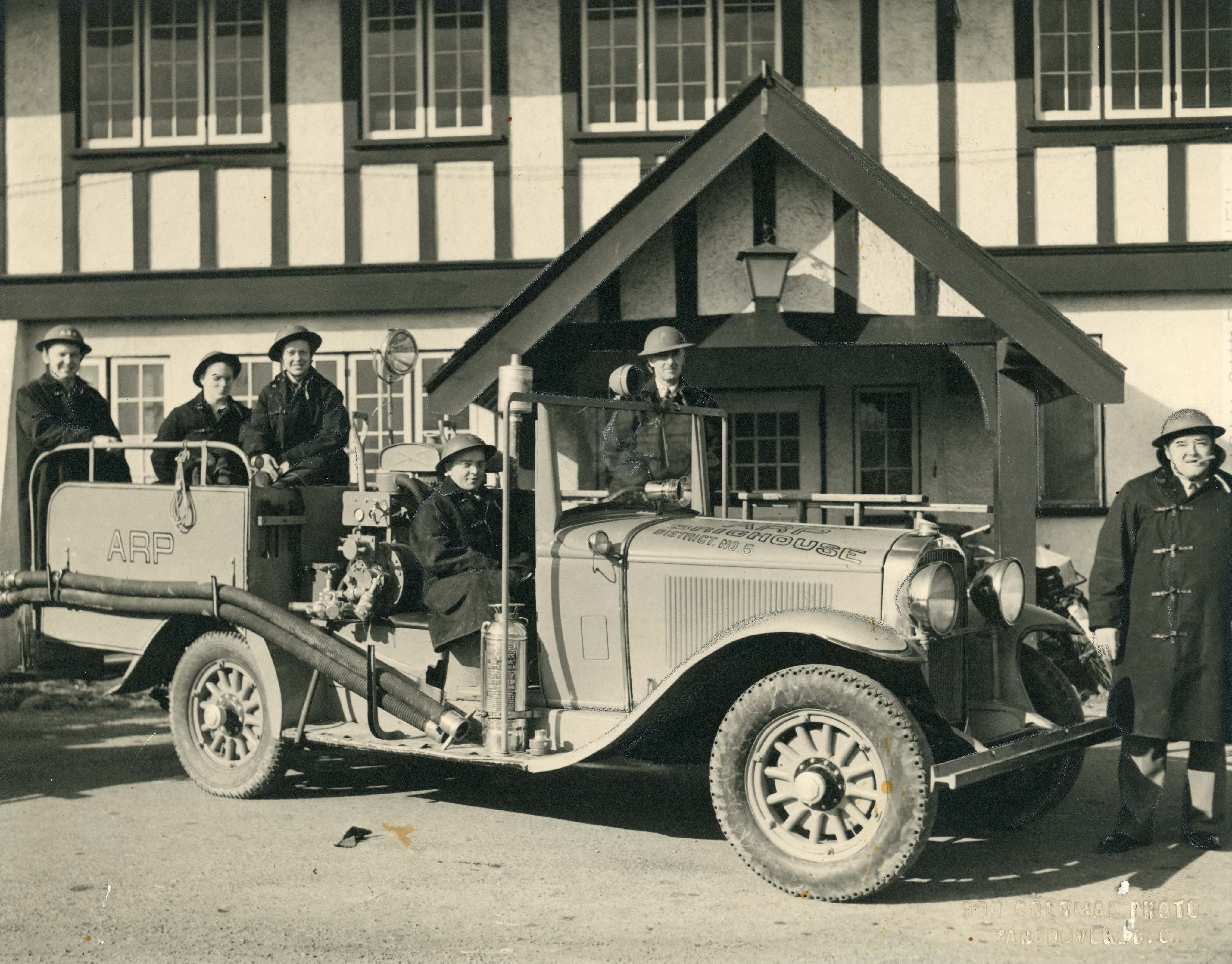
City of Richmond Archives photograph 1978 40 31.
The Steveston unit was followed closely by a truck built at McClelland’s Service Station and Brighouse Motors. The Brighouse machine was constructed from a 1929 Buick Sedan and was fitted out much the same as the Steveston unit. The third fire truck built was from the Bridgeport unit, a 1935 Ford truck, outfitted like the other two vehicles.
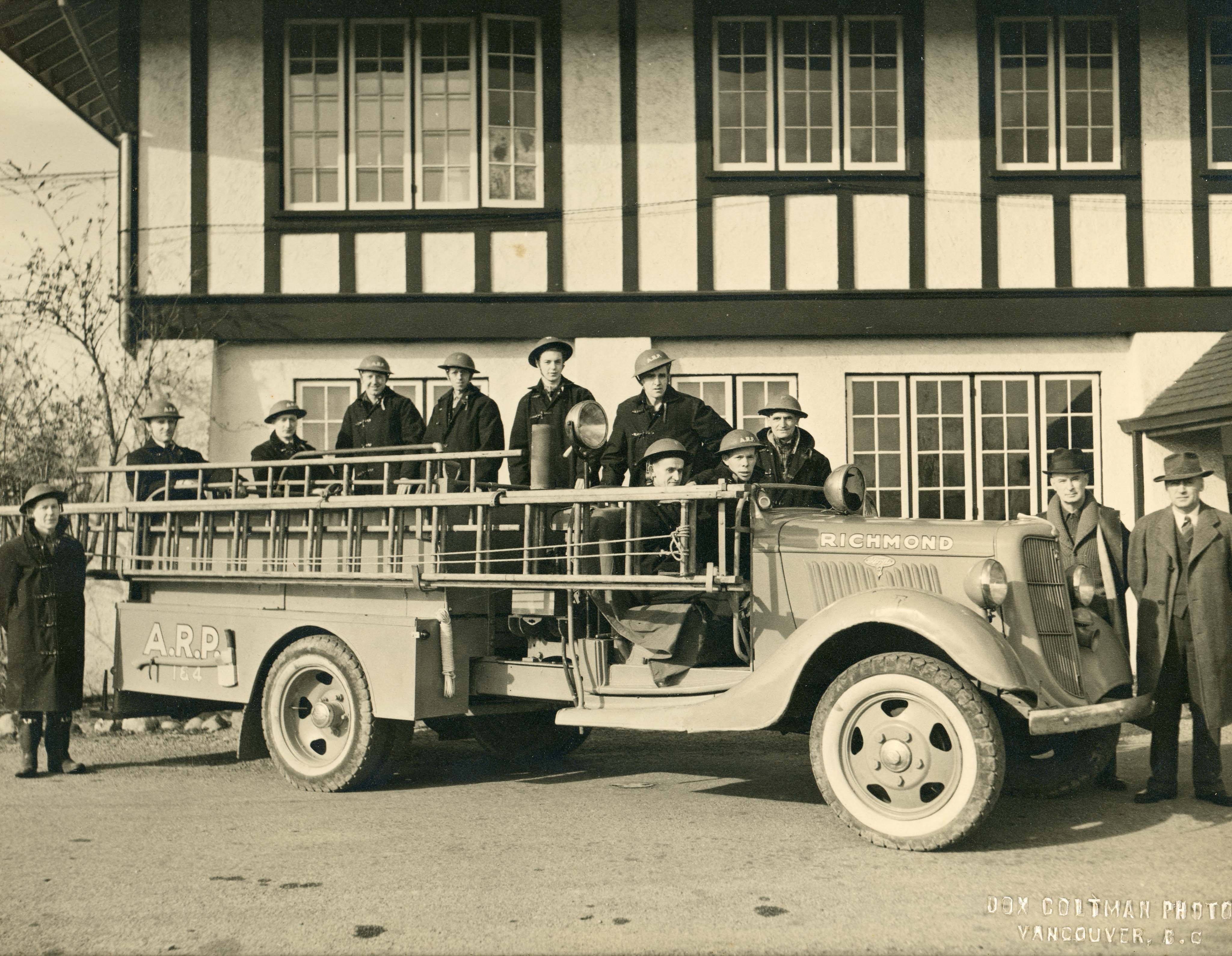
City of Richmond Archives photograph 2016 16 1.
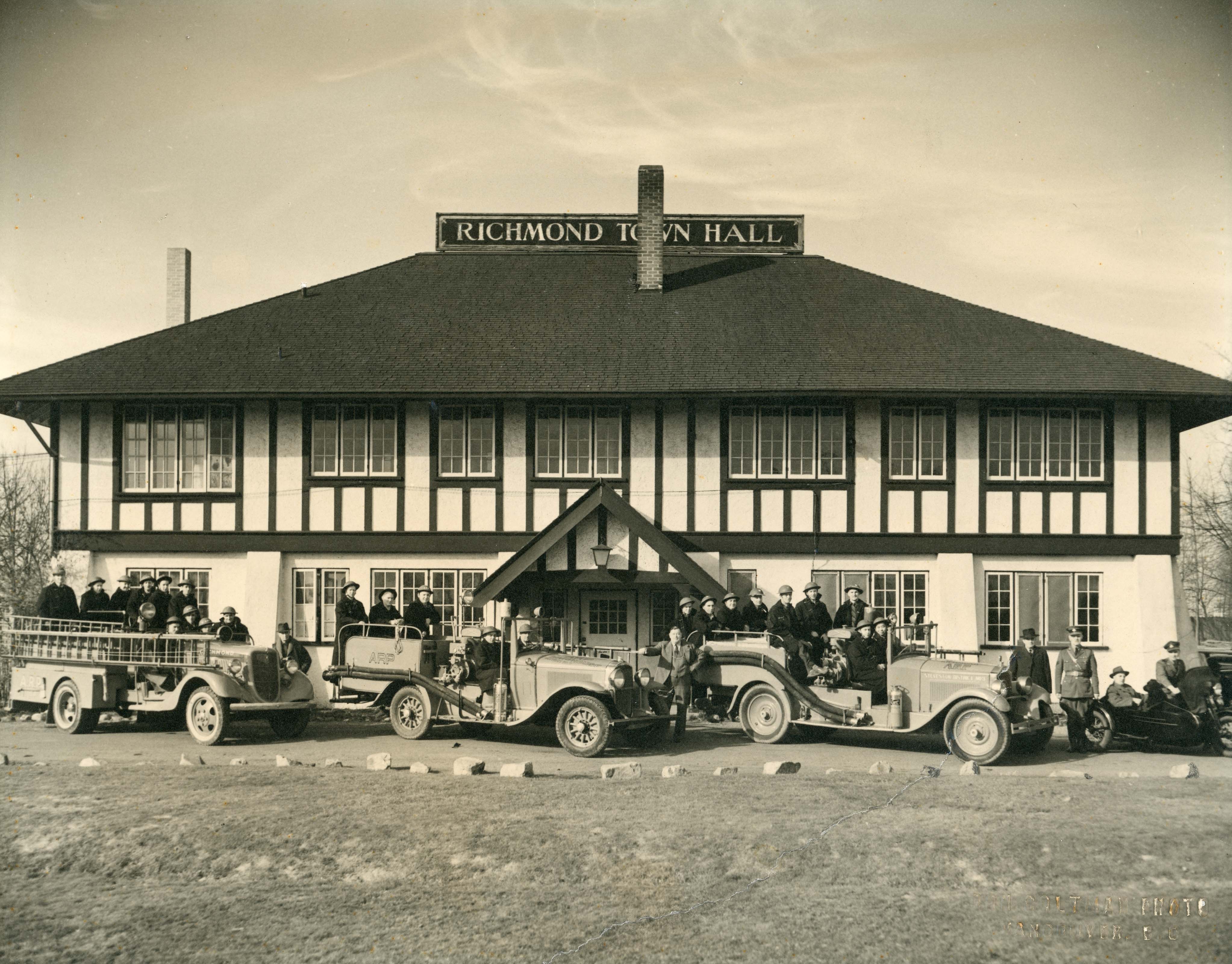
City of Richmond Archives photograph 1978 40 30.
By April 1942 there were four air raid warning sirens erected in Richmond at Steveston, Brighouse, Mitchell and at the Airport. They were all operated from a control room at 650 Burrard St. in Vancouver which sounded all fifty sirens in Vancouver and surrounding areas. Local sirens were also operable individually. A trial of the sirens on Saturday, April 25, 1942 was described in the Richmond Review under the heading “Sirens Heard In Quiet Richmond,” “The rising and falling tone did not sound unfamiliar at that, as anyone who has attended picture shows has heard the mournful wail in war pictures.” “The “imminent danger” signal came first, being five minutes of up and down intonations reaching most parts of the Island very clearly.” “The next message sent out was “raiders past,” being three minutes of steady tone.” “The sirens have one more call, the “alert,” which was not sounded Saturday but which will be five minutes of steady tone.”
The A.R.P. grew rapidly in Richmond and by the end of 1942 had around 850 members, serving in many capacities. The most active group, Steveston, had refurbished a small building next to the former Fisherman’s Hospital on No. 1 Road and set it up as a club room with donated pool tables and furniture. In Brighouse, the A.R.P. group had built a 16 by 30 foot fire hall, complete with a hose drying tower and space for a club room on the upper floor.
The District Seven (East Richmond – Mitchell) group met at the St. Thomas Hall (East Richmond Community Centre) and took specialized training in blood grouping and blood transfusion. A boy’s bicycle brigade was also formed, training schoolboys to act as dispatch riders in the event of the loss of telephone communications during an attack.
As the Second World War progressed, the A.R.P. in Richmond grew. By 1944 the Steveston group had built a modern fire hall with space for its new truck, built on a new 2-ton truck chassis by Harry Hing. He had also built an ambulance from a 1927 Lincoln car which found a home in the hall, along with the original truck which had been retired but was kept for sentimental reasons. Brighouse also had a new truck and gifted their old one to the Burkeville unit.
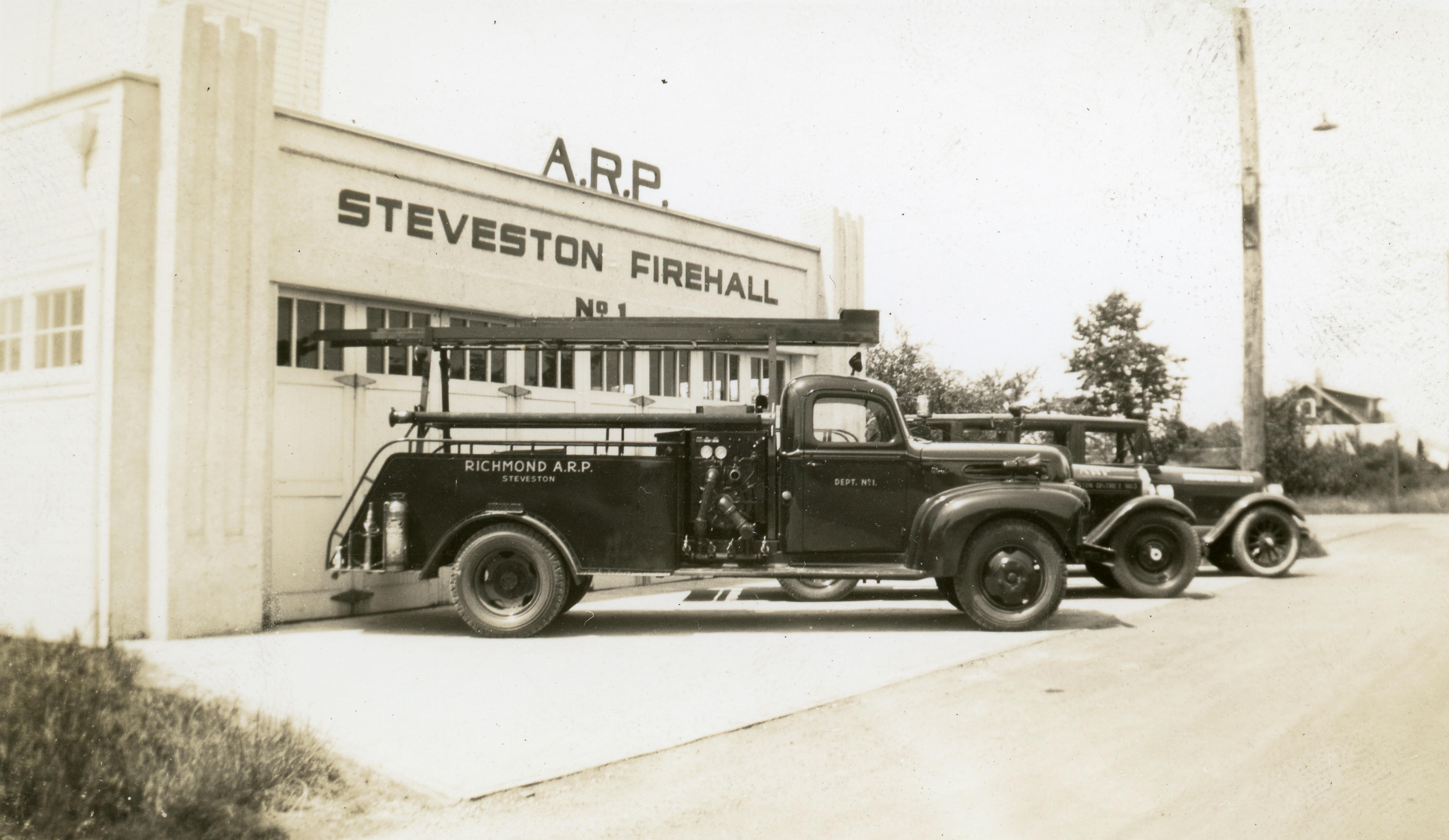
City of Richmond Archives photograph 1978 40 16.
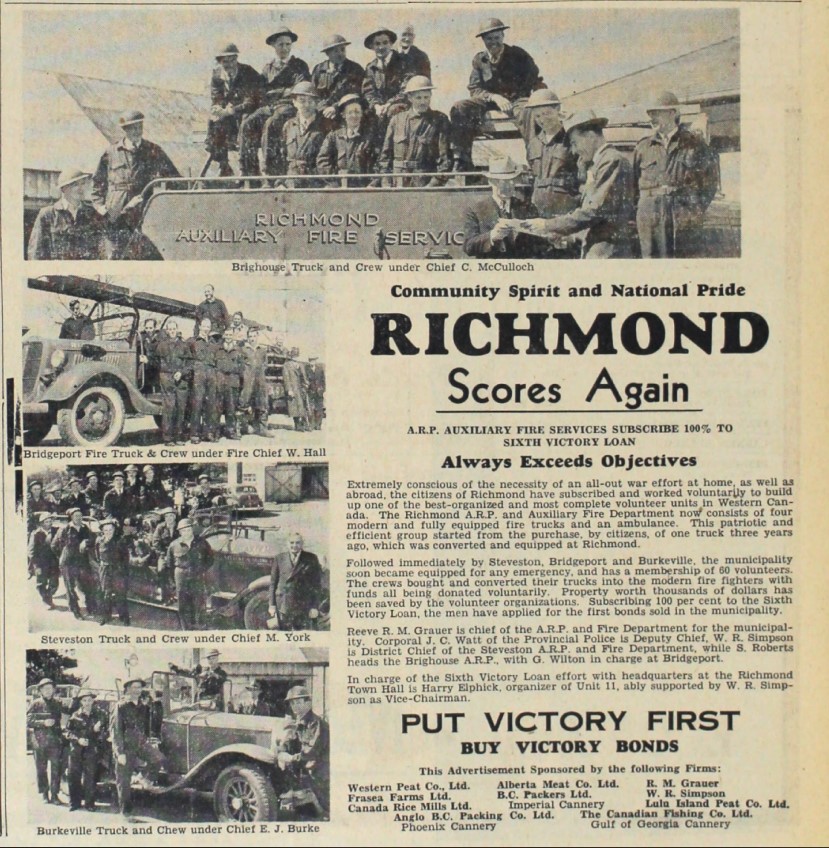
When the Second World War ended in September 1945, the A.R.P. was disbanded and volunteers left the Brigades. The trucks were retained however and some limited volunteer fire response remained until the Steveston, Brighouse, Bridgeport and East Richmond Volunteer Fire Brigades were reorganized in 1947. The story of the A.R.P. is a testament to the effectiveness of groups of volunteers, organized in the service of their communities and the significant impact they can make. Many of the A.R.P. members went on to form the Richmond Volunteer Fire Department which formed the foundation of the present Richmond Fire-Rescue which exists today.
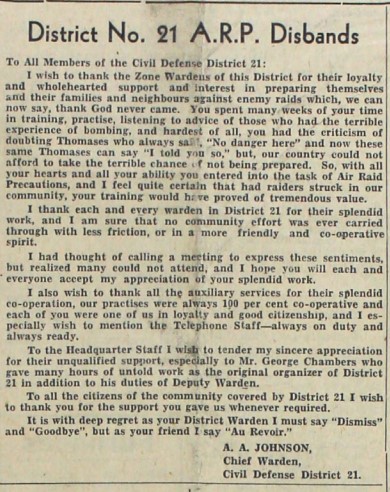
The demobilization of the A.R.P did not spell the end of Civil Defence in Richmond. With the end of the Second World War came the advent of the Atomic Age and Richmond’s response to the threat of nuclear aggression during the Cold War. Stay tuned for part two of Outside The Box – The Richmond Archives Blog’s civil defence posts.


You must be logged in to post a comment.