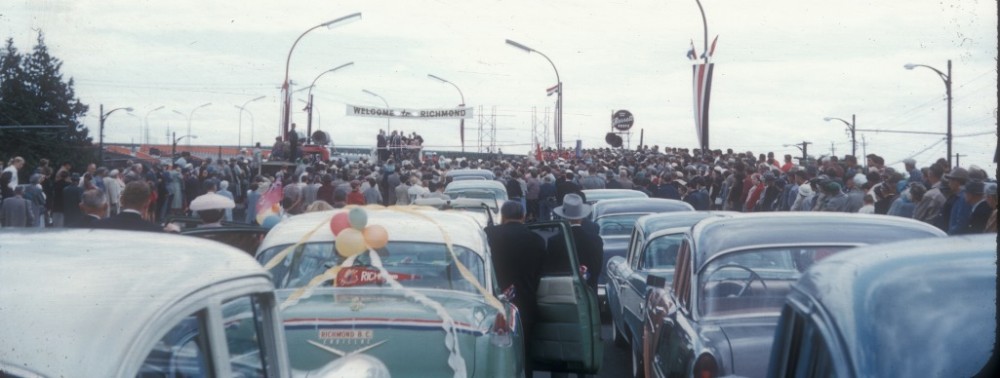
Many, maybe most of Richmond’s residents are unaware of the influence of the thoroughbred horse racing industry had on Richmond’s history, or of Richmond’s contributions to the horse racing industry. There is little doubt that not long after men learned to mount a horse and ride it, the first race occurred. Over centuries, the sport developed worldwide into an organized event, leading to selective breeding of horses, strict rules and betting. The modern era of racing is generally considered to have started in the late 1700s when the first of the classic English races were established.
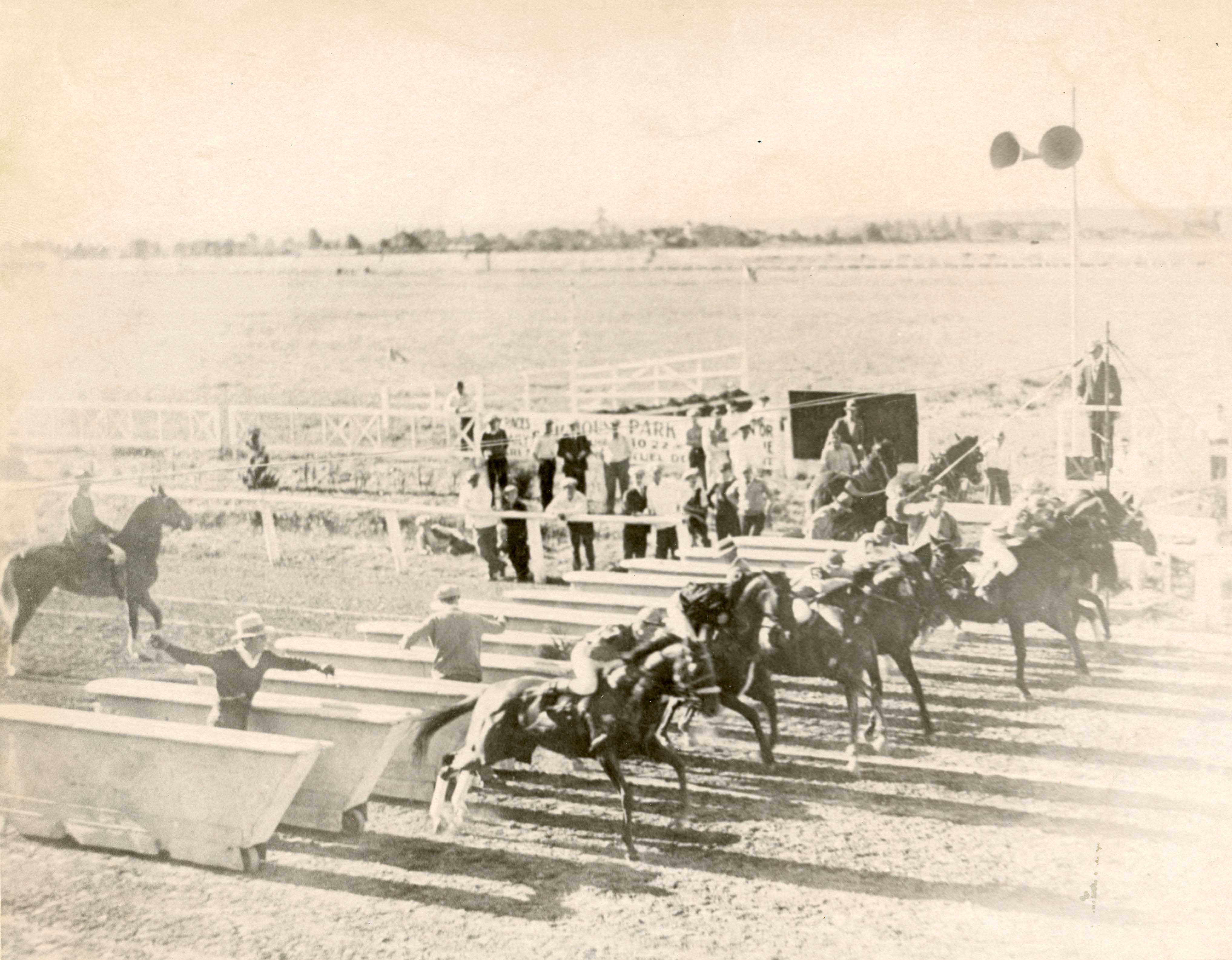
One of the problems with racing horses is having a fair start and false starts and disputes about them were common. Early races depended on jockeys keeping their horses behind the start line, marked by a tape, chalk line or wooden structure, until the starter waved his flag to commence the race. Often an assistant starter would stand farther down the track to wave his flag in the event of a bad start.
The first automated starting system was developed in Australia in the 1890s and consisted of a spring-loaded wire that stretched across the starting line. When the race was started the wire would spring up and away from the horses. Various versions of this starting system were used in Australia and around the world up into the 1930s, an improvement over previous starting methods but still subject to false starts and broken equipment by overeager horses.
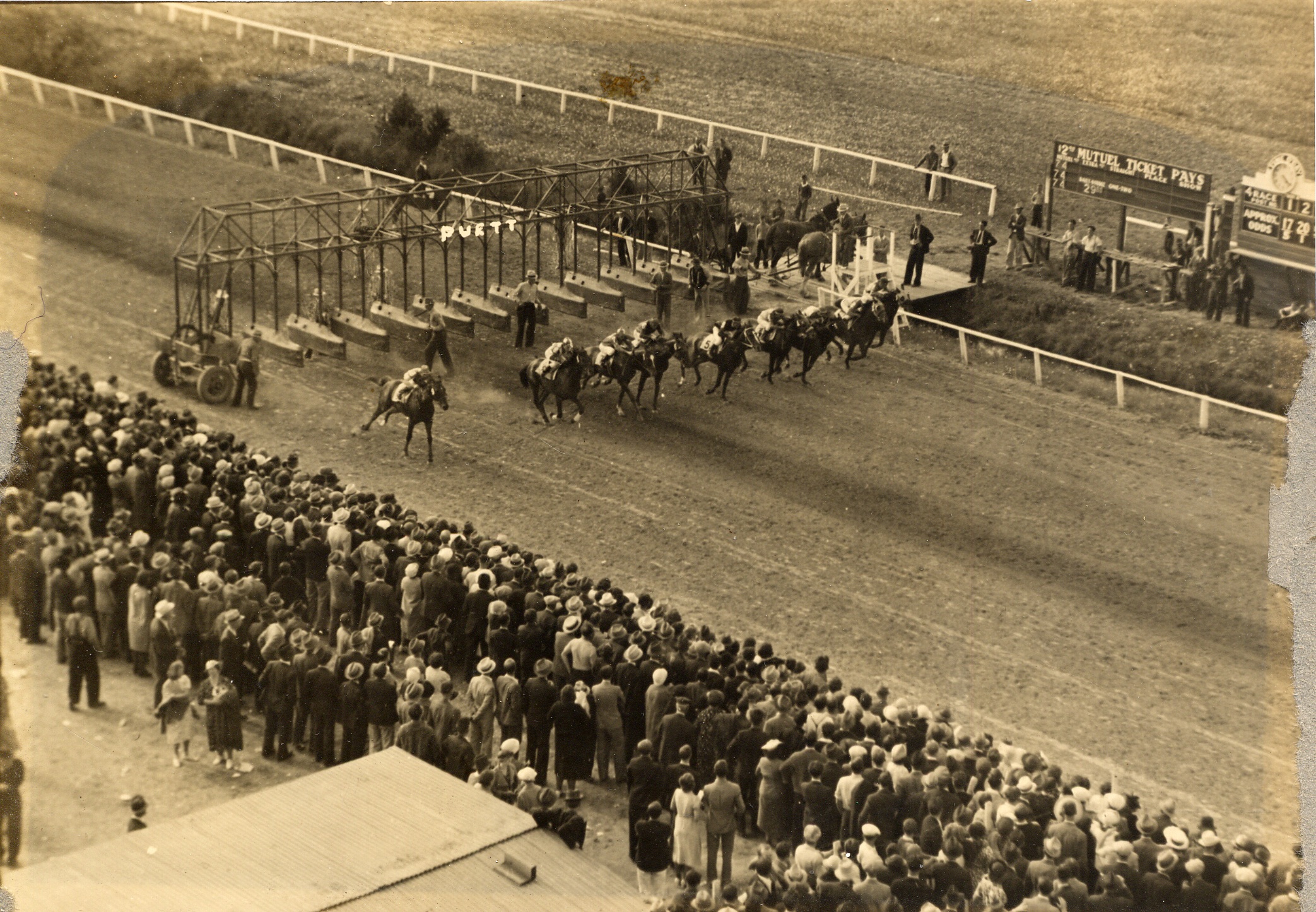
Enter Clay Puett. Born in Texas in 1899, he quit school in grade seven, went to work as a ranch hand and then got interested in horse racing. He worked his way up the ladder from groom to starter at racetracks, adding to his already considerable knowledge about horses and their behavior. He recognized early on that a consistently safe and reliable method of starting races was needed in the sport and began to tinker with designs to allow this. His early conceptions didn’t work out too well but in 1933 he built an experimental hand-operated a two-stall gate with breast plates which worked fairly well, although jockeys were occasionally thrown when their horse hit the breast plates a bit too hard.
Some more years of tinkering and perfecting the design ensued until a model was patented and built. This trial unit also had two stalls, operated electrically and was experimented with at Hollywood Park near Los Angeles. The design incorporated narrower stalls than previous gates with a backstop at the rear to prevent horses from backing out and “V” shaped tubular gates in front. Held closed by electro-magnets, the gates sprung open simultaneously when the circuit was broken by a master switch. Individual gates could also be opened independently of the others if necessary.
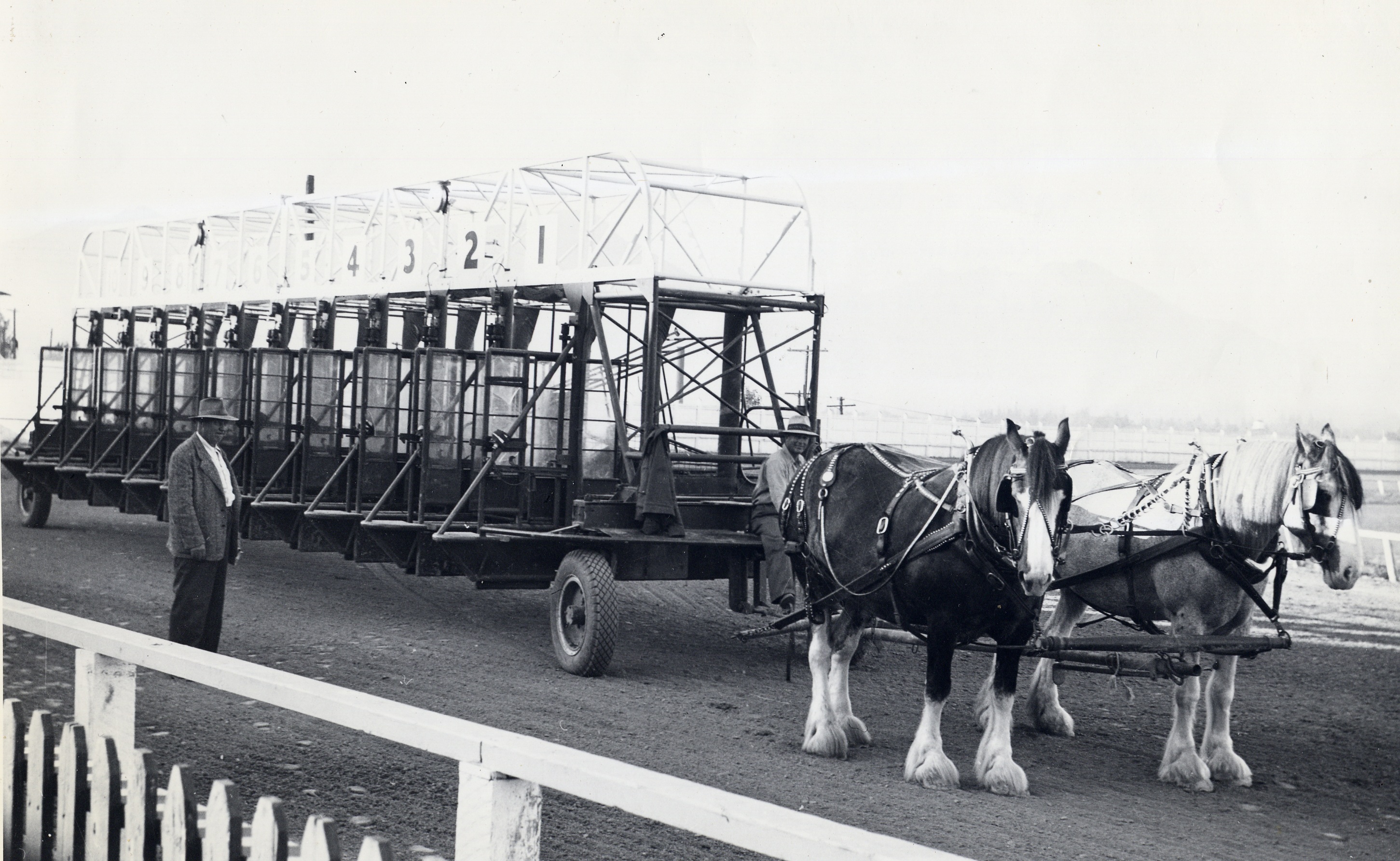
A full-sized version was built and used in a race for the first time on July 1, 1939, at Lansdowne Park Racetrack in Richmond. A report in the Daily Racing Form stated, “Clay Puett’s new starting gate, introduced to organized racing for the first time at Lansdowne, last Saturday, is being hailed by horsemen as the greatest and most beneficial contribution to the turf since the advent of the totalisater.(tote board)”
Prominent California owner and trainer Elmer O’Connell, who was racing at Lansdowne said, “For thirty years I’ve been to the races, and this is the biggest single improvement I’ve ever seen in the business, including the photo-finish machines.”
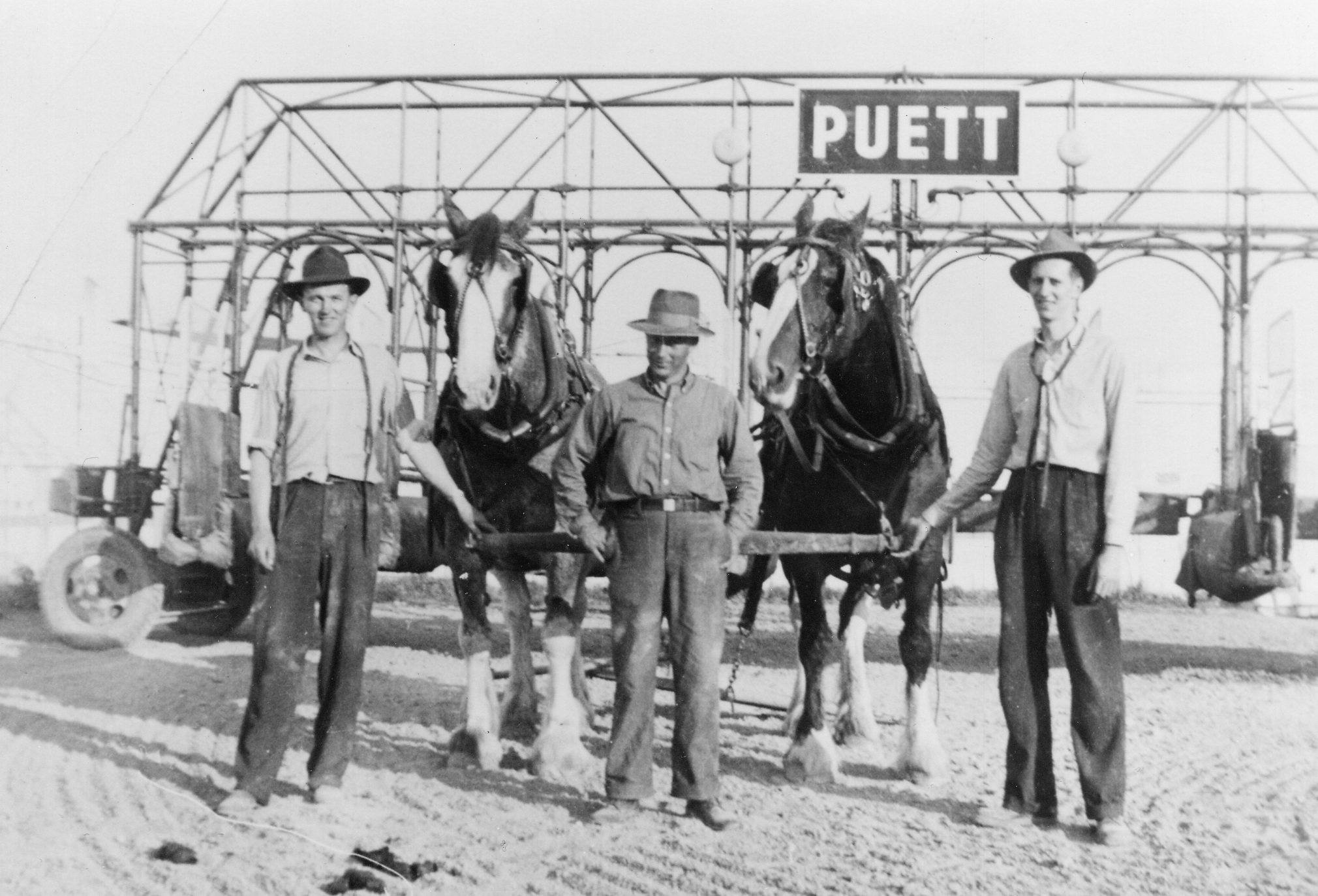
Vancouver Province reporter Johnny Park described the first race using the Puett gate. Instead of unruly horses, jostling and misbehaving at the starting line, “Nine of the youngsters paraded in the special, and acting like perfect little ladies and gentlemen, showed more experienced horses how to act at the post and run straight and true. They walked right into Puett’s stalls, stood still for a moment, and broke as a team.”
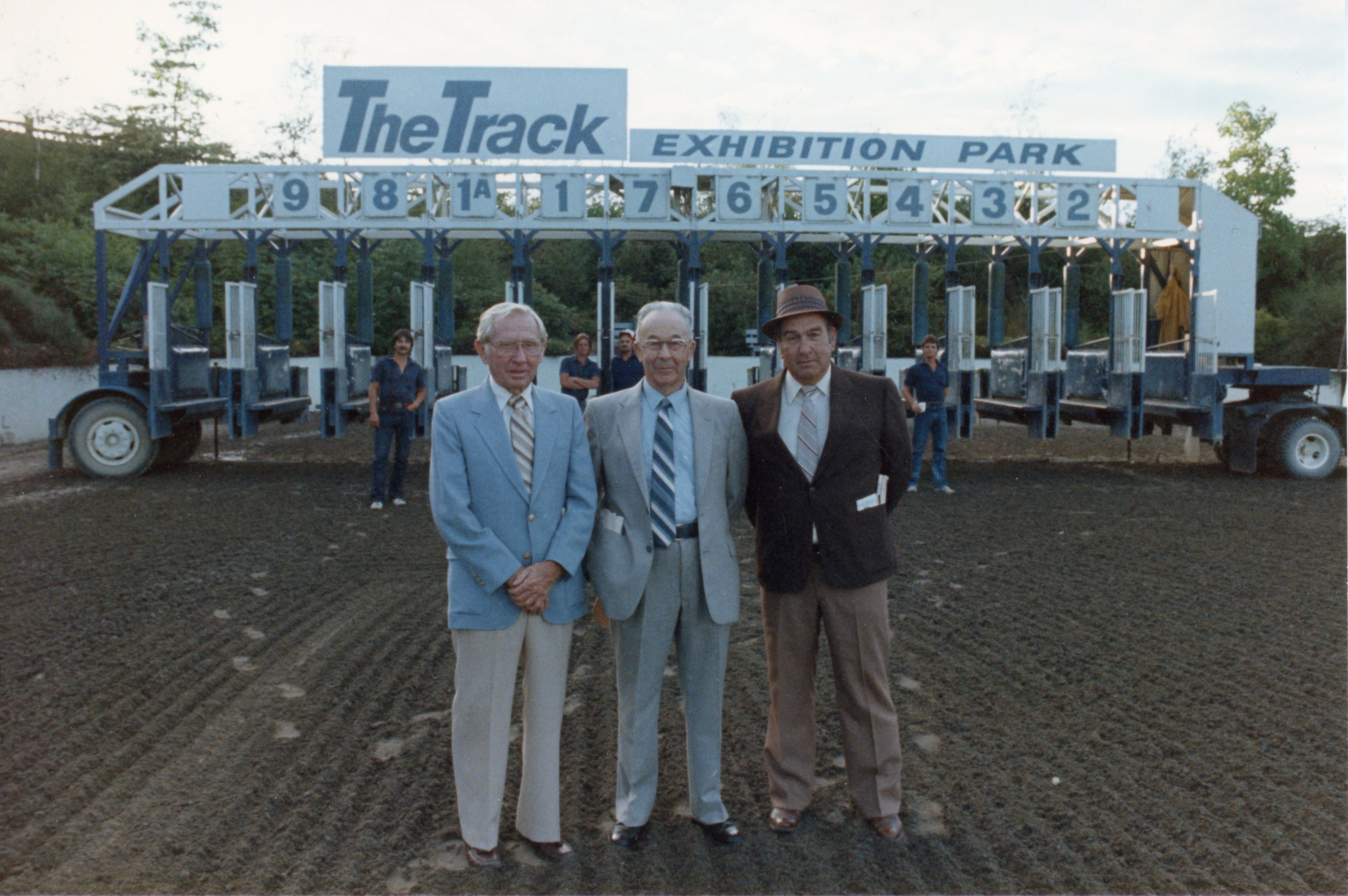
Clay Puett was the starter at Lansdowne and Exhibition Park tracks for 24 years. His starting gate became the standard for flat racing world-wide and, while modifications and improvements have been made over the years, all of the gates used today are based on his original design which was used first in Richmond. As for Puett himself he said. “I have enjoyed being the inventor of the starting gate, but I have never capitalized on it. Oh yes, I am an extrovert and I love talking about it, but I have always been smart enough to know it would be just a short period of time before the gate just became a piece of equipment used all over.” Clay Puett passed away in 1998.
For more about horse racing history in Richmond watch A Short History of Horse Racing in Richmond on YouTube at A Short History of Horse Racing in Richmond


You must be logged in to post a comment.