In 2023, Jeanne Ryan (nee Harada) donated her family’s records to the City of Richmond Archives. The Harada family’s story is one that is shared by many Japanese Canadians who lived in Richmond, both before and after the forced internment of the Second World War. They have deep roots in Richmond, dating back to 1908 when Eikichi Harada emigrated from Japan.
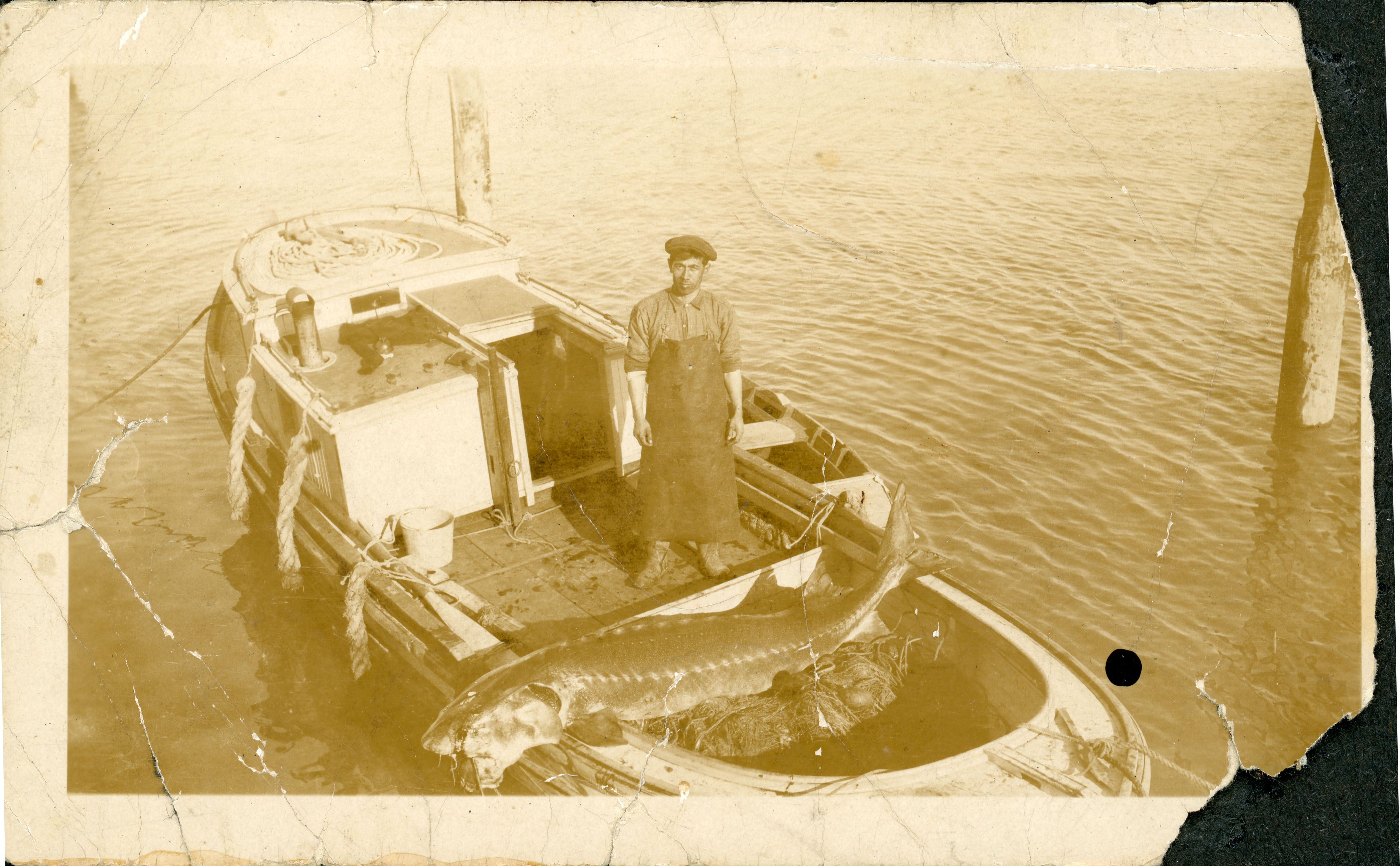
Eikichi Harada with a sturgeon, 1930 Fraser River. City of Richmond Archives photograph 2023 13 1 26.
The family’s records consist of 2000 photographs which have been scanned from 13 photograph albums and date from around 1900 to 1977. They depict several generations of the Harada and Kamitakahara families and their relatives and friends as they moved between Japan and the British Columbia coast, internment in the B.C. interior, displacement to southern Alberta and their return to Richmond once restrictions were lifted in 1949. The albums feature themes of growing up, gatherings, weddings, celebrations and new family members.
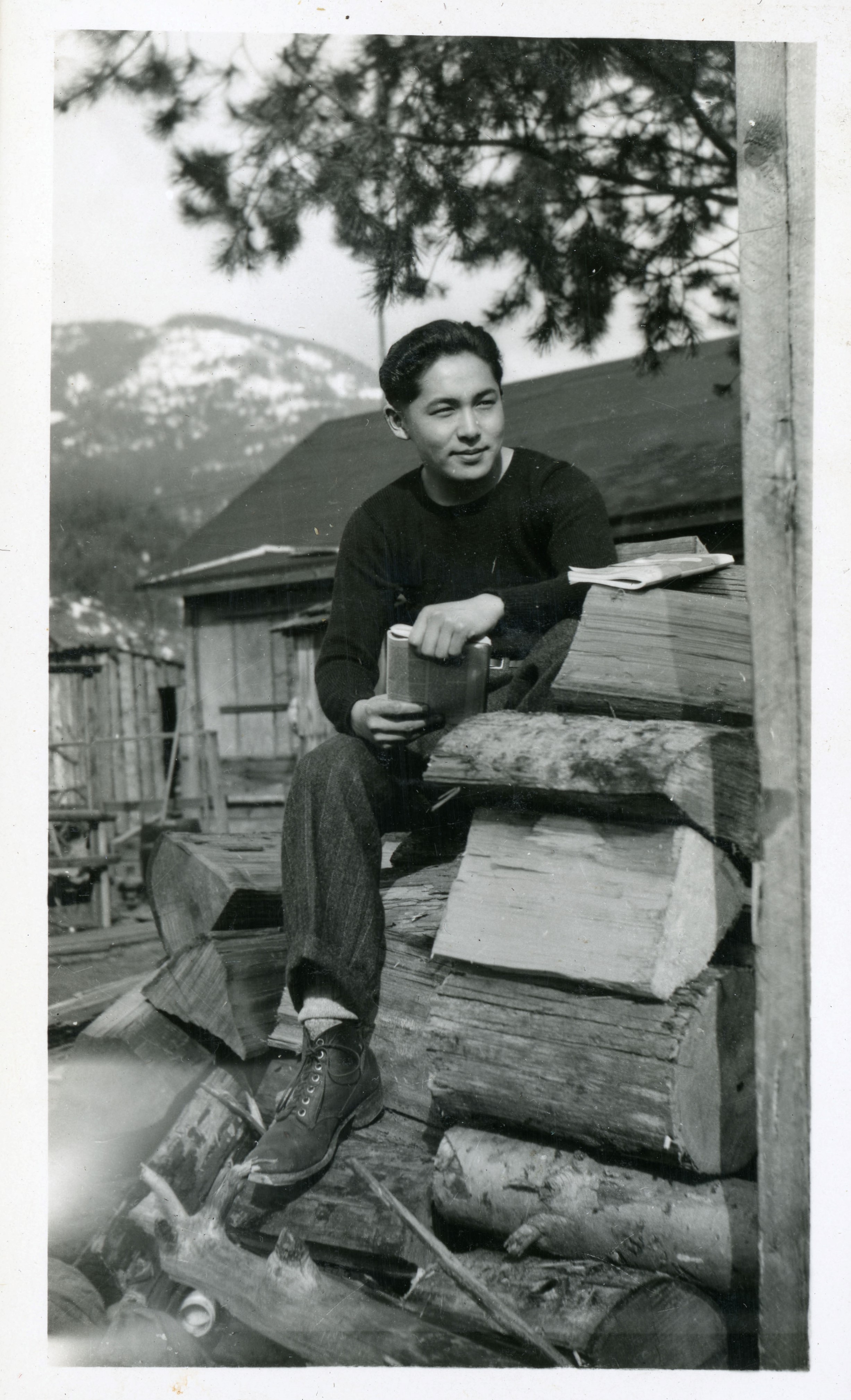
George Kamitakahara reading, Between 1942 and 1946, Slocan City internment camp. City of Richmond Archives photograph 2023 13 1 113.
In 2024, Anouska Kirby was hired as an Archives intern. Anouska’s work involved genealogical research and consulting with Harada family members and friends to identify people, places and events and meticulously describing each of the 2000 images according to archival descriptive standards.
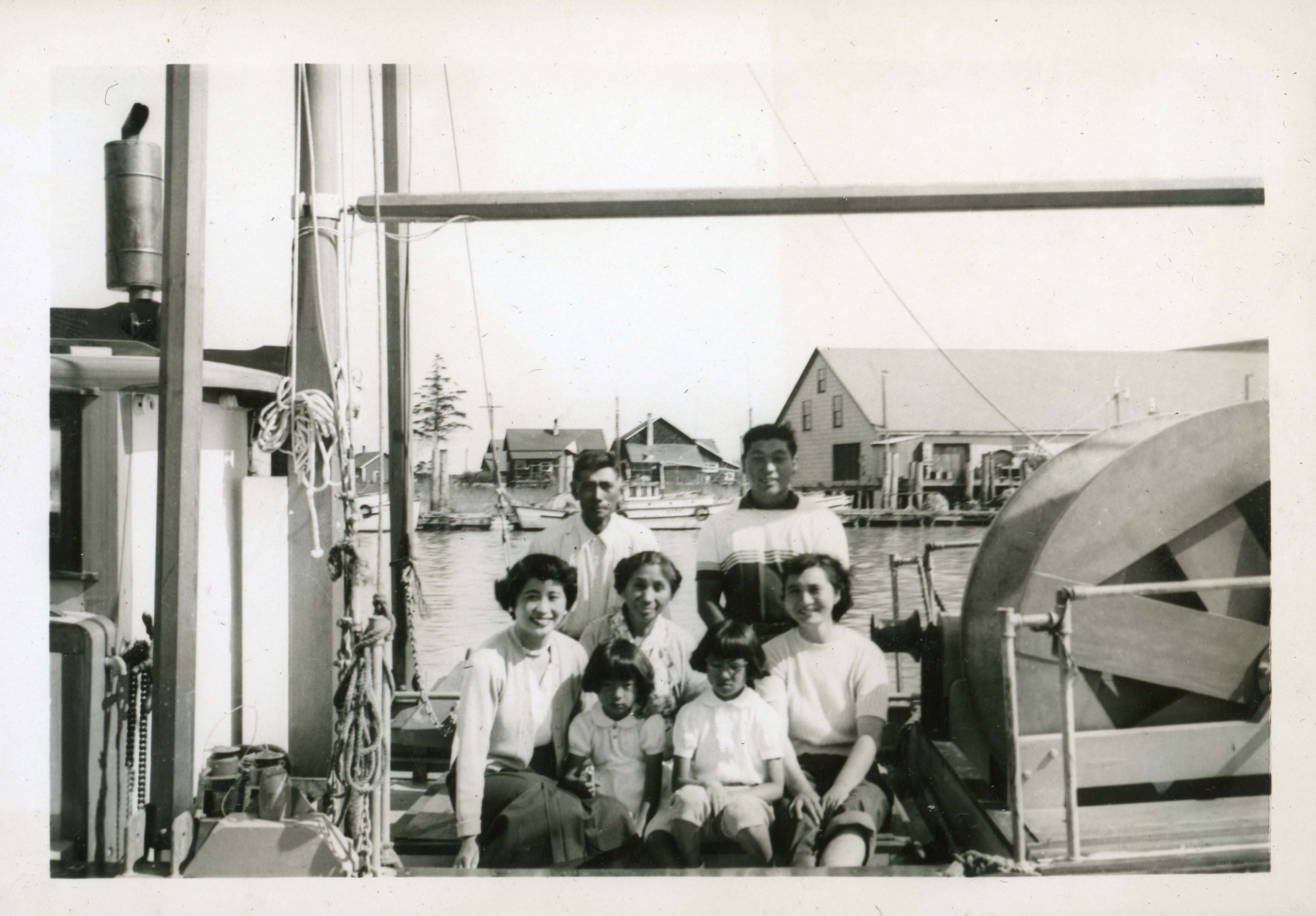
Harada family, between 1952 and 1957. From left to right, back row: Eikichi Harada and Eiichi Harada. Middle row: Junko (June) Ohiri, Tamae Harada and Akiko Harada. Front row: Linda Harada and Jeanne Harada. City of Richmond Archives photograph 2023 13 1 120.
The City of Richmond Archives is pleased to present an exhibit curated by Anouska and Jeanne Ryan featuring images from the Harada family photograph albums. The exhibit presents 14 carefully selected photographs grouped into four general categories: (1) Early 1900s Japanese Canadian Fishing Community; (2) Forced Displacement; (3) Rebuilding Community; and (4) New Beginnings. The exhibit can be viewed in person at the City of Richmond Archives entrance or online here.
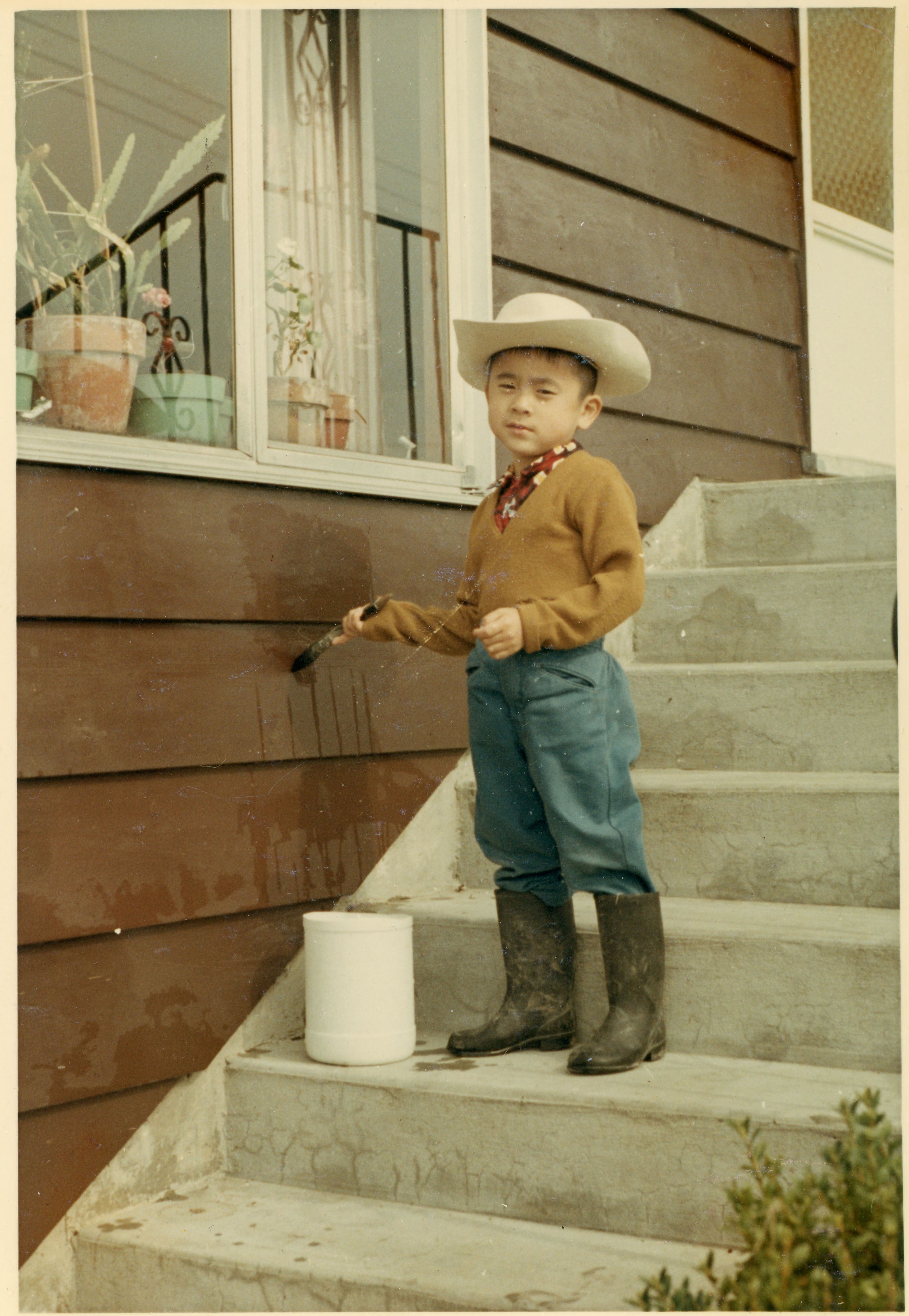
Glen Harada, 1968 at the Harada family home on Monteith Road, Steveston. City of Richmond Archives photograph 2023 13 10 178.
The Harada family photographs are incredibly significant. Documenting multiple generations of the Harada extended family, as well as friends and workmates, these photographic records pay tribute to the strength and resilience of the Japanese Canadian community. The digitized records can be searched on the City of Richmond Archives “Search Photographs” page here.
Credits
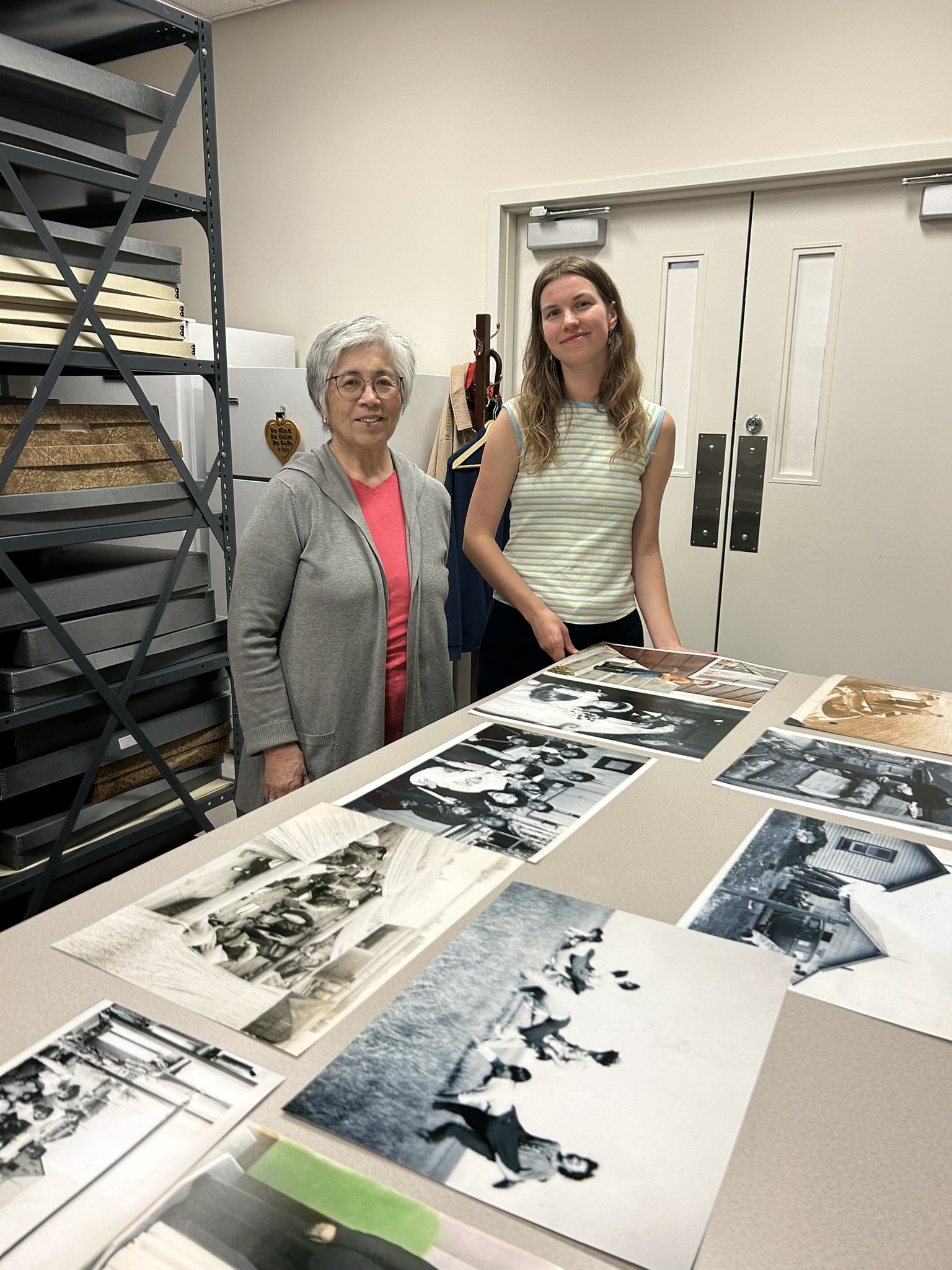
Jeanne Ryan and Anouska Kirby. City of Richmond Archives photograph.
Physical and online exhibition curated by Anouska Kirby and Jeanne Harada.
Photograph digitization by Bev Boyd.
The work of processing and describing the Harada family photographs was made possible with gratitude to the late Geraldine (Dody) Wray and family. Dody was a long-time member and director on the board of the Friends of the Richmond Archives (FOTRA). Her generous bequest to FOTRA, along with a Young Canada Works Building Careers in Heritage grant made the project a reality.
Richmond has a long and rich history of Japanese immigration and settlement. Various places around Richmond, Sea Island, Don Island and, in particular, Steveston were areas where Japanese immigrants lived, worked, raised families and contributed to the diverse cultural blend of our city.
Steveston looking west along Moncton Street from No.1 Road around 1940. The majority of the businesses along this street were operated by Japanese-Canadian entrepreneurs at the time. City of Richmond Archives photograph RCF 274.
Japanese immigrants (Nikkei) arrived in Steveston around the time that the English Cannery opened in 1882 and by the 1900s made up a large portion of the Steveston population. Mostly male and mostly fishermen, they were accommodated in bunkhouses built by the canneries. During the fishing season Japanese “Bosses,” who had control of twenty or thirty boats, would negotiate contracts with the canneries for them and take care of their needs such as food, clothing and other services in return for a percentage of their wages.
This image taken on November 22, 1936 shows members of the Japanese community gathered outside the Japanese Buddhist Mission on First Avenue to commemorate the ceremony of “Putting in the Buddha.” City of Richmond Archives photograph 1995 3 1.
Although the original intention of many of the men was to return to Japan after working in Canada, many decided to stay permanently. Some returned to Japan to find wives, others had their families back home arrange marriages with suitable women, the so-called “Picture Brides”. Bunkhouses were unsuitable for married couples, so canneries built small houses to accommodate families.
A group of Japanese girls pose for a picture in traditional May Day dress outside the Steveston Japanese School ca. 1926. City of Richmond Archives photograph 1978 1 36.
The Nikkei population grew, the men fishing and their wives working in the canneries and raising families. They diversified, expanding into boatbuilding, buying property, farming and starting businesses. People joined Faith communities, formed sports teams and created a rich community life.
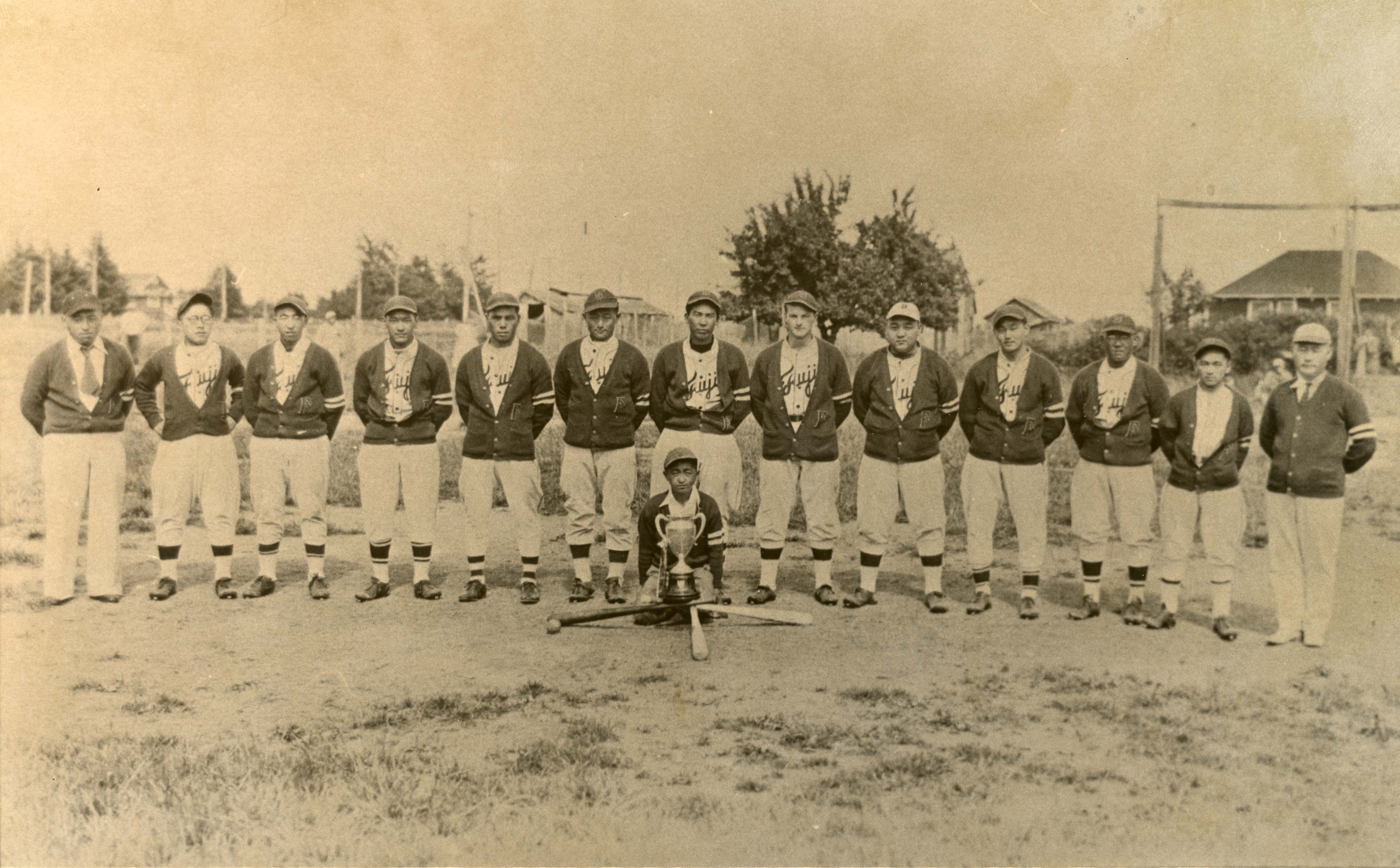
The Steveston Fuji baseball team played in the Vancouver Japanese League with the Asahi Giants, Powell Drugs and Union Fish teams. City of Richmond Archives photograph 1977 7 12.
Contending with discrimination and exclusion, The Japanese Fishermen’s Benevolent Society was formed in 1897 to protect the interests of the Nikkei fishermen and the community, A 1906 decision by the Richmond School Board to ban children of non-property owners effectively deprived most of the Nikkei children of an education and resulted in the construction of the Steveston Japanese School. To ensure that the health needs of the community were met, the Japanese Fishermen’s Hospital was built, Richmond’s first.
The Japanese Fishermen’s Hospital on No.1 Road in Steveston, ca. 1915. City of Richmond Archives photograph 2006 39 47.
By the 1930s the Japanese population had grown to account for two-thirds to three quarters of the total population of Steveston, approximately 3500 people. Nikkei owned businesses and stores of every description lined Moncton Street from No.1 Road to Third Avenue. Grocery stores, meat and fish markets, hardware and general stores, a bicycle shop, the River Garage, a billiard hall and clothing stores operated by Nikkei entrepreneurs could be found on both sides of the street. Five confectioneries (candy and chocolate shops) satisfied those with a craving for sweets.
The Mukai Confectionary stood at the corner of Moncton Street and No.1 Road and had a confectionary in the front, a pool hall in the back and ten bedrooms upstairs. It also housed a taxi business and had space used by a dentist who came to Steveston once a week. The building was lost in a fire sometime between 1942 and 1951 but the location is still known as Mukai Corner. City of Richmond Archives photograph RCF 272.
The density of the Japanese Canadian population in Steveston is very obvious when looking at the meticulous research done by Haruji (Harry) Mizuta who, using maps from the 1936 Waterworks Atlas of Richmond, marked the locations of Nikkei homes and businesses from the Scottish Canadian Cannery in what is now Garry Point Park to the Winch Cannery at the foot of No.2 Road. This is especially true with the map he marked as #30-2 1930s – Gulf of Georgia Cannery and Old Steveston Town – Steveston BC.
This map, created by Haruji (Harry) Mizuta illustrates the quantity of Nikkei homes and businesses, marked by blue and red dots, in Steveston during the Thirties. City of Richmond Archives Reference Files.
The growth of “Japan Town” came to a sudden halt with the forced relocation of Japanese Canadians from the Coast of British Columbia. Families were uprooted, stripped of their property and moved to areas where they had to start over and rebuild their lives, often in harsh circumstances. Steveston became a virtual ghost town with so many of its residents suddenly gone. In 1949 when Nikkei families were permitted to come back to the coast, those who decided to return rebuilt their lives and community again. Today the legacy of Japan Town is a cherished and honoured part of Steveston’s and Richmond’s history.
Haruji (Harry) Mizuta’s research shows some of the businesses and business owners along Moncton Street during the 1930s. City of Richmond Archives Reference files.
Cannery workers and their families at Vancouver Cannery, Sea Island, on the occasion of the visit by the Japanese Consul and his wife, 1912. City of Richmond Archives Photograph RCF 185
Many people are surprised to learn of the significant presence of Japanese Canadians on Sea Island prior to World War II.
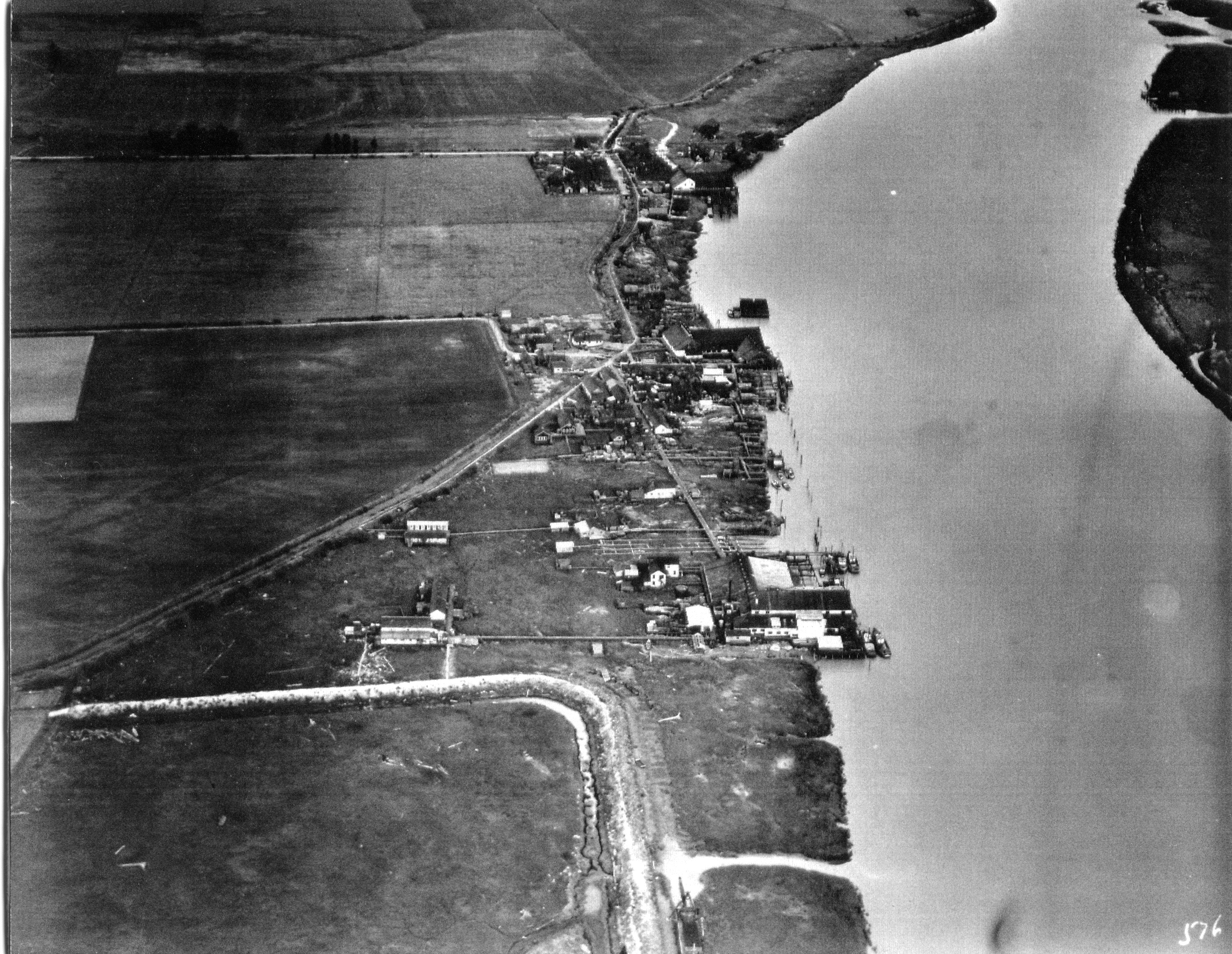
Acme Cannery (top) and Vancouver Cannery (bottom) on Sea Island, ca. 1932. City of Richmond Archives Photograph 1985 166 10
Beginning in the early years of the last century, a number of Japanese moved to Richmond to work as fishermen and cannery workers for Vancouver Cannery and Acme Cannery, both located on the southwest corner of Sea Island.
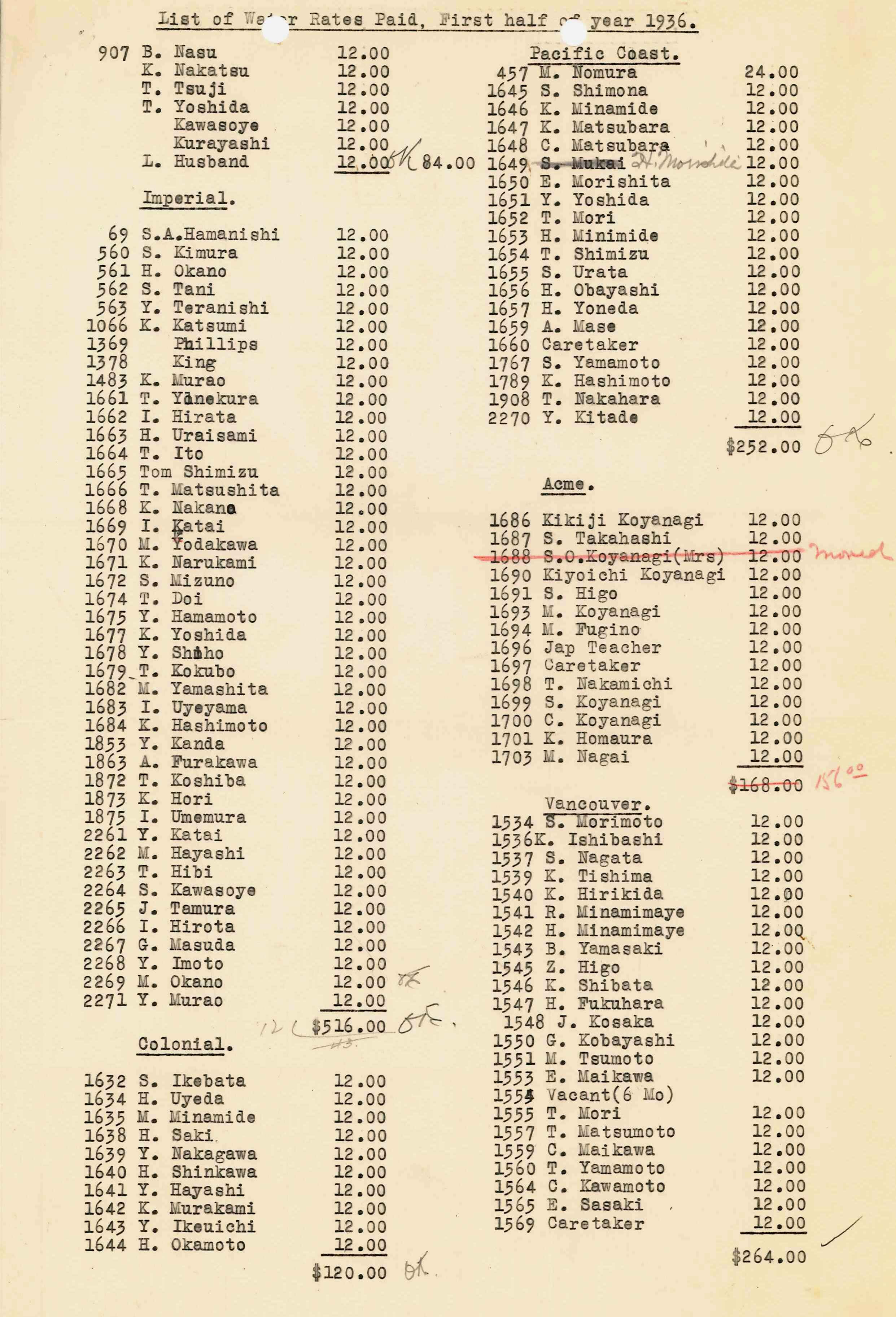
List of families in cannery-owned housing, 1936. City of Richmond Archives MR 6, File 603-3
The majority of the workers and their families lived in company-owned housing in close proximity to the canneries themselves.
The houses were built on both sides of the dyke running through the cannery properties.
A school, the Sea Island Japanese School, was established at Vancouver Cannery for the sons and daughters of workers of both canneries.
Sea Island Japanese School, Div. 2, 1929. City of Richmond Archives Photograph 1985 39 65
Sea Island Hurricanes, ca. 1938. City of Richmond Archives Photograph 2004 2 1
A sense of identity and a spirit of cooperation and self-sufficiency developed. Sports teams like the Sea Island Hurricanes (aka North Arm Hurricanes) played against lacrosse teams from Steveston and other communities, while groups like the Sea Island Young People’s Society organized a variety of social activities.
Sea Island Young People’s Society on New Year’s Day, 1939. City of Richmond Archives Photograph 2013 8 1
World War II, however, marked the end of the community on Sea Island, with the evacuation of Japanese Canadians in 1942 to camps in the interior of BC or to farms in Alberta.
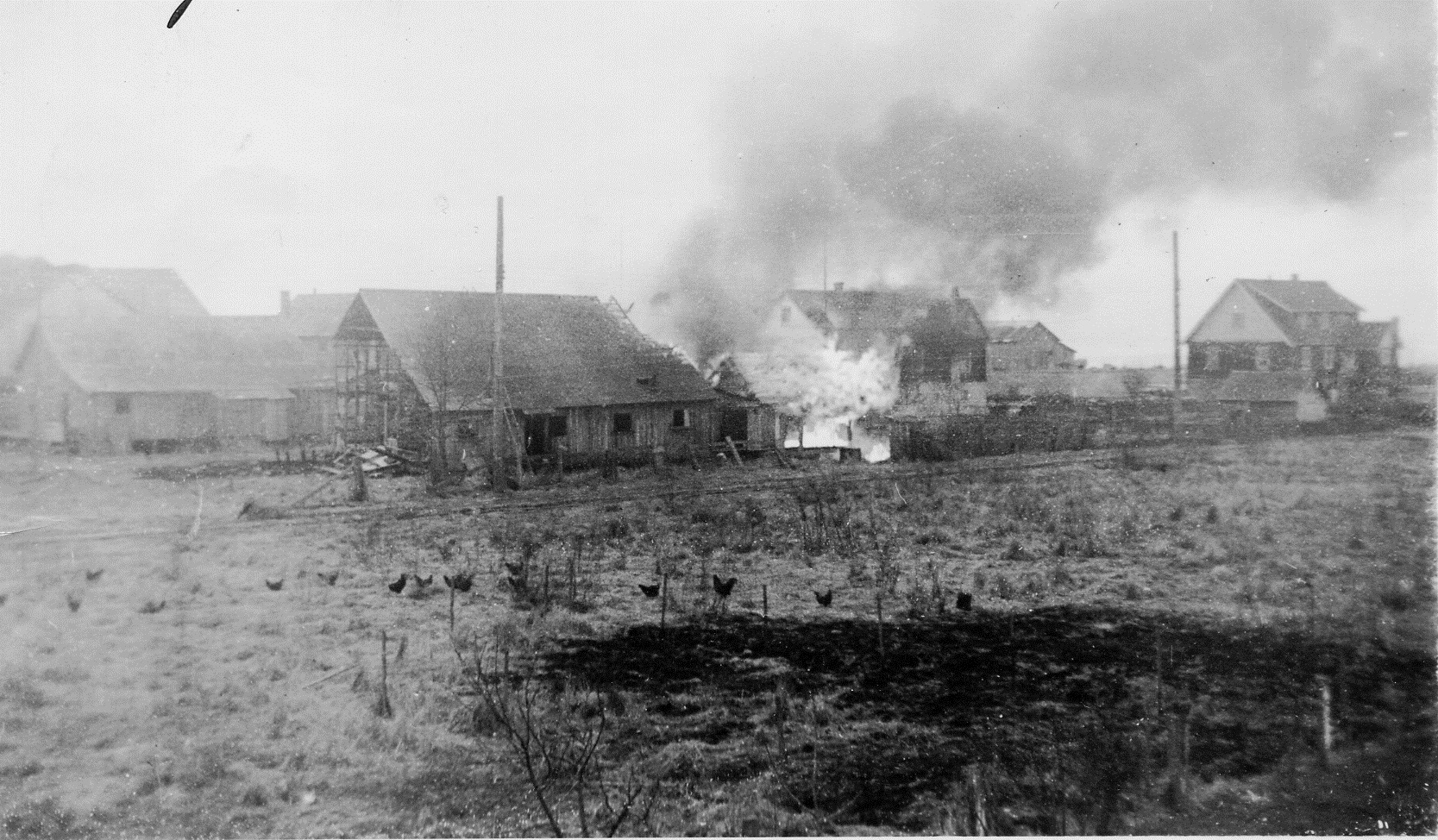
The canneries were closed and the cannery-owned housing was destroyed.
The burning of Japanese-Canadian houses at Acme Cannery. City of Richmond Archives Photograph 2000 15 2
When Japanese Canadians were allowed to return to the BC coast in 1949, a number of former Sea Island residents made their way back to Richmond and settled in the Steveston area, where they resumed work in the fishing industry.
Program for the 1983 Reunion. City of Richmond Archives Accession 2014 4
In 1983, a reunion was held for former Japanese-Canadian residents of Sea Island, as well as for those who had lived and worked at nearby Terra Nova and Celtic Canneries. The success of the celebration demonstrated how the spirit of community developed in the pre-war years had never been lost.







 Outside the Box - The Richmond Archives Blog
You must be logged in to post a comment.