Cannery Row – The Middle Arm Canneries

The salmon canning industry in Steveston is well known and documented, with several books written detailing the history of Steveston’s Cannery Row and the more than twenty canneries which were built along the one and one half mile waterfront of the South Arm of the Fraser River to its mouth. There was, however, a lesser known stretch of canneries in Richmond. These canneries along the Middle Arm of the Fraser, while being fewer and farther removed from the boom town of Steveston, provided work and accommodation for people working in the fishing industry. Here are some of their stories.
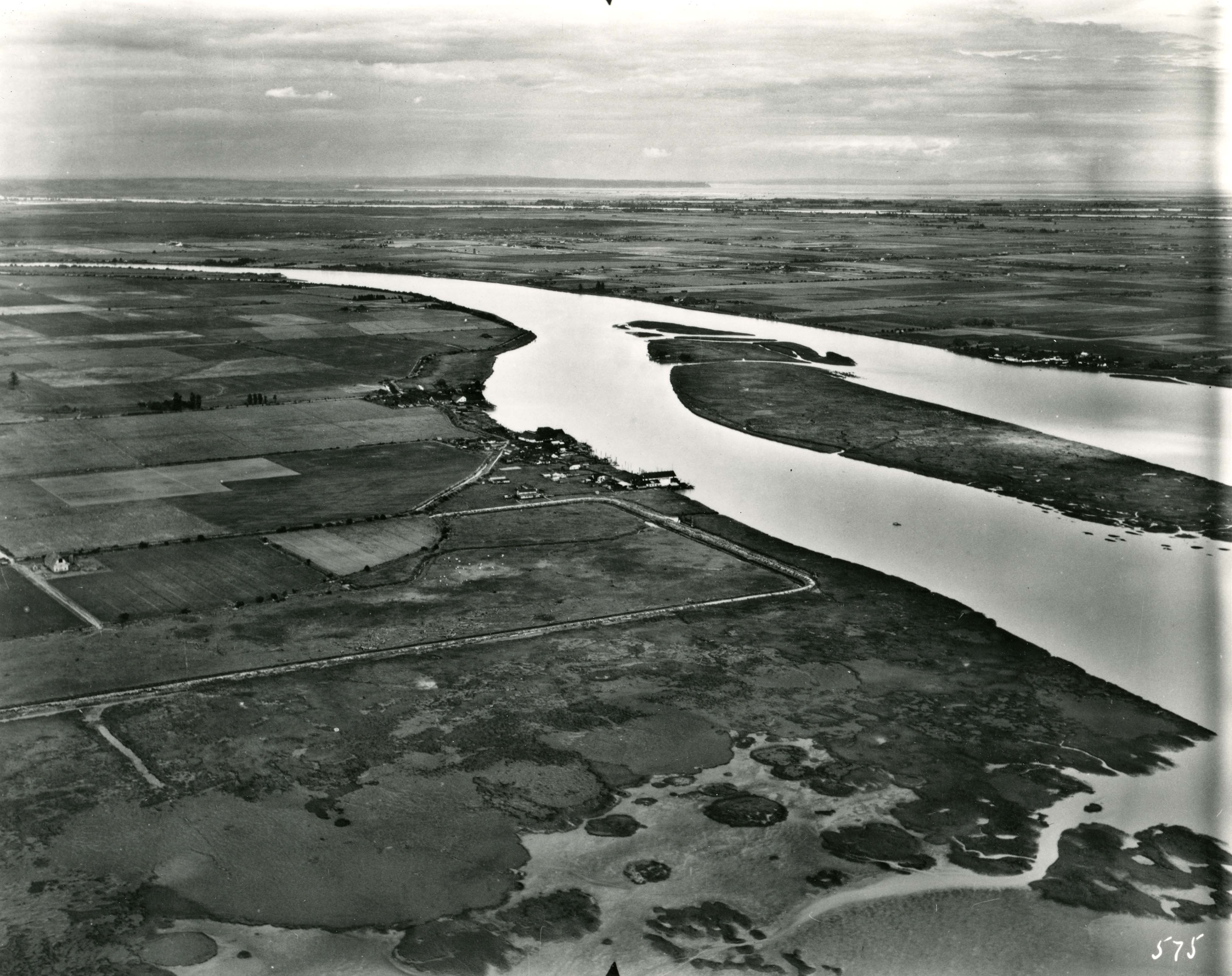
This aerial view of the Middle Arm of the Fraser River (ca. 1929) shows the south-west shore of Sea Island and, looking closely, six of the Middle Arm Canneries. On the Sea Island shore the Fraser River, Vancouver and Acme Canneries are visible. On Swishwash Island where a channel cuts through, the pilings and a building from the Sea Island Cannery can be seen. Across the river on Lulu Island is the Terra Nova Cannery and away in the distance on the tip of Dinsmore Island the roofline of the Dinsmore Cannery can just be made out. City of Richmond Archives photograph 1985 166 5.

South-west Sea Island

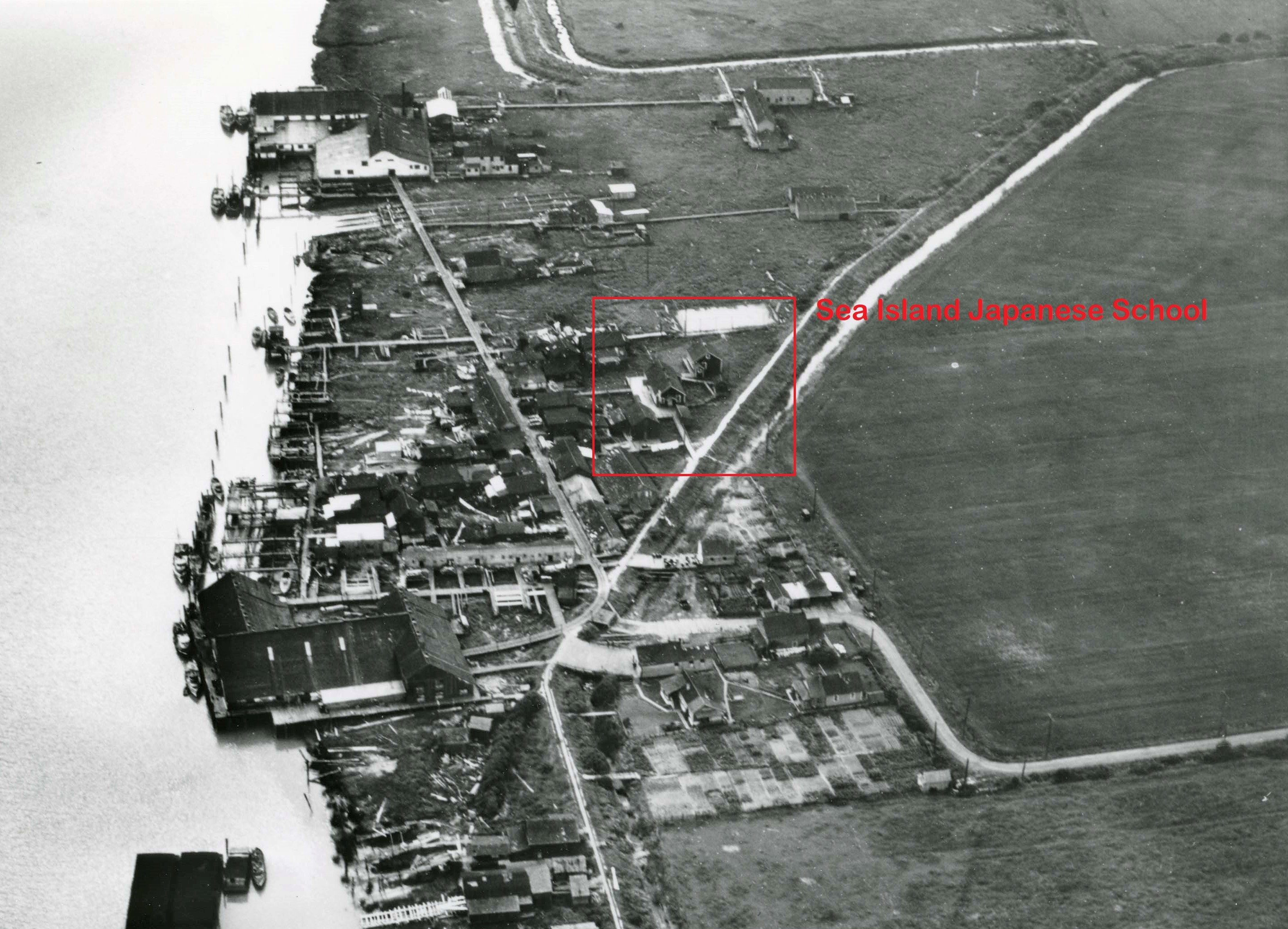
Three canneries stood along the south-west shore of Sea Island, and a fourth just across the channel from them. The Fraser River, Vancouver, Acme and Sea Island Canneries were all built in the 1890s. Company-owned housing for cannery workers, fishermen and their families was built along both sides of the dyke running through the cannery properties. Boarding houses for single migrant workers were provided and often temporary villages, built on the dyke close to the cannery, were established by seasonal Indigenous workers. This group of canneries became home to a large, tight knit community of mostly Japanese Canadian workers and fishermen who settled in the cannery housing and utilized the cannery docks and facilities even after salmon canning stopped in those locations. The Sea Island Japanese School, was established at Vancouver Cannery for the children of workers and resulting in community spirit, sports teams and social groups. Boat builders plied their trade and other industries connected to the fishing industry flourished. The forced relocation of Japanese Canadians in 1942 marked the end of the community and most of the buildings were razed.

Three canneries were built along the south-west shore of Sea Island, the Fraser River Cannery (bottom), the Vancouver Cannery (Middle) and the Acme Cannery (Top) (ca. 1930). The Fraser River and Vancouver Canneries were purchased by Vancouver Cannery Limited in 1914 and became known simply as the Vancouver Cannery. These canneries were all connected by a wooden boardwalk allowing easy access to all the buildings and dwellings in the community. City of Richmond Archives photograph 1985 166 10.

Fraser River Cannery

The Fraser River Cannery was located on the south west shore of Sea Island and was the closest of the Middle Arm canneries to the mouth of the river. Built in 1896 or 1897 by McPherson & Hickey, the cannery had a sockeye pack of 3500 cases for 1898, according to a report by the Vancouver Province newspaper. It was sold to the Canadian Canning Company in 1899 and was then subsequently purchased by Gosse-Millerd Packing Company (Vancouver Cannery Limited) in 1914. The facility was equipped with machinery for manufacturing cans and was capable of supplying all five of the company’s plants, located at Sea Island, Rivers Inlet, Bella Bella, Skeena River and the west coast of Vancouver Island. Having been absorbed into Vancouver Cannery Limited, the Fraser River Cannery lost its separate identity, becoming part of the Vancouver Cannery complex.

The former Fraser River Cannery in 1912, just before being absorbed into the Vancouver Cannery. The can making machinery inside could supply all five of the Gosse-Millerd Plants. Note the barrels along the roof used for fire protection. City of Richmond Archives photograph 1988 37 6

Vancouver Cannery

The Vancouver cannery complex is shown here, ca. 1930, showing the former Fraser River Cannery (top left), the Vancouver Cannery (bottom left) and cannery buildings and houses. The Sea Island Japanese School is shown outlined in red. City of Richmond Archives cropped photograph 1985 166 11.

The Vancouver Cannery was erected in 1896 by the Canadian Canning Company. It was purchased by Vancouver Cannery Limited in 1914, owned by R.C. Gosse and F. Millerd who had also purchased the Fraser River Cannery just to the west. It was subsequently owned by several incarnations of the Gosse – Millerd partnership until 1928 when it was absorbed into British Columbia Packers. The plant stopped operating as a cannery in 1930, but still existed as a fish camp for the Imperial Plant. The cannery equipment was dismantled in 1935-36.
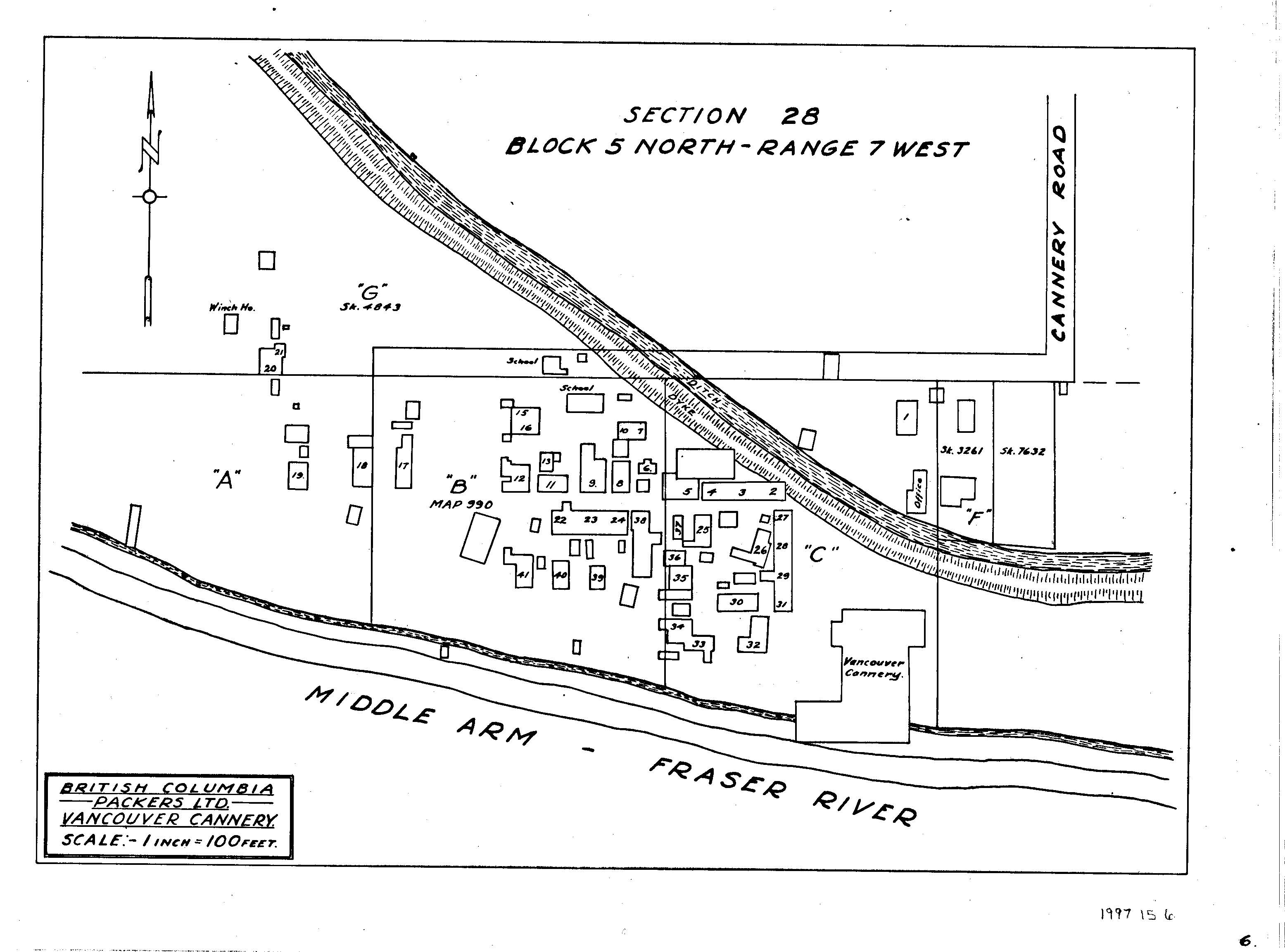
This map from the 1936 Waterworks Atlas shows the locations of buildings at the Vancouver Cannery site, including the Sea Island Japanese School. City of Richmond Archives 1997 15 6.
Class picture of Division 2, Sea Island Japanese School in 1929. City of Richmond Archives photograph 1985 39 65.

Acme Cannery

The Acme Cannery was erected in 1899 by the Acme Canning Company Limited, owned by Jane R. Cassidy and Allan Cameron. In 1902 it was purchased by the British Columbia Packers Association and subsequently by the British Columbia Fishing and Packing Company Ltd. (1914) and British Columbia Packers Ltd (1928) as the company reorganized. Acme operated as a cannery until 1918 when the machinery was removed from the plant. It operated as a Fraser River Camp for the Vancouver Cannery until 1930 and as a fish camp for the Imperial Cannery afterward. It was also the location of Thomas Goulding’s cork mill, the only commercial supplier of cedar fish net floats on the West Coast. In 1946 it was sold to D. Matheson.

This 1936 image from the Waterworks Atlas shows the layout of buildings at the Acme Cannery. City of Richmond Archives 1997 15 7.

Sea Island Cannery – Bon Accord

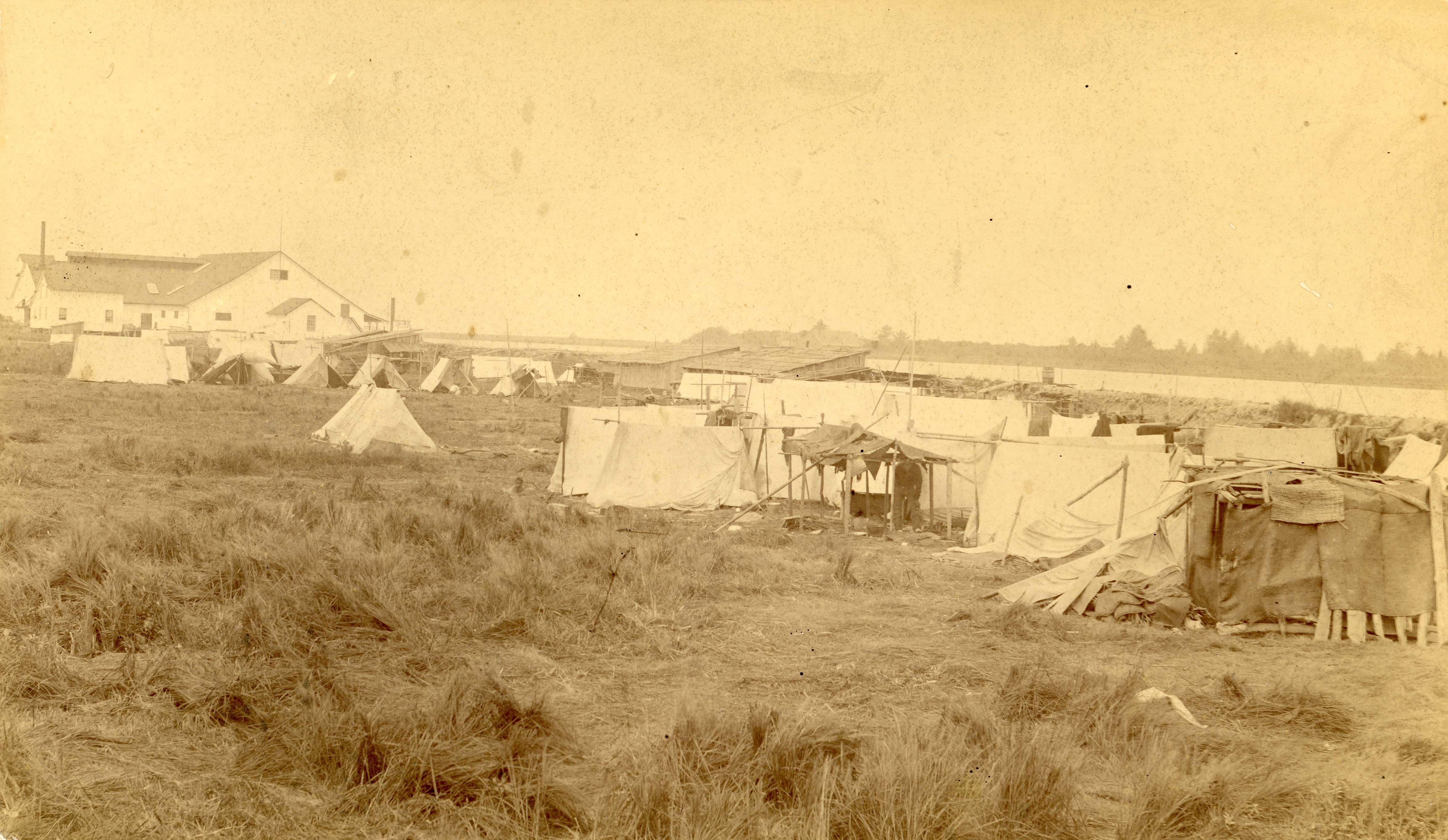
The Sea Island Cannery on Swishwash Island is shown here, ca. 1900. A temporary camp of tents and shacks for workers is set up on the low lying island. City of Richmond Archives photograph 1993 3 1.

Little more than a large sandbar, Swishwash Island was the location of the Sea Island Cannery. Originally built by Alexander Ewen and D.J. Munn in 1890 as the Bon Accord Cannery, its name was changed to avoid confusion with a hatchery of the same name at Port Mann. By all accounts this was a successful cannery, employing 225 workers and held licenses for 18 boats. In its first year of operation it packed 18,225 cases of fish. In 1898 the sockeye pack alone was 8500 cases. The Sea Island Cannery operated profitably for ten years until 1899 when it was severely damaged in a fire. In December 1901 a huge storm and flood caused massive damage to the remaining structures. The property was acquired by BC Packers who abandoned it and sold it off in 1902.
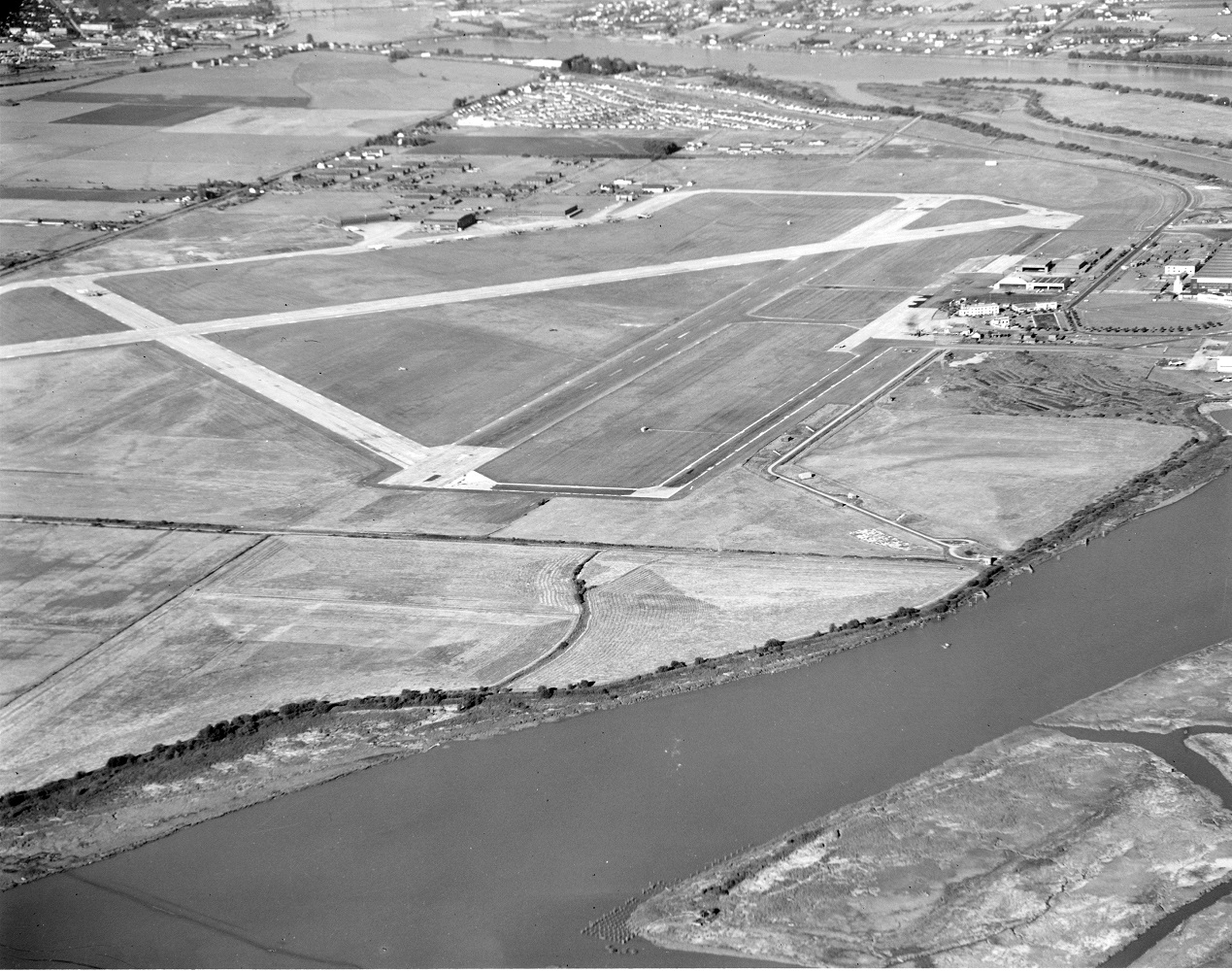
This aerial photograph, ca. 1950, gives a view of the Vancouver Airport, R.C.A.F. base and Burkeville. Pilings from the old Sea Island Cannery are visible on Swishwash Island in the foreground. City of Richmond Archives photograph 1997 5 9.

North-west Lulu Island

The north-west part of Lulu Island, known as Terra Nova, was home to three other canneries, the Labrador Cannery, the Alliance Cannery and the Terra Nova Cannery. All three of these canneries were subjected to the full force of a gale in December 1901 which caused a great deal of damage and, in one case, the complete destruction of the cannery.

Labrador Cannery

There is little information available about the Labrador Cannery. While listed as located at Terra Nova, its exact location and years of operation are not well documented. One of the smaller operations in Richmond, it reported a total pack of about 10,000 cases for the 1901 season. The Labrador Cannery was reported to have been completely destroyed in the early hours of December 26,1901, when gale force winds and extreme high tides breached the dykes along both sides of the North Arm and flooded large areas of Lulu and Sea Islands. The December 27, 1901 Vancouver Daily Province stated that, “The Labrador cannery at Terra Nova was entirely swept away.” “The buildings were smashed and piled up inside the dyke. Logs four feet thick which dashed against the buildings were also carried inside the dyke and leveled the embankment on the way. Nearly all the cannery boats were smashed and put out where dry land will appear when the tide goes out again.”

Alliance Cannery

Built in 1895 by R. Colquhoun’s Alliance Canning Company, the Alliance Cannery was sold to George Wilson in 1901. This cannery was severely damaged in the 1901 storm as well, although not so badly that it could not be restored. The water level rose enough to cover the floors of the cannery buildings, soaking the cans of salmon stored there but not ruining them. In 1902 the cannery was absorbed into the BC Packers Association, closed in 1903 and became part of the Terra Nova Cannery.
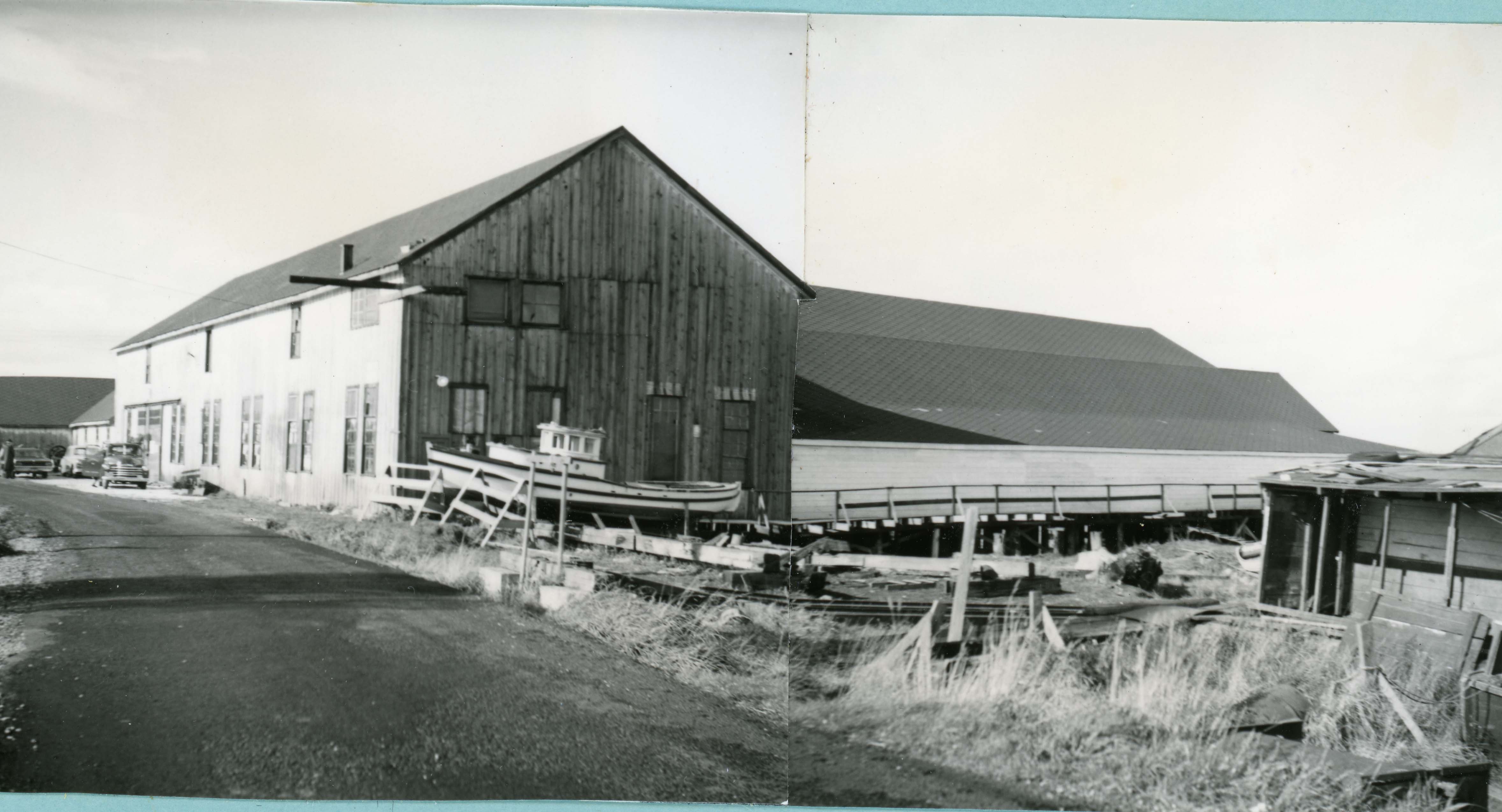
This photo from 1962 shows some of the buildings of the Terra Nova cannery from the dyke. City of Richmond Archives photograph 1985 4 840.

Terra Nova Cannery

The Terra Nova Cannery was built in 1892 by Duncan and John Rowan who formed the Terra Nova Canning Company. They operated the cannery until they sold to the BC Packers Association in 1902. During the December 1901 gale this cannery suffered less damage than the others at Terra Nova but the Japanese boarding house there collapsed trapping several men inside. They were rescued during the height of the storm by other workers and residents of the area with no loss of life. The cannery closed in 1928 but the buildings and docks continued to be used for net storage, moorage and as a fish camp for the Imperial Cannery. The cannery buildings were taken down in 1978.
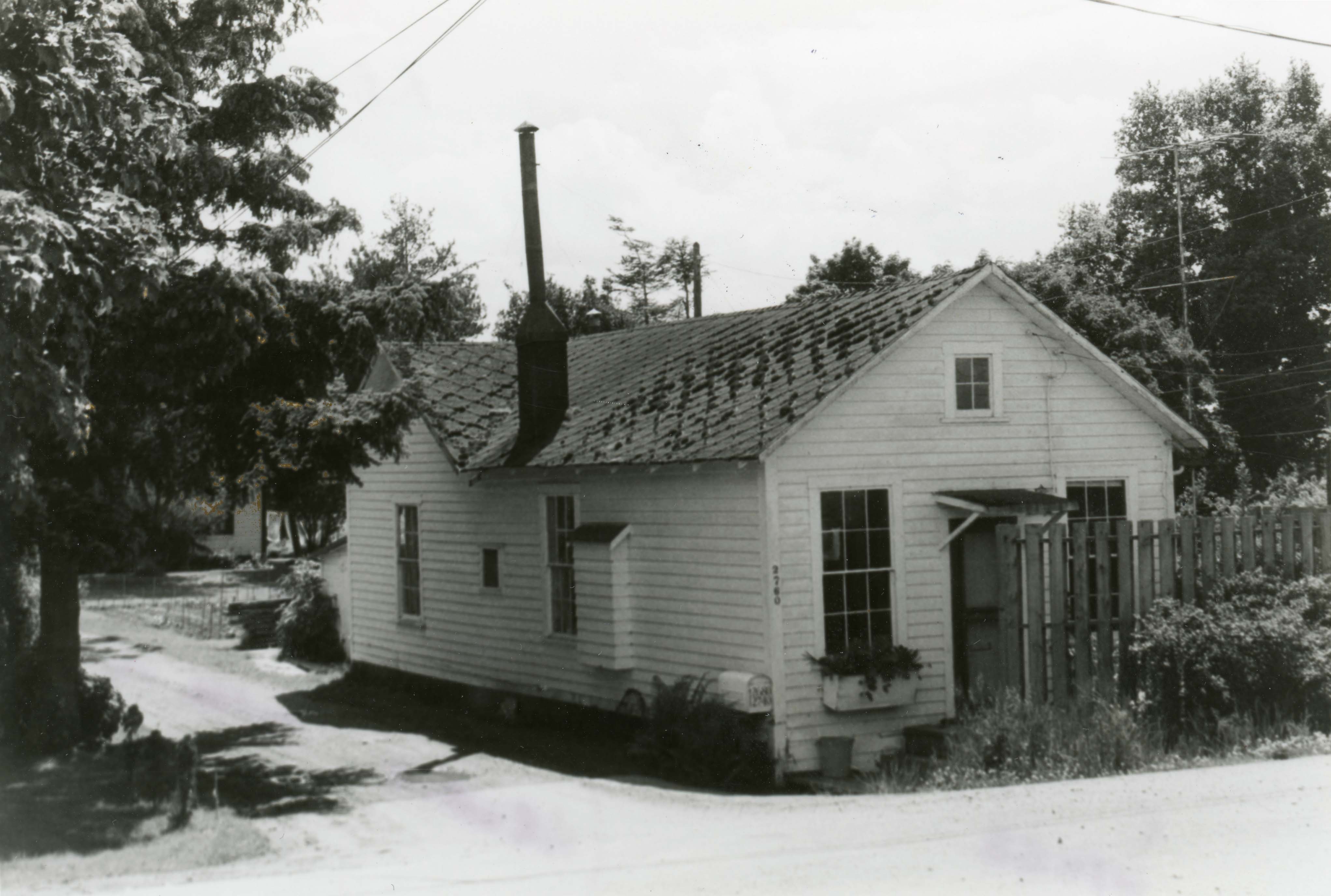
This building was built in 1912 and served as a residence and as a store for the Terra Nova Cannery. It is the last remaining building associated with the cannery. The building is included in the City of Richmond’s Heritage Inventory. City of Richmond Archives photograph 1978 37 66

The Eastern Middle Arm

The final three canneries were spread along the eastern part of the Middle Arm and into the North Arm, each on a different island.

Dinsmore Island Cannery
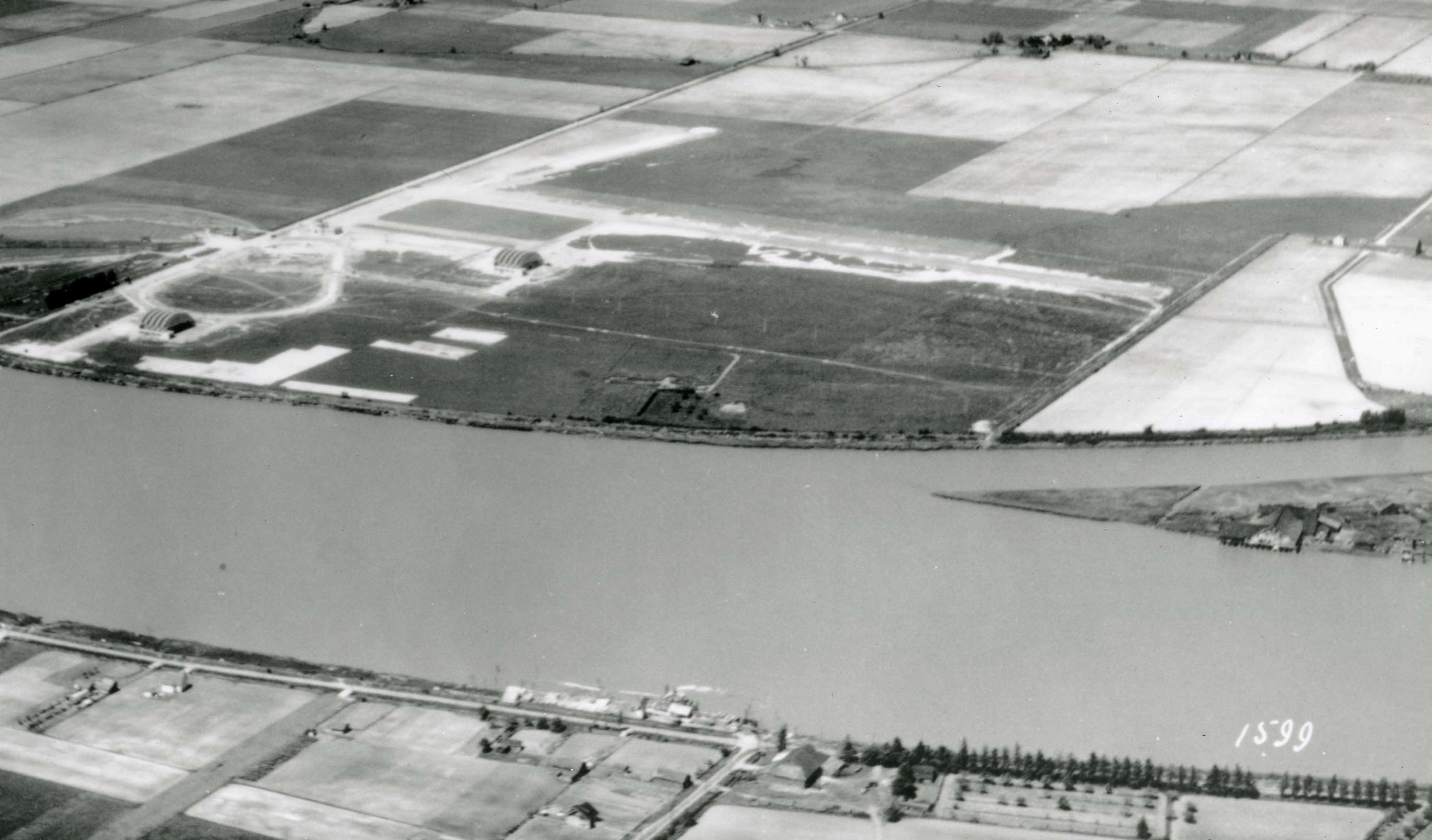
This 1931 aerial view shows the Vancouver Airport on Sea Island under construction and the Dinsmore Island Cannery on Dinsmore Island. City of Richmond Archives photograph 1985 166 18 (cropped)

The Dinsmore Island Cannery was built on Dinsmore Island in 1894 by Richard E. Gosse for the Dinsmore Island Canning Company, run by Michael Brighouse Wilkinson and William McPherson. The Island was named for pioneer John Dinsmore, who farmed the island and was one of the owners of the cannery. The cannery was absorbed into the BC Packers Association in 1902 and operated until 1905, after which it operated every four years during dominant sockeye runs, closing after the 1913 season. The cannery equipment was removed and the property was sold in 1934. Dinsmore Island along with Pheasant Island were absorbed by Sea Island due to infilling with dredging spoils, remembered only in the name of the bridge which connects Gilbert Road to Russ Baker Way.

Provincial Cannery

The Provincial Cannery was built in 1896 on Lulu Island south of the bridge to Sea Island and was operated by the Provincial Packing Company of Norman MacLean, J.W. Sexsmith and R.W. Harris. In 1902 it was absorbed into the BC Packers Association who removed its equipment and sold the property in 1905. In 1906 the location became the home of the Easterbrook Flour mill.

The Provincial Cannery is shown here ca. 1896. City of Richmond Archives photograph 2004 40 4.

The Richmond Cannery

The last cannery was not technically in the Middle Arm but was in Richmond. The Richmond Cannery was located on Richmond Island, between Sea Island and the Vancouver side of the North Arm. It was built by JH Todd and Sons in 1882. The Richmond Cannery operated from 1882 to 1905 when it was shut down. JH Todd renamed their Beaver Cannery in Steveston Richmond Cannery after the original was closed.
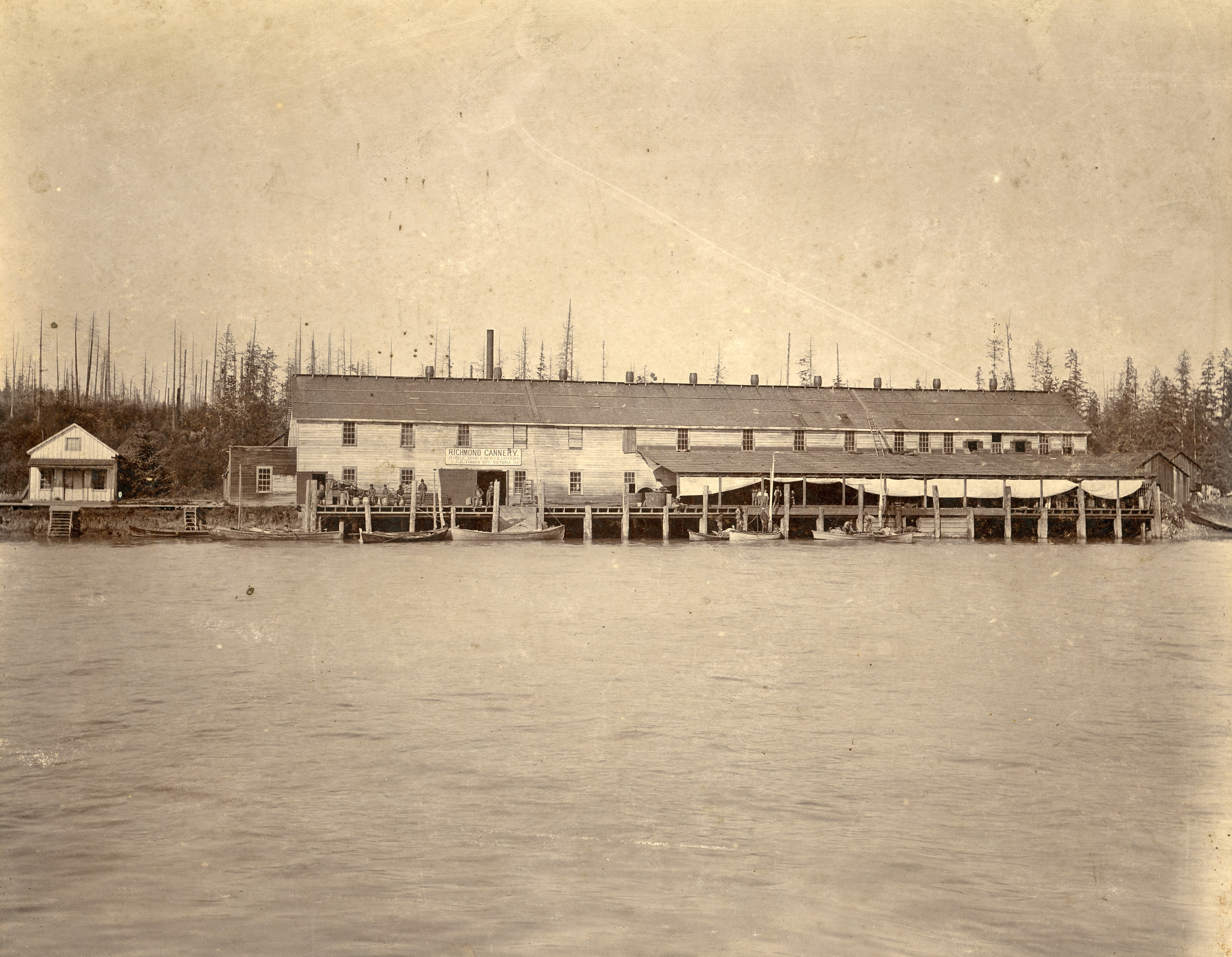
The Richmond Cannery on Richmond Island is shown here, ca. 1900. City of Richmond Archives photograph 1986 57 3.

The canning of fish at the Middle Arm canneries did not last as long as the industry in the South Arm. Built during the rush to exploit the seemingly endless supply of fish during the late 19th Century the realities of the limits of the resource and fierce competition for it resulted in the closure of the canning operations at those locations. However, the maintenance of the facilities at Terra Nova and especially at the Vancouver and Acme Canneries resulted in the growth of a vibrant community which has added to the character of Richmond’s history.

For more about the Japanese Canadian community on Sea Island see https://richmondarchives.ca/2015/01/06/japanese-canadians-on-sea-island/

To learn about Thomas Goulding’s cork mill see https://richmondarchives.ca/2024/02/01/keeping-an-industry-afloat-thomas-gouldings-cork-mill/

Peace Together – Ling Lam and the Hong Wo Store (同和)

Ling Lam 林德調 (City of Richmond Archives accession 2013 52.)

In 1890, a 17 year old boy arrived in Vancouver from China on the ship SS Abyssinia. In Vancouver, Chung Ling Lam* 林德調 studied English at the Chinese Methodist Church and worked in the canneries in Steveston. He started out in business by teaching himself how to bake bread and peddled buns door-to-door around Steveston. In 1895 he bought property and opened a store which became one of those places that embeds itself into a community’s collective memory.

Translating as “Peace Together” or “Living in Harmony”, this sign (to be read from right to left) was located on the wall inside the Hong Wo Store (同和) and is now one of four signs from the store in the Richmond Museum’s collection. (City of Richmond Collection 006.23.20)

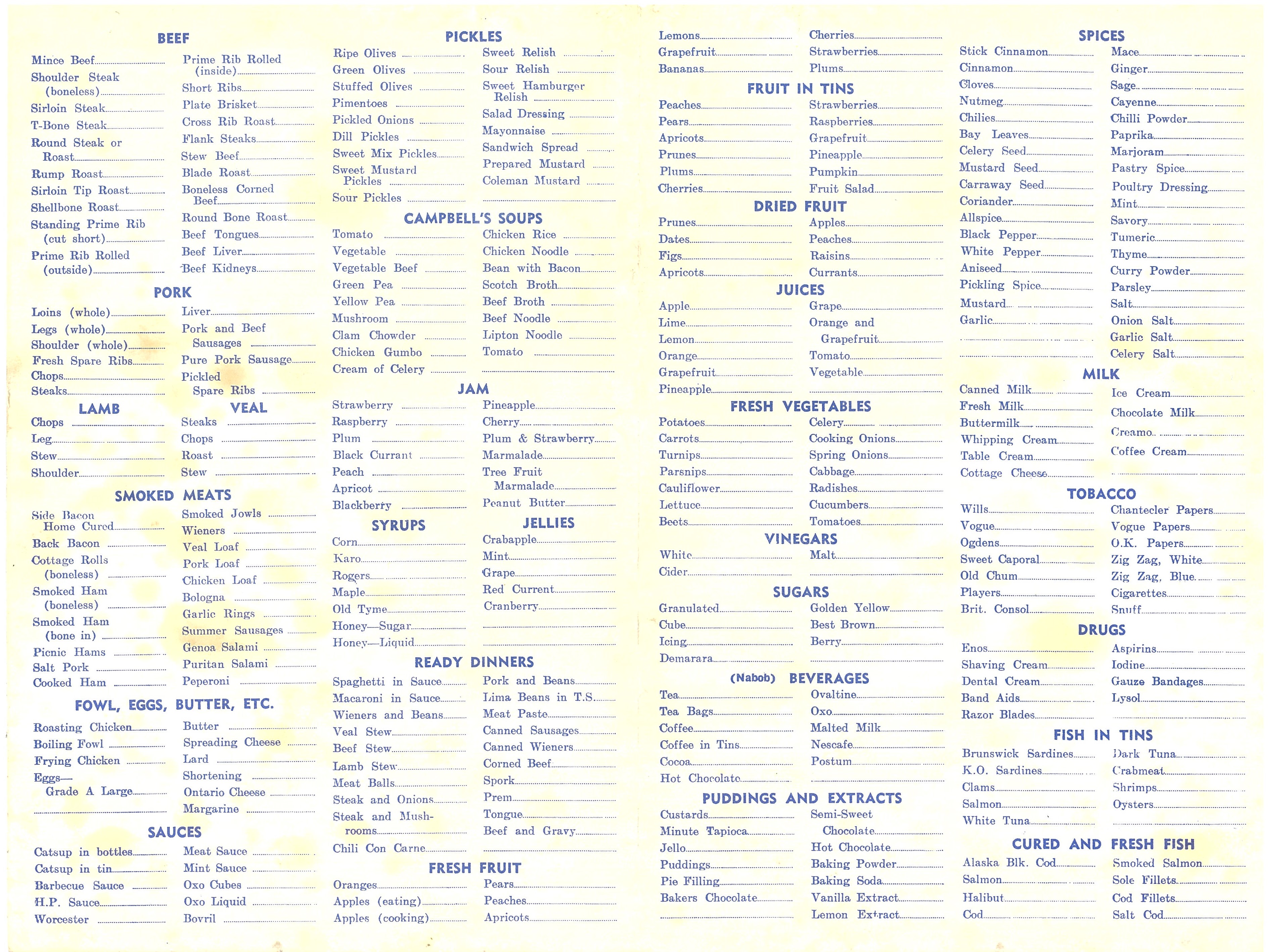
Ling Lam named his business Hong Wo, meaning “Peace Together” or “Living in Harmony”. Located outside the dyke near the foot of Trites Road and near the Nelson Brothers Cannery, the place was a true General Store. If you couldn’t get what you needed at the Hong Wo Store, you probably couldn’t get it anywhere. The building was located adjacent to a wharf where fishboats could tie up and get supplies before the next fisheries opening. To streamline the process an order form was developed and issued to the fisherman who could check off the items they needed and the order would be ready for pickup at the specified time. He sold provisions to fishermen, canneries, boatbuilders, farmers and the general public.

Filling out this order form would ensure that your order would be ready and waiting for you to pick up at the wharf behind the Hong Wo Store. (City of Richmond Archives accession 2013 46.)

The lot that Mr. Lam had built his store on was approximately 235 feet wide by 425 feet long (2.27 acres), and extended over the dyke to the high water line. Mr. Lam also acquired acreage north of that lot which was bordered on the north side by the CN Railway right-of-way and on the east by Trites Road (1.3 acres). Open fields to the north of the railway line (11.03 acres) became his farmlands, another arm of his business.

Property owned by the Hong Wo Company is outlined in red in this image cut from the 1936 Waterworks Atlas. Buildings are identified in the image including the pickle factory, greenhouses, bunkhouses and the store at the lower left. City of Richmond Archives image 1991 40 23 – Waterworks Atlas.
Nestled between cannery buildings, the Hong Wo property can be seen near the centre of this image from 1952. The roofs of Mr. Lam’s greenhouses can be seen near the CN Rail line and the pickle factory near Trites Road. Hong Wo and Company farmland is above the rail line. (City of Richmond Archives photograph 1997 16 92.)

Once Ling Lam had his retail and farming businesses running, he returned to China to get married. His wife, Chew Shee Lam 趙氏, arrived in Canada in 1899 and they lived in an apartment above the store. Around 1908 the store was destroyed by fire and the family moved into a cannery house until the new store was built. The Lam children walked three miles along the dyke into Steveston to go to school. With the business and farm prospering, Mr. Lam moved the family into a house in East Vancouver around 1914.

The Lam Family home in East Vancouver with the family standing on the front porch, ca. 1914. (City of Richmond Archives photograph 1986 17 1.)

To order stock for the store in the early days, Mr. Lam would ride a bike to New Westminster to his supplier’s offices. The order for the season would be delivered by boat to the wharf and shed behind the store. The bicycle was eventually retired when a telephone was hooked up in the store, one of the first in Richmond, and orders could be phoned in.

The Hong Wo Store was a place for people to drop by, have a chat and pick up what they needed. In this photo Jessie Lam Ross, the daughter of Ling Lam, visits with customers under the sign reading “Peace Together” or “Living in Harmony”. (City of Richmond Archives photograph 1987 22 179.)

Around 1914 Mr. Lam began to act as a labour contractor to two canneries, providing seasonal Chinese workers. He also employed the workers on his farms, supplying accommodations, food and a cook for a temporary crew of about 30 during the growing season and harvest. A full time foreman, assistant and truck driver were also employed.

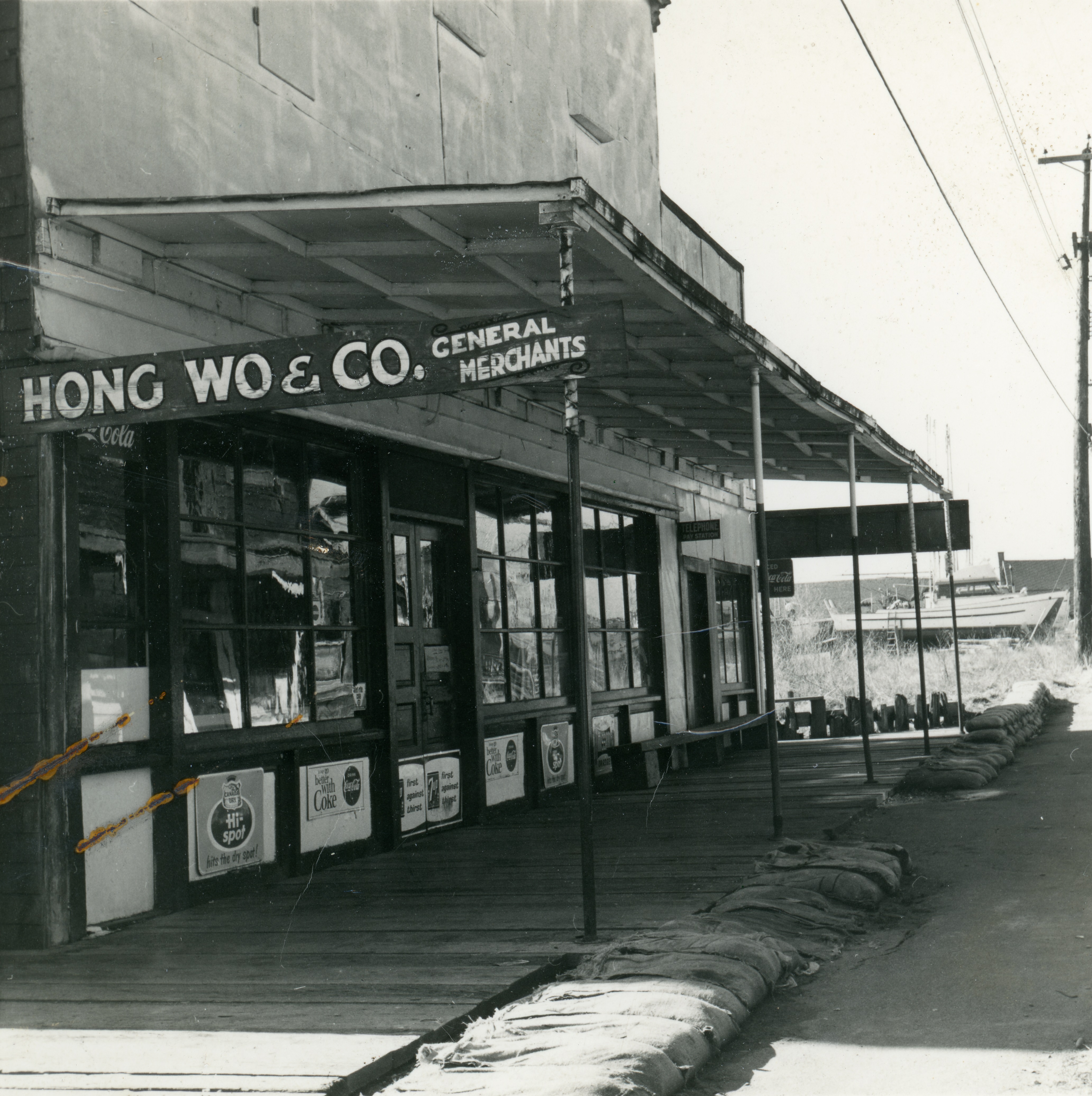
The entrance to the Hong Wo General Store in 1969. The fishboat and cannery buildings in the background show its proximity to the water. (City of Richmond Archives photograph 2006 13 13.)
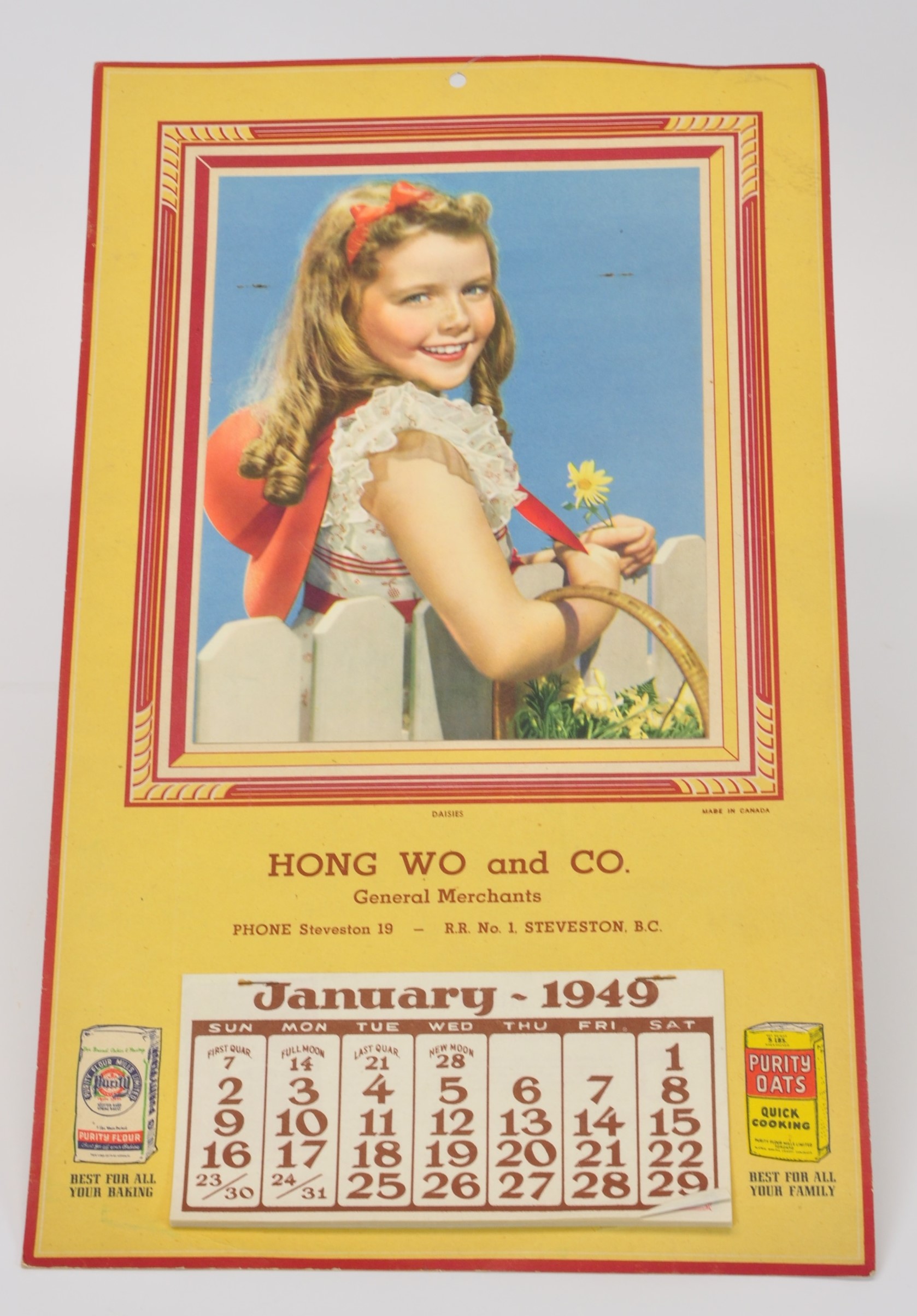
Like many businesses Hong Wo and Co. distributed calendars, like this 1949 example, to their good customers. (City of Richmond Collection 008.4.2)

During its peak, the farms owned by Mr. Lam produced tomatoes from about 30 greenhouses. Potatoes and beans were grown in the open fields along with a large crop of cucumbers for pickles. A complex of buildings was built on the lots south of the rail line. These included a pickle factory, complete with at least 20 eight-foot deep concrete vats for brining, storage buildings and greenhouses. Several bunkhouses were located on the property as well as a cookhouse with a large brick and metal wok and a building where barrels were assembled. Mr. Lam also invented a machine to sort cucumbers for dill pickles, a product which formed a large part of his farming business.

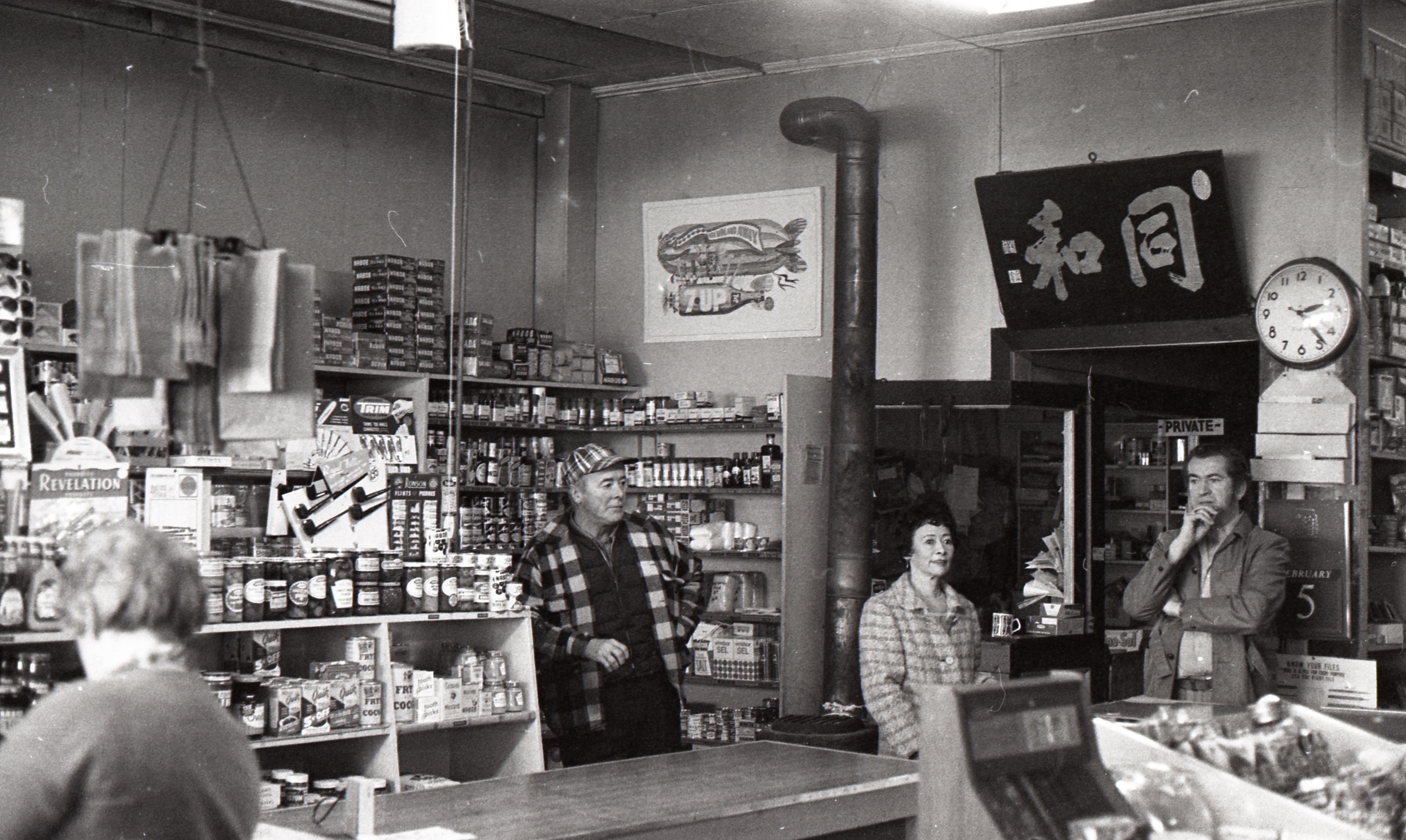
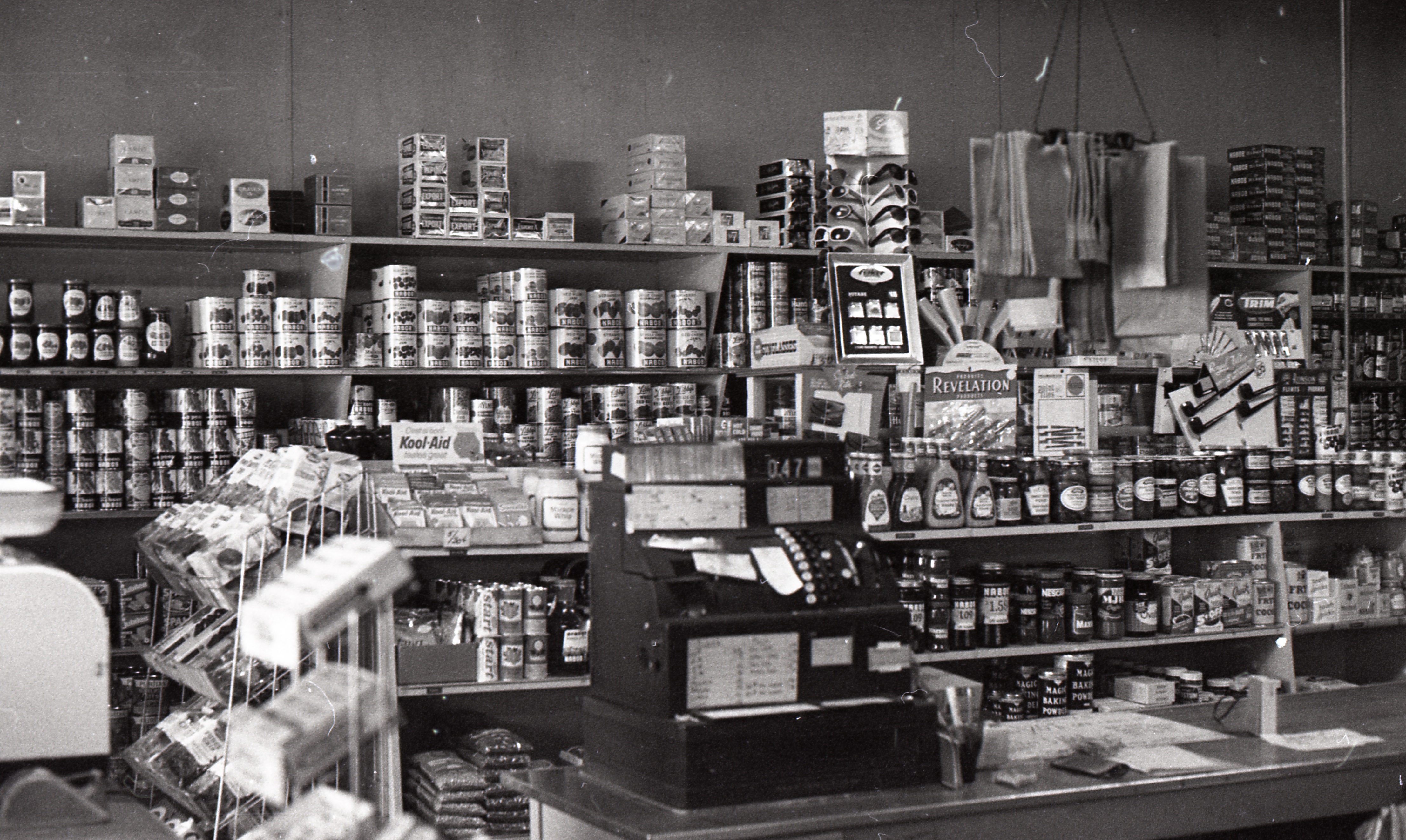
Work clothes, ice cream, instant mashed potatoes, Seven-Up and marine enamel all vie for space on the shelves of the Hong Wo Store. (City of Richmond Archives photograph 1987 22 171B.)

As reported by his daughter Jessie Lam Ross in a 1968 Richmond Review newspaper article, “He was a big name among the Chinese growers. He contracted with Empress, Royal City, Nalley’s, and other companies, and kept about 250 acres under cultivation in Steveston. Day and night he was on the go. He used to haul cukes in and pile them in huge stacks for the dill pickles.”

Looking west along the dyke path between the buildings on the Hong Wo and Co. property in 1967. The store is the last building on the left. (City of Richmond Archives photograph 1994 22 1.)

Ling Lam was also very active in Vancouver’s Chinese community, acting as the chairman of the Chinese Merchant’s Association, serving as an Elder in the Chinese United Church and starting the Chinese Farmer’s Association. He was known as a dedicated, principled, hard working man.

Some of Ling Lam’s buildings were still standing when this photo was taken in 1970. The pickle factory is the building on the far right. (City of Richmond Archives photograph 1987 22 152B.)

“I never saw him in work clothes,” his daughter Jessie remembered,” He always wore a blue serge suit and, in the summer, a shirt and tie and blue serge pants. He only took two holidays in his life, and then it was to go to California to look for seeds.”

Stock on the shelves at the Hong Wo Store. At its peak the store employed as many as 9 clerks. (City of Richmond Archives photograph 1987 22 180.)

After Mr. Lam’s death in 1939, his son George Lam and daughter Jessie Lam Ross took over his business, operating his store until 1971. With the store’s closure the property and buildings on it began to deteriorate, causing concern for the owners of nearby cannery buildings after several fires had been extinguished by the Richmond Fire Department. Efforts by the Steveston Historical Society to have the Hong Wo buildings declared a heritage site proved to be in vain and the store and surrounding buildings were destroyed in 1977.

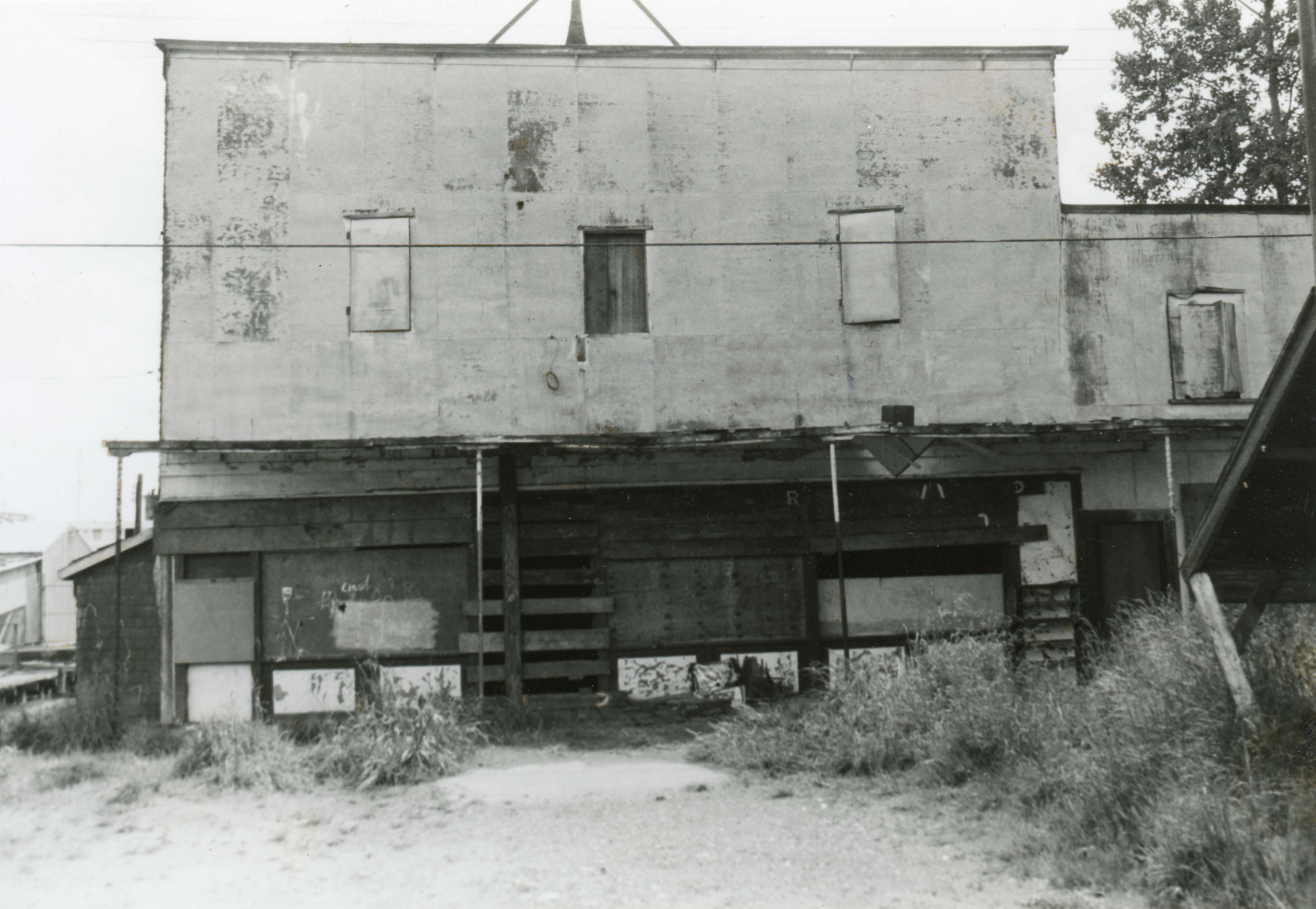
The Hong Wo Store in 1977, boarded up and nearing its demolition. (City of Richmond Archives photograph 1978 37 22.)

While the Hong Wo Store has been gone for nearly half a century its 75 years of service to industry and community make it one of the unique components of Richmond’s history. The store’s story and that of Ling Lam, a self-made man who built a thriving business from humble beginnings, are memorialized in a sign at the corner of Trites Road and Westwater Drive near the location of his pickle factory.

*This blog post follows Western conventions of naming with the given name preceding the surname.

Western Exposures – The BC Packers Photographs by Gar Lunney


The fishing industry has been a mainstay of the industrial and social life of Richmond throughout its history and British Columbia Packers has been at the centre of this industry since the earliest days. In 2001 the company generously donated the contents of its archives to the City of Richmond Archives.

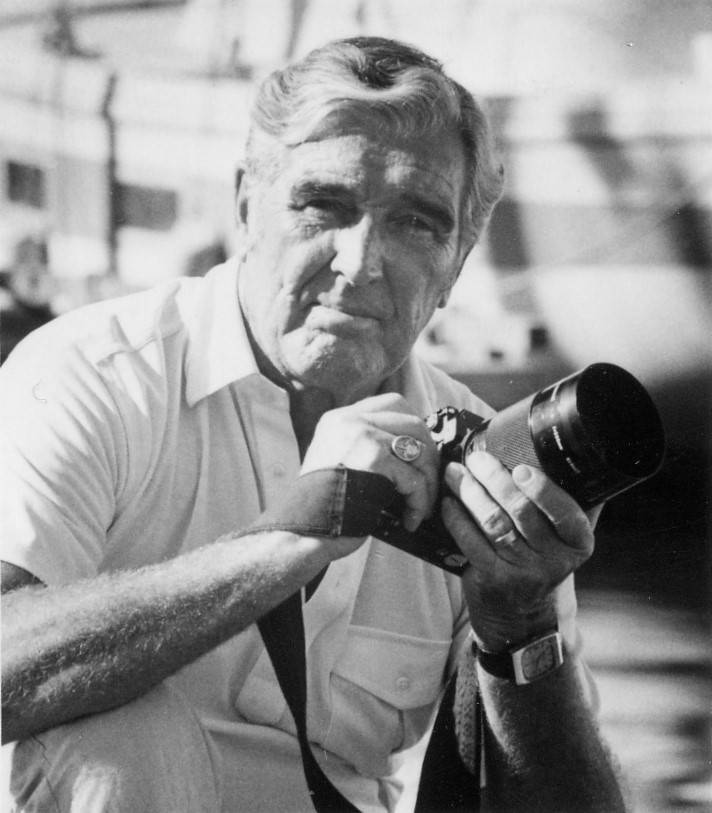
Gar Lunney 1980

Gar Lunney in 1980. City of Richmond Archives photo.

In this collection are a wealth of photographic images documenting the company’s history, including a group of photographs by Gar Lunney, (1920 – 2016), one of Canada’s eminent photographers.

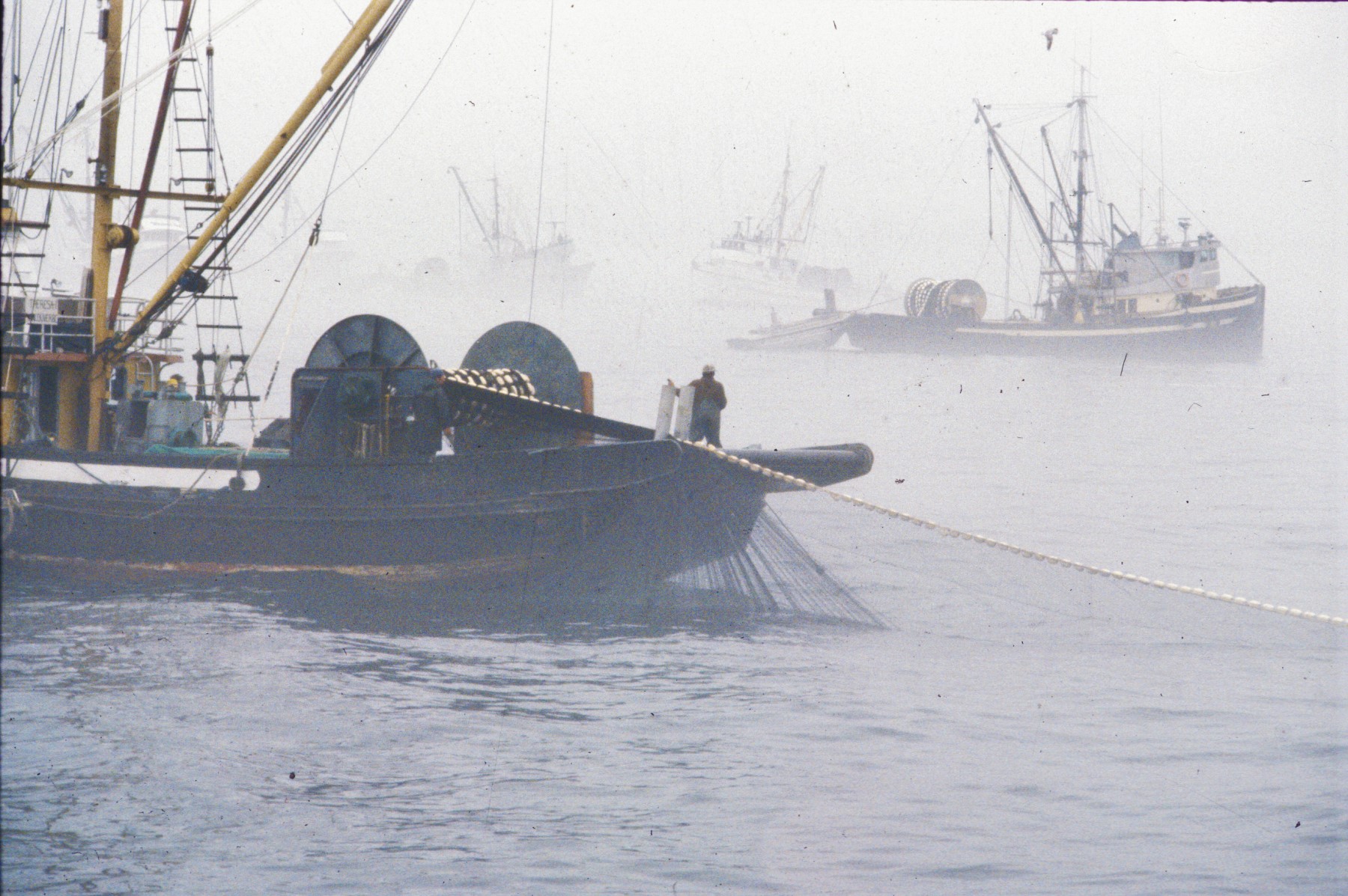
16-Fog

In the background seiners wait to set their nets during the San Juan salmon fishery. In the foreground the boat begins to retrieve its net and the salmon in it. Crews make it all work despite the crowded conditions and poor visibility in the fog. City of Richmond Archives photograph – BC Packers Fonds Series 9.

Gar Lunney began his career with the Winnipeg Tribune before serving with the Royal Canadian Navy during the Second World War.

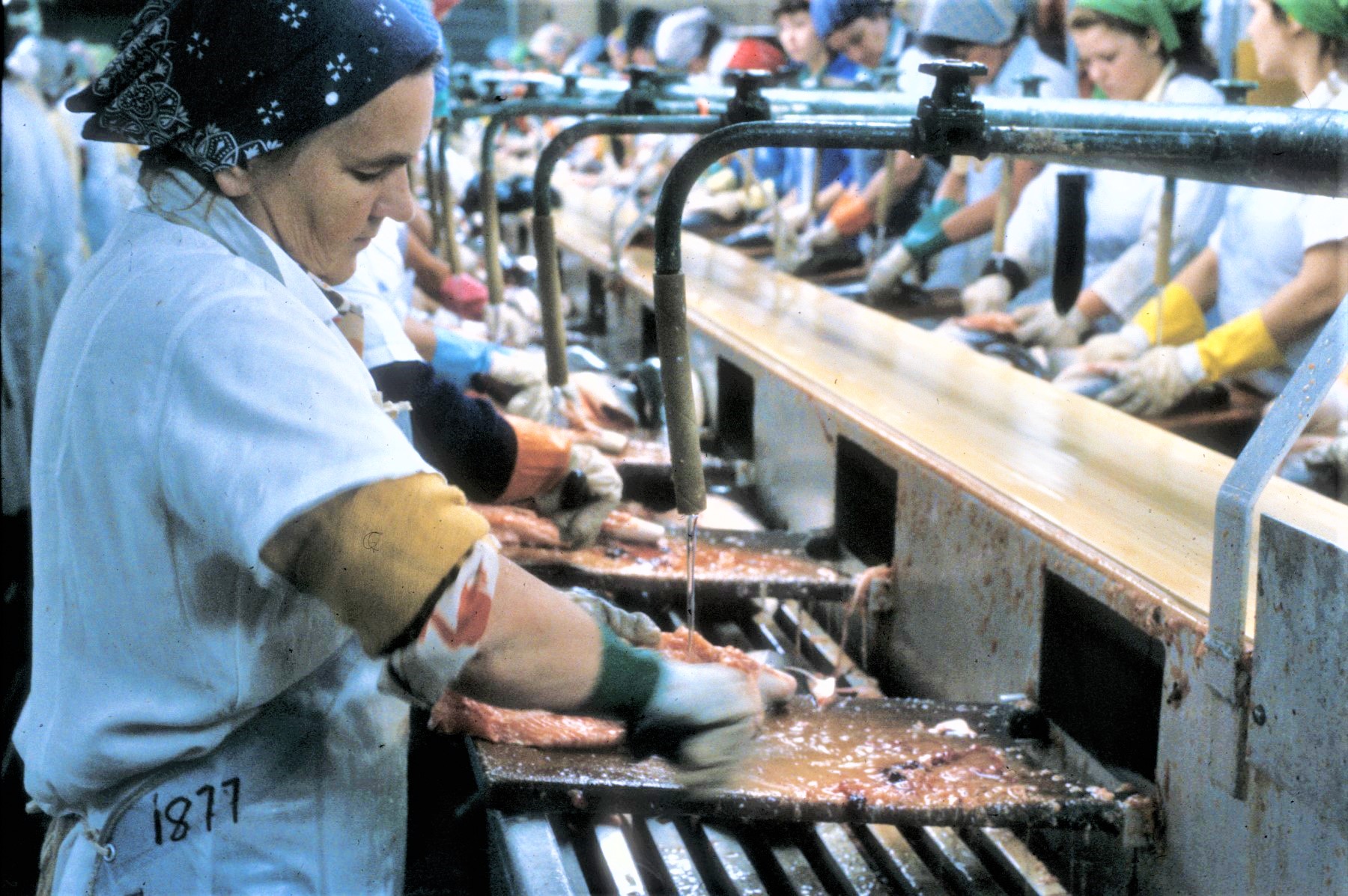
8-Women washing fish

Women at the “Sliming Table” in the BC Packers Imperial Plant in Steveston, washing fish. City of Richmond Archives  photograph – BC Packers Fonds Series 9.

After the War, he joined the Still Photography Division of the National Film Board where he documented Royal tours, took portraits of famous Canadians,and photographed landscapes, industries and people in their everyday lives from every corner of the country.

22-Corkline

A deckhand stands on the stern watching a herring net being pursed and hauled back to the boat. City of Richmond Archives photograph – BC Packers Fonds Series 9.

In 1970 he left Ottawa and moved to Vancouver beginning a career as a freelance photographer specializing in photojournalism and annual reports, thus making a connection with BC Packers Limited.

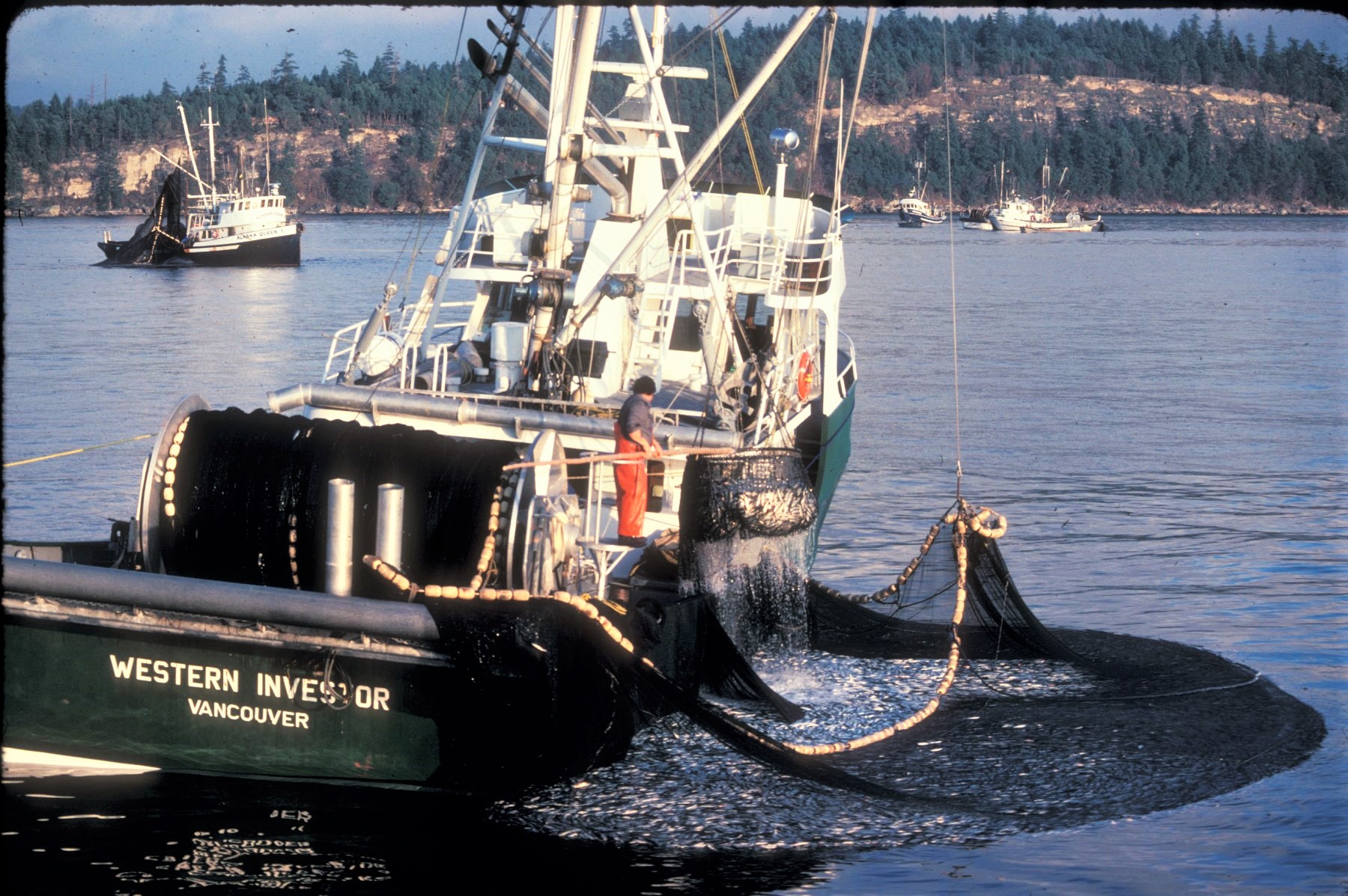
31-Wester Investor with big set

A crewman aboard the Western Investor brails herring out of the net. City of Richmond Archives photograph – BC Packers Fonds Series 9.

The photos taken by Lunney capture an era when fishing was still booming, parking lots at the processing plants were full, and it seemed as if the fishing would never end.

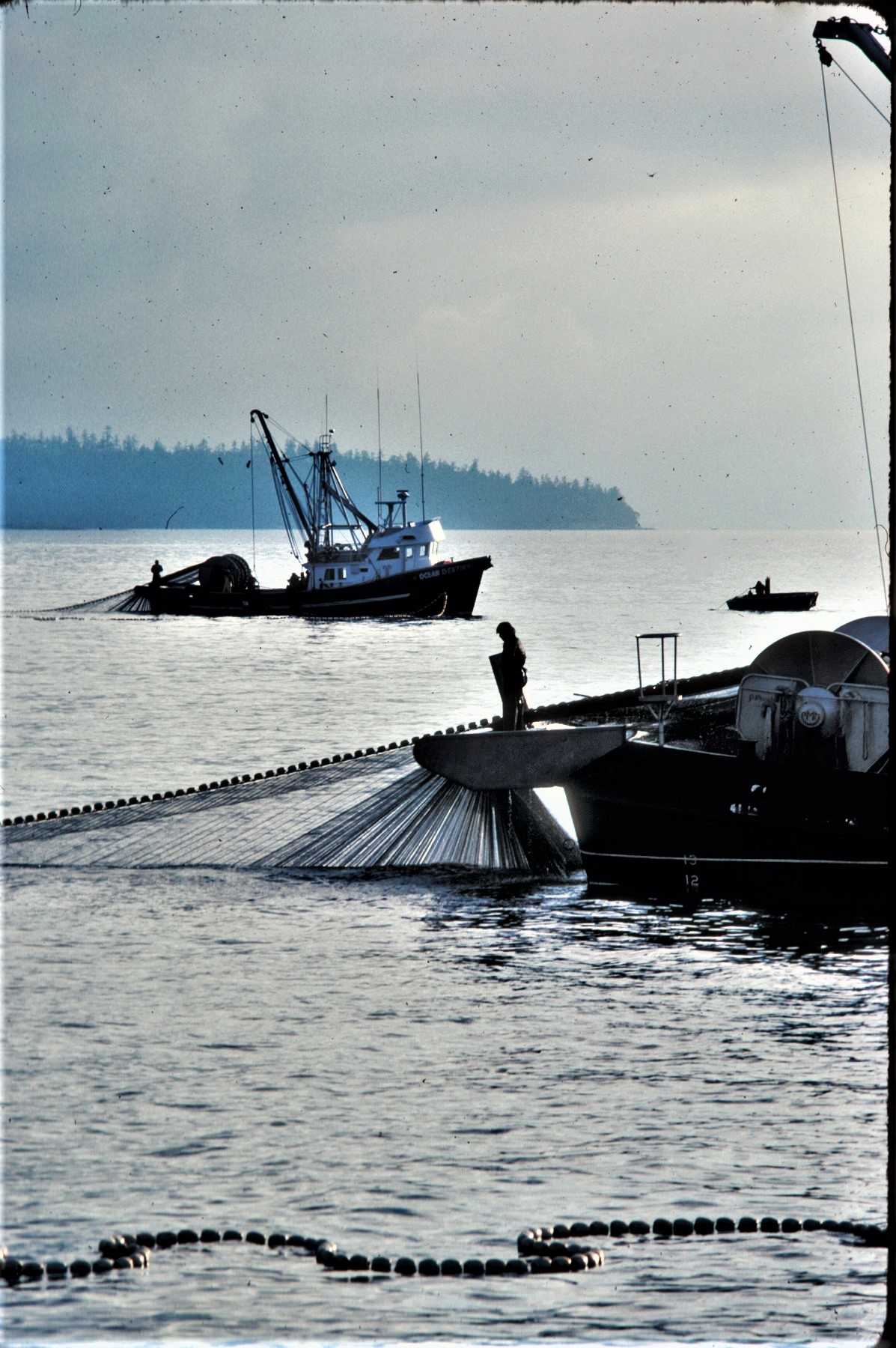
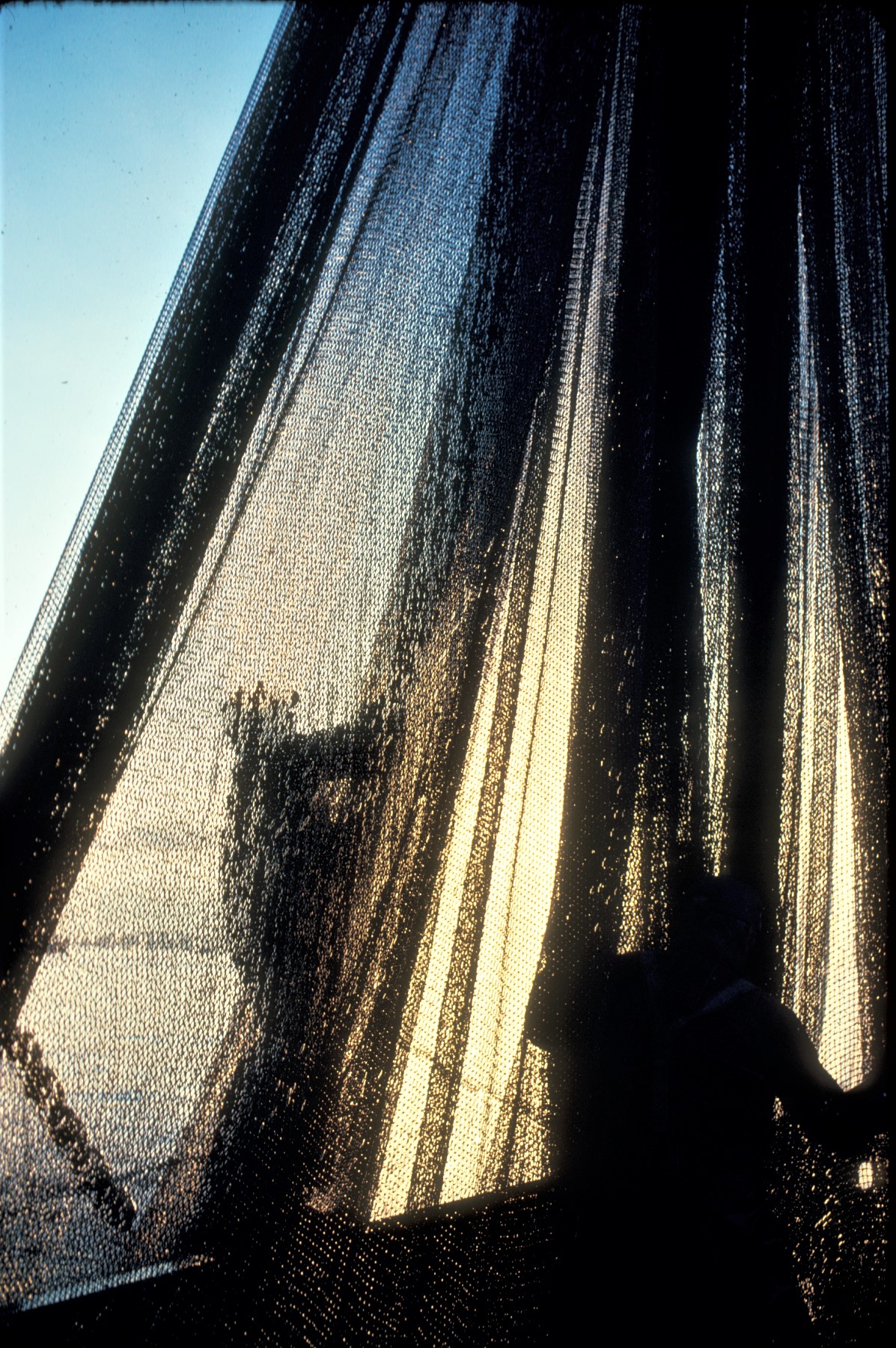
30-Sunset

The last sun of the day lights up the wet net. City of Richmond Archives photograph – BC Packers Fonds Series 9.

While the heyday of commercial fishing and processing in Richmond is over, the history of its time is preserved for future generations at the City of Richmond Archives.

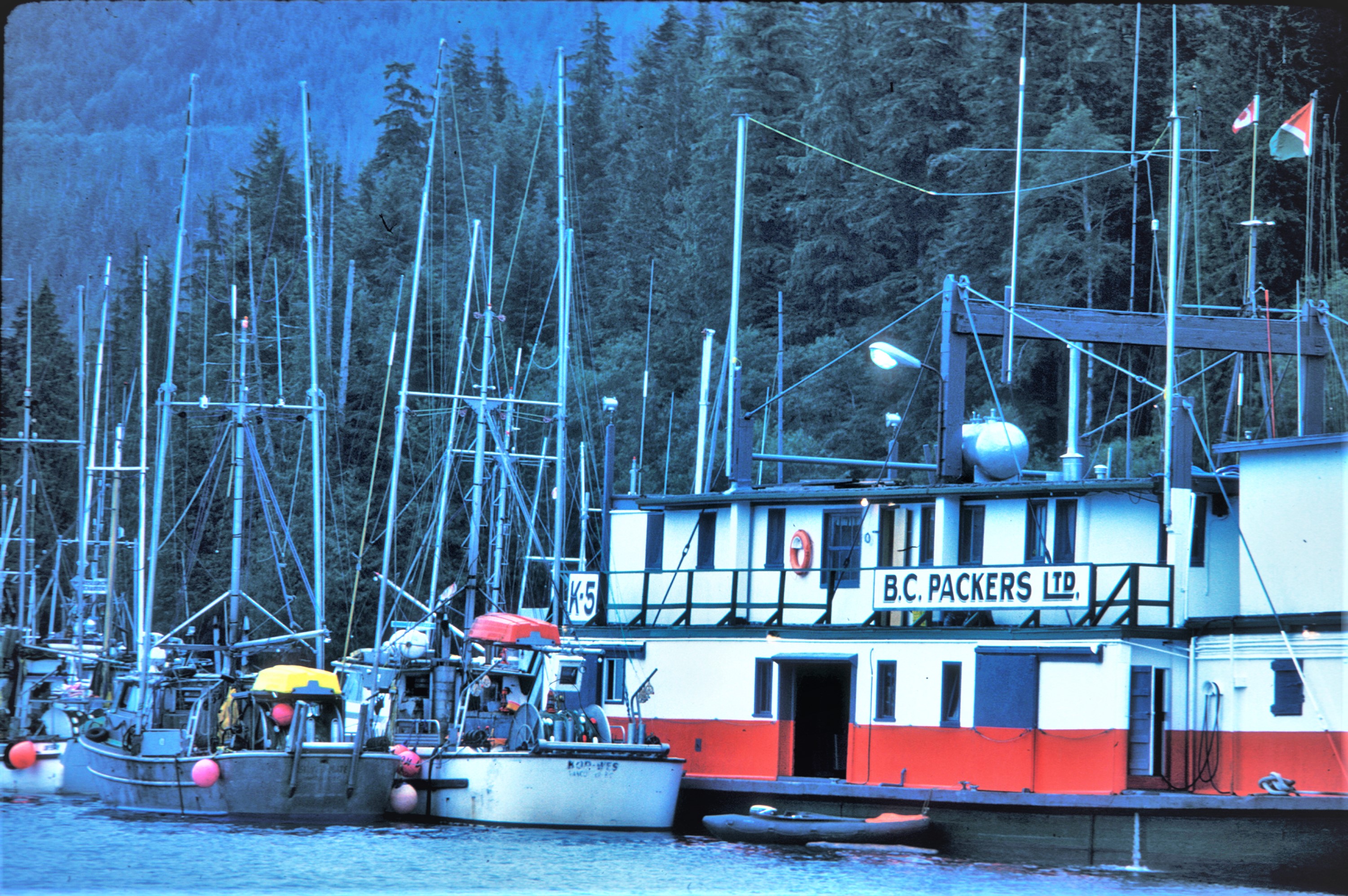
12-B.C. Packers K-5 camp2

The BC Packers K-5 Camp was the company’s main operations centre for the Juan de Fuca fishery. Anchored in San Juan Harbour near Port Renfrew, it housed offices, a store and refueling facilities. The gillnetters Silver Mate and Kor-Wes are tied to the camp. City of Richmond Archives photograph – BC Packers Fonds Series 9.

Focus on the Record – The Eric Rathborne fonds.

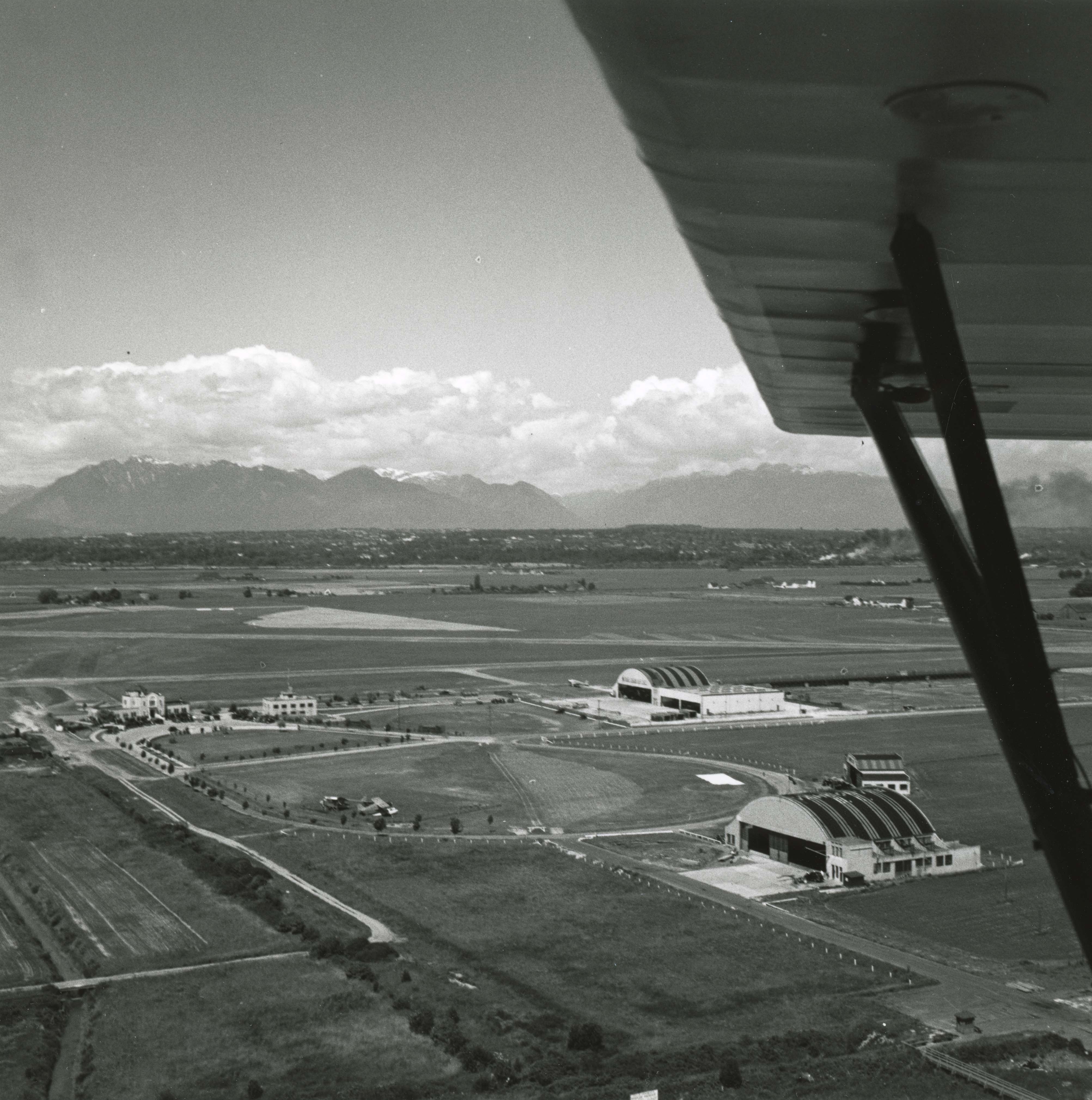
The Eric Rathborne fonds at the City of Richmond Archives consists mainly of black and white photographs of aviation activities at the newly opened Vancouver Airport on Sea Island, taken ca. 1935 to 1960.

1997 5 5 This aerial view of Vancouver Airport shows the hangars, administration building and radio building, ca. 1939. City of Richmond Archives photograph 1997 5 5.

Donald Eric Dalby Rathborne was born in England on December 18, 1907. He had his first ride in an airplane in 1924 which sparked a lifelong passion for aviation. He, with his family, emigrated to Windsor Ontario in 1926 when he was 18 years old. In 1930 Mr. Rathborne moved to Victoria in 1930 and then to Vancouver in 1933.

1997 5 107 Eric Rathborne sits in the cockpit of an open biplane, ca. 1936. City of Richmond Archives photograph 1997 5 107.


1997 5 68 An unidentified aviator wearing a sheepskin flying suit poses on the wing of an aircraft, possibly a Junkers A50, ca. 1936. City of Richmond Archives photograph 1997 5 68.

In his spare time Eric did odd jobs around the Vancouver Airport in exchange for flying lessons, achieving his private pilot’s license in 1936. In 1939 he took a full time job as a maintenance man with Trans Canada Airlines, the precursor of Air Canada, his duties including loading food, oxygen and mail onto aircraft, refueling and engine servicing.

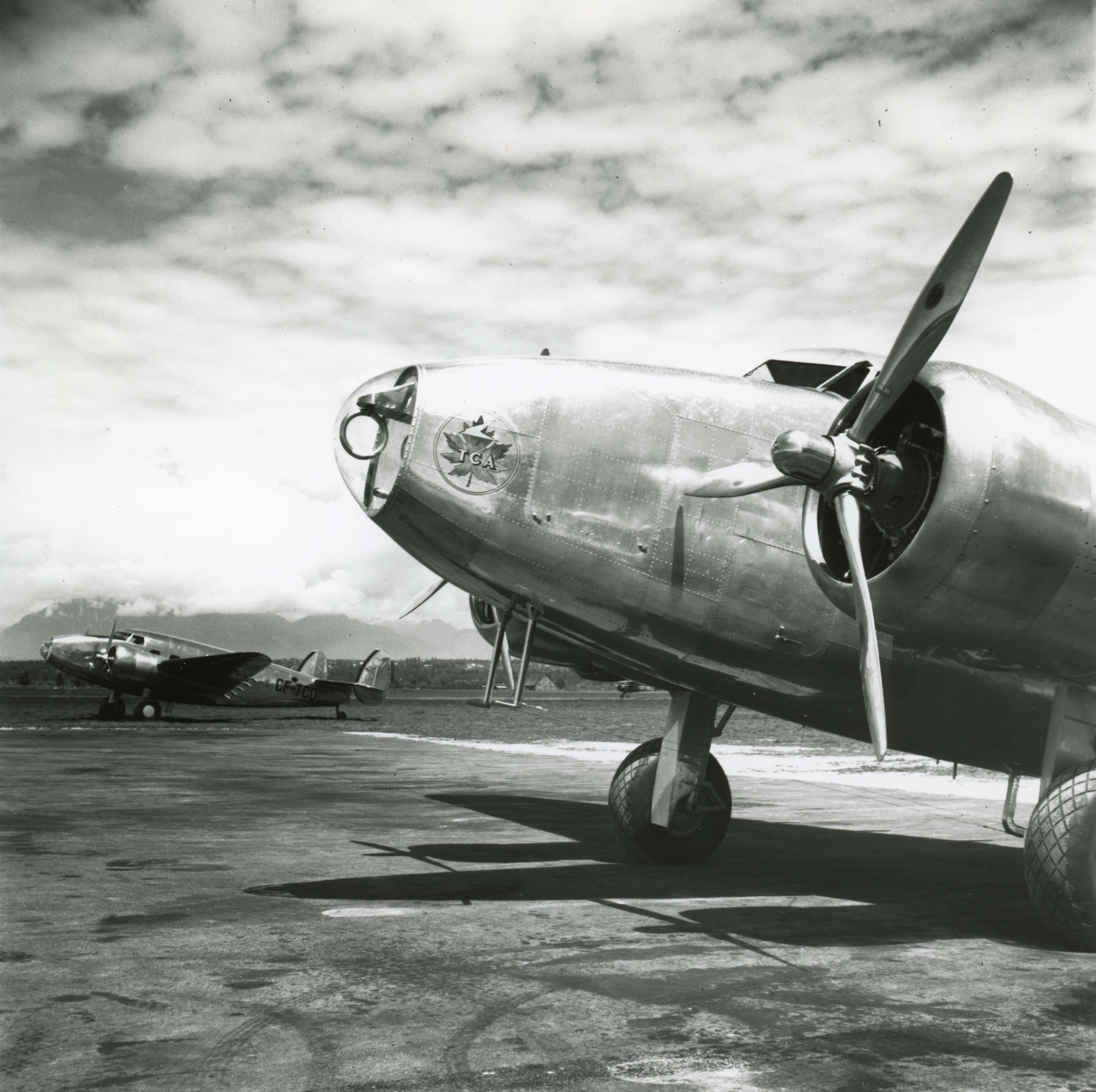
1997 5 33 Two Trans Canada Airlines Lockheed 14H-2 aircraft rest on the tarmac at Vancouver Airport. City of Richmond Archives photograph 1997 5 33.


1997 5 19 The public lines up to see the interior of the United Airlines “Mainliner” Douglas DC-3, on display at Vancouver Airport at the time of the introduction of this type of aircraft into commercial service, ca. 1938. City of Richmond Archives photograph 1997 5 19.

In May 1941 he earned his commercial pilot’s license and then joined the British Commonwealth Air Training Plan as a staff pilot. The BCATP was the organization responsible for training thousands of Commonwealth pilots and air crew during the Second World War.

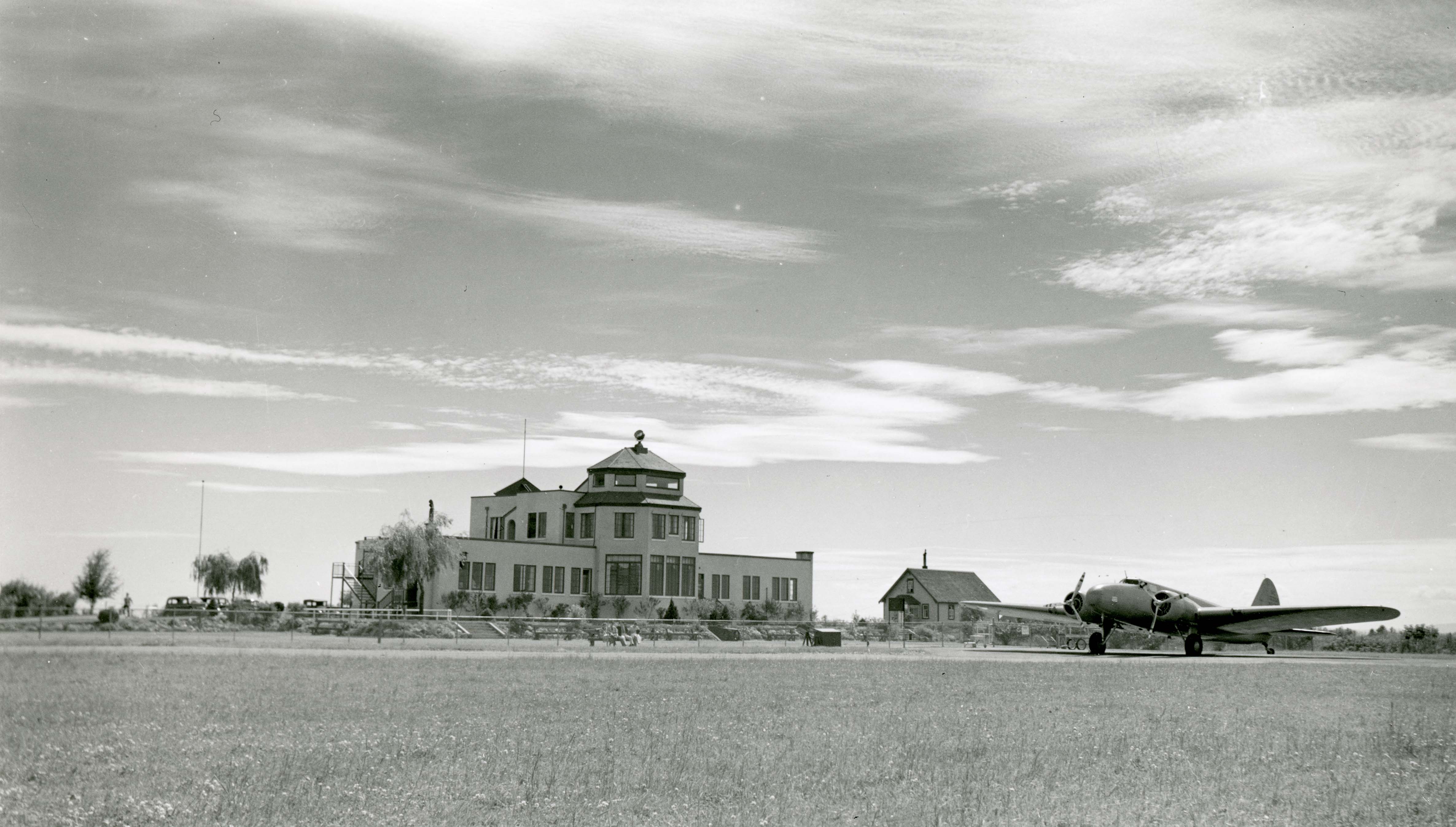
1997 5 26 A United Airlines Boeing 247D airliner sits in front of the Vancouver Airport terminal and administrative building in this photo, ca. 1936. City of Richmond Archives photograph 1997 5 26.


1997 5 38 Ruth Alm poses on the observation deck at the Vancouver Airport in the flight attendant’s uniform of Trans Canada Airlines, ca. 1939. The airfield is in the background. City of Richmond Archives photograph 1997 5 38.


1997 5 82 WWII aircraft mechanic, pilot and career flight attendant Ruth Johnson poses beside the Aero Club of BC’s De Havilland Tiger Moth DH82c at the Vancouver Airport, ca. 1946. City of Richmond Archives photograph 1997 5 82.

After his wartime service Mr. Rathborne was, at 37 years old, deemed too old to work as a commercial airline pilot, so he flew as a private pilot and worked occasionally as a pilot for local airlines while making his living as a commercial photographer for over 30 years.

1997 5 93 A young Don Rathborne points to a sign for Brisbane Flying Shcool Air Tours in this photo ca. 1949. Nearly 30 years later he saw an airport themed display put on by the City of Richmond Archives at Lansdowne Mall and contacted the Archives to see if they were interested in copying his father’s collection. These images and the rest of the collection will now be preserved, illustrating Vancouver Airport during the Golden Age of Flight and the post War years. City of Richmond Archives photograph 1997 5 93.

That Rathborne made his living as a commercial photographer is evident in the quality and composition of the photographs he has left documenting the early years of Vancouver Airport on Sea Island. Eric Rathborne died on November 30, 1990 at the age of 82.

The full collection of photographs from the Eric Rathborne fonds can be viewed at: https://bit.ly/2HvXxdb

The Richmond Oil Boom – In Search of the Steveston Gusher

In these days of environmental concerns, global climate change and pipeline protests, the oil and gas industry has become the target of much criticism. This was not the case around the turn of the last century when, in the middle of the Texas Oil Boom, attention was focused on a small fishing village at the mouth of the Fraser River.

The existence of natural gas on Lulu Island had been known for millennia.  The Musqueam fishing camp at Terra Nova was named sp`’elekw`eks (pronounced SPALL-uk-wicks), “Bubbling Water” in English, referring to the gas which was visible bubbling through the water in the slough. The Musqueam village at Garry Point was known as kw’áýò7xw’ (pronounced KWAY-ah-wh), meaning “Boiling (bubbling, churning) Water” in English, referring to the gas bubbling in the Steveston Slough.

Early European settlers in Steveston were also very aware of the gas deposits beneath Lulu Island. In 1891 the Steveston Enterprise Newspaper reported that the natural gas “forces its way through the water that accumulates in the wells and ditches where it is exposed and blackens the soil with heat when it is consumed.” Tossing a match into the bubbles would cause them to ” flash like powder”. Tipping a barrel over a gas vent would collect it and produce a continuous flame at a hole in the top of the barrel.

Steveston in 1891 looking North up 2nd Avenue. The sign on the left advertises the land auction of June 16. City of Richmond Archives photograph 1984 17 75 .


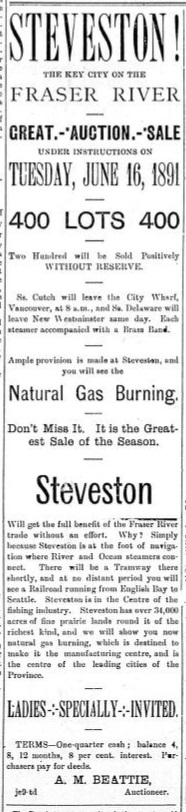
This ad from June 1891 in the Victoria Colonist invites investment in Steveston where you will “see the natural gas burning.”


Word of the gas spread with advertising for land auctions in the area. An ad in the Victoria Colonist invited people to bid on 400 lots available in Steveston, “The Key City on the Fraser River”.  According to the ad, participants would see the natural gas burning, its presence sure to make the area a manufacturing centre and a leading city in the Province.

The presence of the colourless, odorless gas led to efforts to exploit this resource. In August 1891 the Steveston Natural Gas and Development Company was formed by a group of local entrepreneurs who attempted to start a well but found their expertise and capital were not up to the task.

The evidence of natural gas led to the speculation that large oil or coal deposits would also be found in the area. In 1904 an organization of Vancouver businessmen, The Steveston Land and Oil Company Limited, bought a lot on No.1 Road in Steveston, east of the end of Broadway Street and next to the Japanese Hospital. They hired some experienced oil riggers and engineers from the oilfields at Beaumont, Texas. A derrick was erected and drilling began at British Columbia’s first officially recorded well. The results were encouraging and by April the shaft had reached 1000 feet, passing through “shale, clay, and blue, greasy mud or gumbo”.

In June, The optimism spurred the company to look for more investors and ads were placed in newspapers announcing that 30,000 shares were available in the company. Hoping to attract sales, the company offered early buyers a “buy two, get one free” deal.


An ad from the Victoria Colonist, June 1904, inviting investors to buy stock in the Steveston Land and Oil Company.

A copy of a share certificate for the Steveston Land and Oil Company. City of Richmond Archives photograph RCF 47.

In August the excitement grew when a large pocket of natural gas was reached by the drillers. The pressure sent sediment and water spouting high over Steveston. That evening a burn off flare was ignited to expend the gas and the resulting flame was 80 feet tall and 18 feet wide and could be seen from New Westminster. Reports claimed that the drillers expected to hit high quality oil soon, after which Steveston would take her place among the world’s great oil fields.

The drilling rig of the Steveston Land and Oil Company in 1904, B.C.’s first documented oil well. Sections of well piping can be seen leaning against the structure. Investors had high hopes that Steveston would be sprouting with derricks like this and black gold would be flowing from deposits under Lulu Island. City of Richmond Archives photograph    1978 15 10.

Despite all the optimism surrounding the search for oil, problems were arising. Oil was certainly present under Lulu Island, droplets had even shown up at the well, but the silt surrounding it was so flour-like that even with fine screens the piping would plug immediately. More expensive equipment and more specialized screens were shipped to the well but eventually the costs of operation overwhelmed the company and the project was abandoned in 1906.

Looking north up No.1 Road in 1908 gives a view of the back of the Steveston rail station, a Roman Catholic Church and the now defunct drilling rig of the Steveston Land and Oil Company, City of Richmond Archives photograph 1978 5 7.

The halt of operations, while saving Steveston from the fate of becoming surrounded by oil wells and a busy tanker port, did not entirely stop the idea that natural gas might be a viable product. In 1930 a well was drilled on the farm of Henry Fentiman at 120 Garry Street. Mr. Fentiman’s house was located at the north side of the present Steveston Community Park, not too far from the location of the old oil rig.

Henry Fentiman’s turn of the century mansion on his Steveston farm. City of Richmond Archives photograph 1986 54 1.

The International Pipe Line Company invested $17,000 in a plan to supply Vancouver with superior, odorless natural gas from Lulu Island, supplanting the manufactured gas used in the city at the time. The first test well was drilled to a depth of 850 feet, produced a flow of gas, but soon plugged with sand. A second well, drilled in 1931 to a depth of 730 feet and using finer screens to separate the sand, proved to be more successful and produced a steady flow of gas.

Drilling for gas on the Fentiman farm. City of Richmond Archives photograph  1978 36 22.

Once again the plan to capitalize on the energy resources of Lulu Island did not come to fruition, but Mr. Fentiman used the gas from the well for decades, easily heating his big, drafty turn of the century house, running his water heater and stove using the apparently unlimited supply of gas from his property. The only complication encountered with the system was the fluctuation in gas pressure caused by changing tides, the gas having to force its way through the whole depth of water in the well.

Henry Fentiman’s gas well, shown here in the 1930s, kept his house heated, water hot and kitchen cooking for decades. City of Richmond Archives photograph    1978 36 21.

In 1969 with the gas well now capped off, the Fentiman property was expropriated for $70,000 by City Council. The buildings were demolished in the late 1970s. The farm was sub-divided and exchanged or used for other purposes, the northern part now home to the Steveston Buddhist Temple, the Lions Club Senior Citizen housing occupies a portion of the old property and the southern part, where the Fentiman house and gas well were located were absorbed into Steveston Park. The natural gas and oil deposits that created so much excitement in the early 20th Century are still there, captured in the earth below Lulu Island but are unlikely to be looked for again.

The Fentiman house and outbuildings in the late 1970s. The gas well was located in the small building between the house and the barn. City of Richmond Archives photograph 1986 54 8.