The Skookum Slide – A Slippery Slope into Childhood Memory

Few communities can lay claim to having a large amusement park attraction in their downtown core, but from 1969 to 1973, Richmond could. The Skookum Slide was only in existence for a few years, but is remembered fondly by those who grew up here in that time, despite tales of the occasional bruise or broken bone.

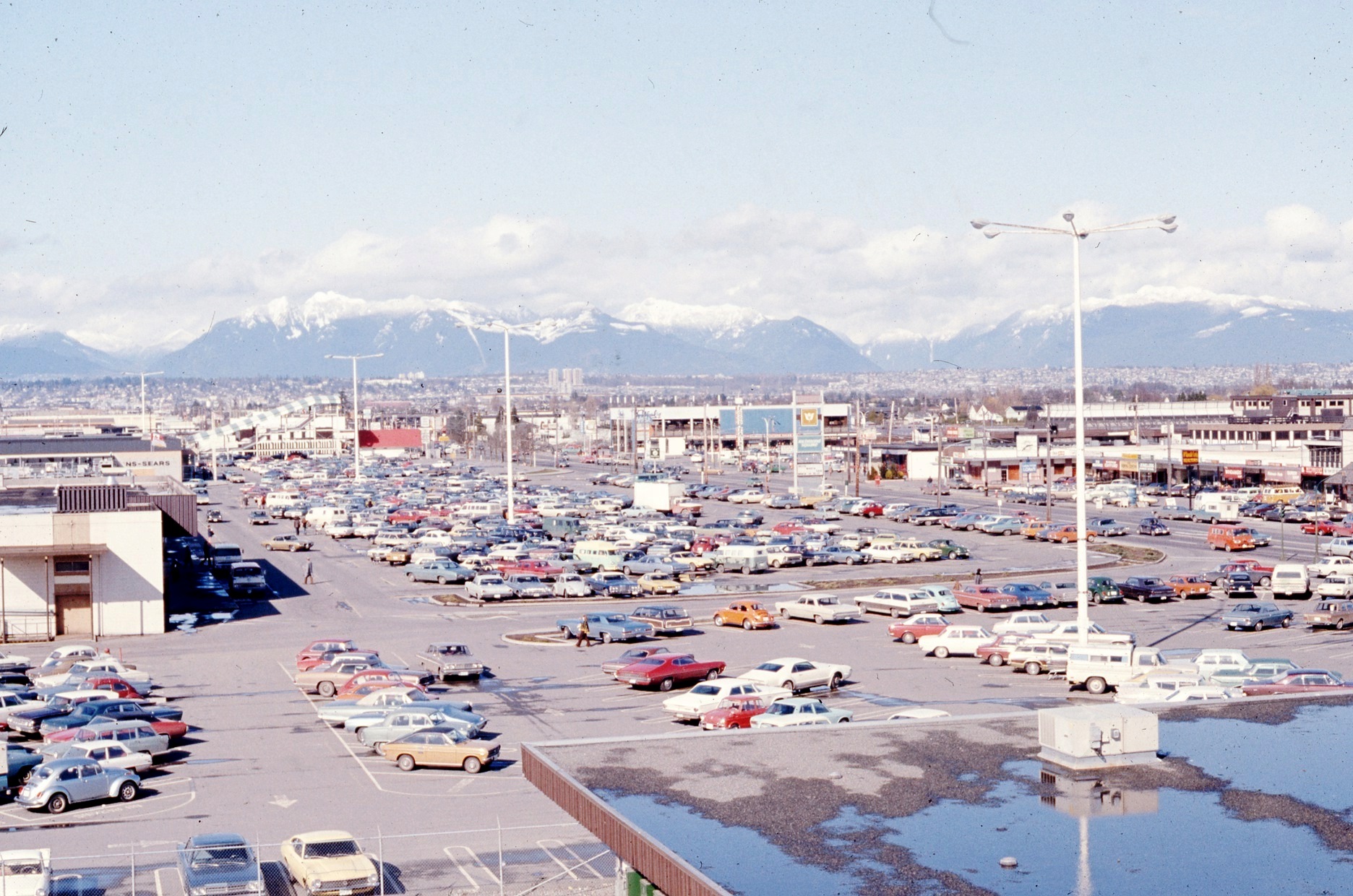
This image, looking south east toward No.3 Road in 1973, shows the Skookum Slide on the right, the back of the Richmond Savings Credit Union in the centre and Wosk's Furniture on the left. The red roof of the Dairy Queen can be seen above the Credit Union. City of Richmond Archives photo 2008 39 2 34.

This image, looking south east toward No.3 Road in 1973, shows the Skookum Slide on the right, the back of the Richmond Savings Credit Union in the centre and Wosk’s Furniture on the left. The red roof of the Dairy Queen can be seen above the Credit Union. City of Richmond Archives photo 2008 39 2 34.

John B. Stokes, President of Super Slide Limited of Vancouver, met with the Director of Planning for the Township of Richmond in late August 1968 and presented his proposal for this new recreational facility. Slides of this type had been operated for several years in California and across the southern United States, but they had not been adapted for the conditions to be found in more northern climates. The Richmond Slide was to be the first in North America fitted with a permanent roof.

Market research indicated that a population of 100,000 was needed to support the operation of the slide. Richmond’s population was only about 55,000, but the company felt that the township’s easy access from South-west Vancouver by car would provide more than enough business to make it profitable.

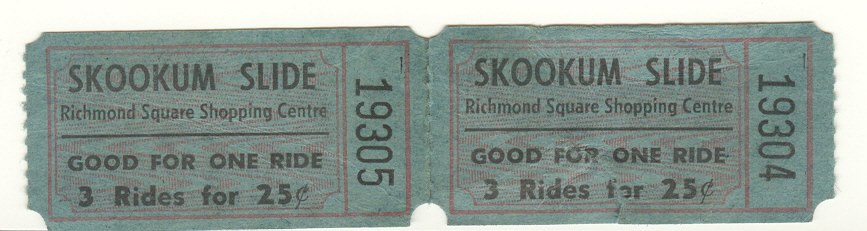
Tickets for the Skookum Slide.

Tickets for the Skookum Slide. Image submitted to the Friends of the Richmond Archives Facebook page.

Ride prices would be set at one ride for 10 cents, three rides for 25 cents, eight rides for 50 cents and twenty rides for $1.00. Having general approval from the Planning Department, the company, which had changed its name to Skookum Slide Ltd., proceeded to search for a building location in the No.3 Road and Westminster Highway area.

A letter from Skookum Slide President John B. Stokes. City of Richmond Archives MR SE 92 SS7, file 43.

A letter from Skookum Slide President John B. Stokes. City of Richmond Archives MR SE 92 SS7, file 43.

They were wanting to lease a property for at least ten years, but ended up sub-leasing parts of lots from the Richmond Savings Credit Union and the Dairy Queen, a lease which would run out on August 31, 1973.

A plan showing the proposed location for the slide on property sub-leased from the Credit Union and Dairy Queen. City of Richmond Archives accession 5337 43.

A plan showing the proposed location for the slide on property sub-leased from the Credit Union and Dairy Queen. City of Richmond Archives MR SE 92 SS 7, file 43.

Construction of the slide was underway by January 1969 with an opening planned for March 1st.

A clipping from the Richmond Review, January 8, 1969.

A clipping from the Richmond Review, January 8, 1969.

The operation of the slide was very simple, with no moving parts other than the customers, consisting of “boys and girls from 6 to 16 years of age” according to marketing information. Patrons would climb the stairs and ramps to the top of the slide, buy their tickets, be issued a burlap sack to sit on and ride the slide’s three “loops” to the bottom while music played at high volume over the sound system. Once the slide tickets ran out, the Dairy Queen was only steps away to enjoy a dipped cone or a banana split until Mom and Dad finished shopping at the nearby shopping centres.

Plan of the Skookum Slide. City of Richmond Archives PL 248 COM 5.

The lease ran out in September 1973 and plans for expansion of the Credit Union and Richmond Square Shopping Centre settled any possibility of extending the slide’s lease. The operation was shut down and the slide removed, leaving some extra parking spaces at the Credit Union and a few nostalgic memories in the minds of those who grew up in Richmond in the early 1970s.

Looking north toward the Skookum Slide from Richmond Square. City of Richmond Archives photo 2008 39 2 246.

Looking north toward the Skookum Slide from Richmond Square, 1973. City of Richmond Archives photo 2008 39 2 246.

Focus on the Record – Records of Early Dyking and Drainage

The Dyke at London's, Lulu Island, 1908. City of Richmond Archives Photograph 1978 5 6

The dyke at London’s, Lulu Island, 1908. City of Richmond Archives Photograph 1978 5 6

In 1936 the Township of Richmond assumed control of dyking and drainage activities within its boundaries by amalgamating its own works established by by-law with those of two other existing authorities: the New Lulu Island Slough Dyking District (NLISDD) and the Lulu Island West Dyking District (LIWDD).

Dyking and the Dredge "Beaver No. 2" in Steveston area, ca. 1905. City of Richmond Archives Photograph 1978 14 4

Dyking and the dredge “Beaver No. 2” in Steveston area, ca. 1905. City of Richmond Archives Photograph 1978 14 4

These two bodies had been established by petition of landowners to the provincial legislature: the NLISDD in 1900 encompassing the slough complex from Francis Road south; the LIWDD in 1905 largely encompassing the area west of No. 3 Road. Commissioners elected to administer these districts were responsible for appointing an engineer who drew up technical plans and assessments of the land benefited.

The City of Richmond Archives holds a wide assortment of records of these two bodies including minutes, assessment rolls, petitions and correspondence. Many provide details of an evolving landscape, where drainage of land and protection from periodic flooding was crucial to the success of farming activities.

Tax notice for Lulu Island West Dyking District, 1921. City of Richmond Archives, Thompson family fonds

Tax notice for Lulu Island West Dyking District, 1921. City of Richmond Archives, Thompson family fonds

Because the land was taxed by these bodies to pay for works, there were detailed records kept of land valuation and plentiful communication between the commissioners and landowners, including minutes of courts of revision. The records provide a vivid picture of early agricultural land use and the transition from private to public dyking.

In addition, Council minutes and bylaws, along with early records of the Board of Works, provide evidence of other dyking and drainage activities in the municipality, as well as of works after the dyking districts were amalgamated with the municipal government.

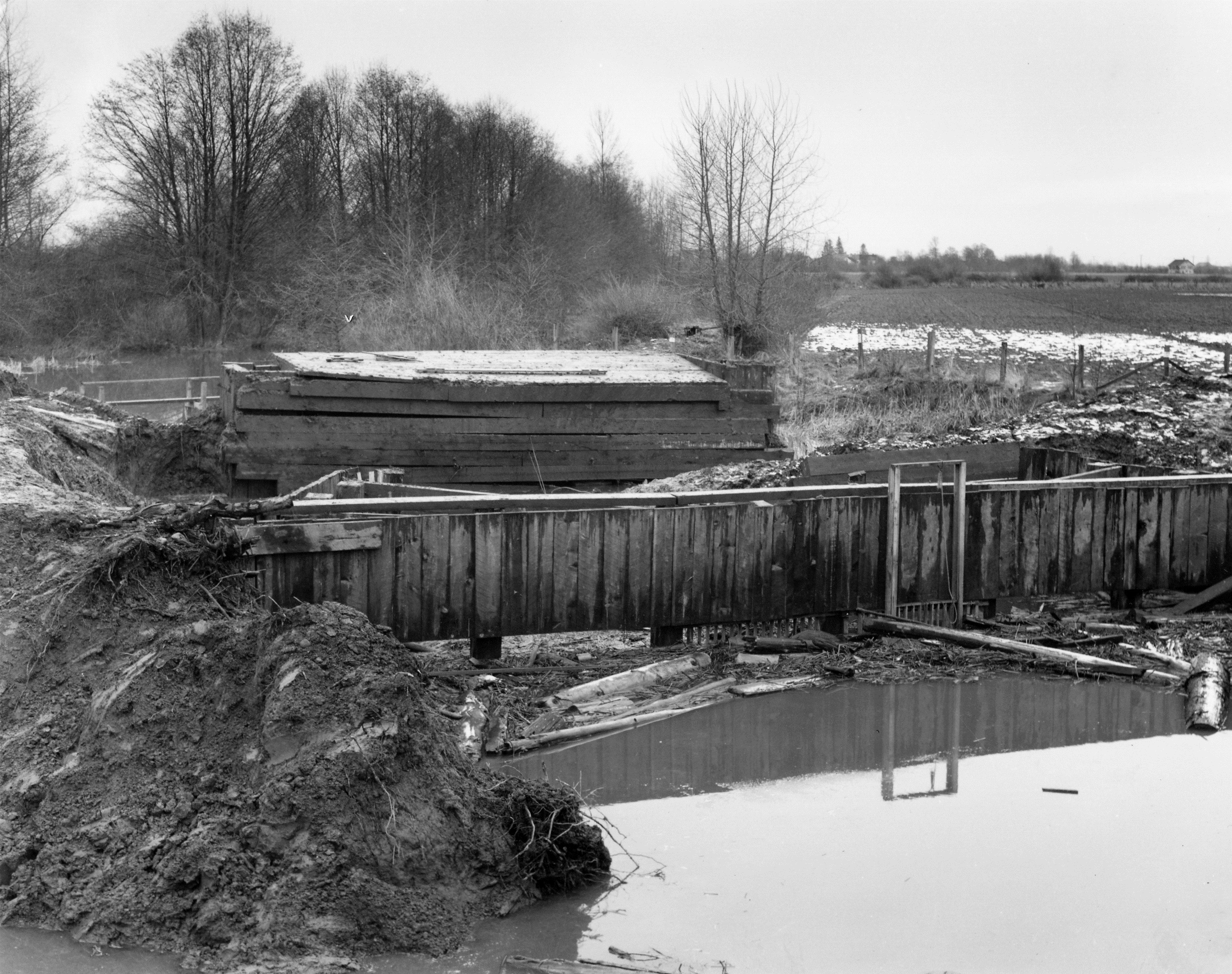
Flood box at Woodward's Slough, 1952. City of Richmond Archives Photograph 1977 1 8

Flood box at Woodward’s Slough, 1952. City of Richmond Archives Photograph 1977 1 8

[Note – this is an updated version of an article first published in the Fall 2012 issue of the Archives News]

Road Names in Richmond – Addressing Community History

Street signage in Richmond. Where do those names come from? (Graham Turnbull photograph)

Street signage in Richmond. Where do those names come from? (Graham Turnbull photograph)

The use of road names as opposed to numbers in Richmond provides residents with a great opportunity to understand the social history of their community.  In a relatively young municipality such as Richmond, people may be lucky enough to meet a neighbour or individual who possesses the same name as the road on which they live, and then on further inquiry discover the identity and significance of that individual’s ancient (or not so ancient) family member.

Excerpt from Council minutes of May 6, 1880, showing first page of motion to petition to declare public highways for No. 1 Road through No. 13 Road. City of Richmond Archives, MR 1, File 1-1

Excerpt from Council minutes of May 6, 1880, showing first page of motion to petition to declare public highways for No. 1 Road through No. 13 Road. City of Richmond Archives, MR 1, File 1-1

The early surveys of Richmond used a road numbering system for convenience, so the numbers themselves, while seemingly boring if you are not a surveyor by profession, have historical significance.  Most residents of Richmond understand that the City’s main north/south numbered roads run parallel to each other at a distance of one mile between.

Numbered east/west roads, however, had their names changed in the 1930s, making intersection identification a lot easier.   Steveston Highway used to be No. 9 Road – and No. 9 Road is now a north/south road in east Richmond;  Blundell Road was No. 18 Road;  Westminster Highway was No. 19 Road; and Cambie Road was No. 20 Road….  oh  – and before that, it was No. 10 Road.  And so on.

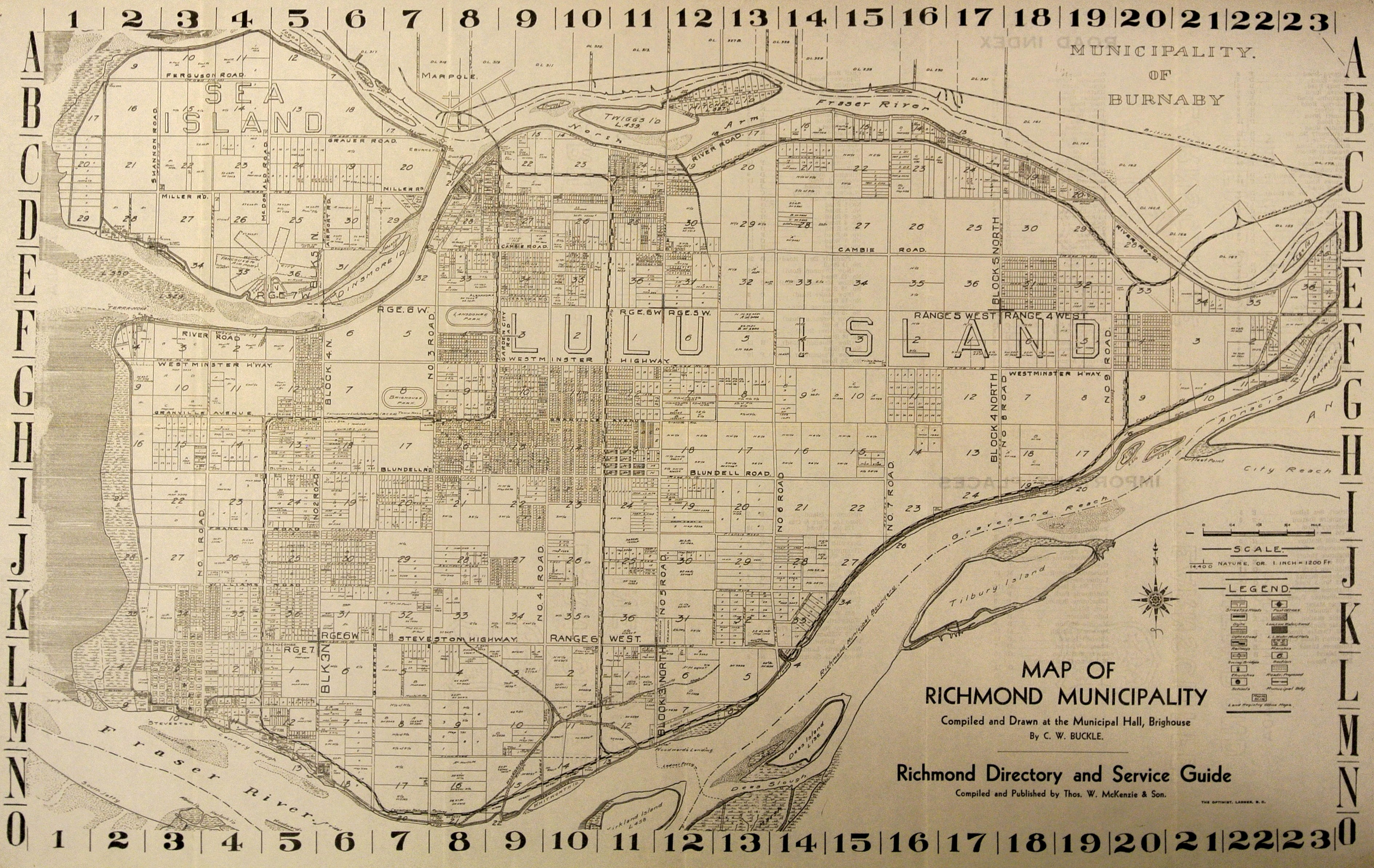
Street map of Richmond, 1937, showing changes to numbered east/west roads, along iwth old names in parentheses. City of Richmond Archives Map 1989 11 1

Street map of Richmond, 1937, showing name changes to numbered east/west roads (with old names in parentheses). City of Richmond Archives Map 1989 11 1

The process for choice and selection of road names in Richmond has been applied with solemnity, enthusiasm, practicality and fanciful desperation over the years, and gradually morphed into a more thoughtful and organized responsibility, with Council approved road-naming  policies being adopted in 1979, 1984 and 1997.

The policies also provide a guide to definitions for the address descriptors such as: “Court: A court is a cul-de-sac which cannot be extended.  It may carry the name of the street from which it originates, but no more than one such court can be so named.   The term ‘place’ can also be used for a court;” “Gate: a gate is a short street less than 106 m (350 ft.) in length connecting two other streets;” “Crescent: A crescent is a named street in the form of a loop, both legs of which terminate on the same street…;” and my own personal favourite since I live on one, Drive: a drive is an irregular or winding street over 230 m (750 ft.)  in length and connecting two other streets”.

Street sign at corner in the old Cora Brown subdivision. McDonald Road (still in existence) was named after pioneer farming family on Sea Island. Edgington Avenue (disappeared with the federal expropriation of Cora Brown for airport expansion)  was named after Private Erine Edgington, a former Richmond High student, who was killed in action in Italy during World War II. City of Richmond Archives Photograph 1997 42 1 483

Street sign in the old Cora Brown subdivision on Sea Island. McDonald Road (still in existence) was named after a pioneer farming family. Edgington Avenue, which disappeared with the federal expropriation of the subdivision for airport expansion, was named after Private Ernie Edgington, a former Richmond High student, who was killed in action in Italy during World War II. City of Richmond Archives Photograph 1997 42 1 483

So regarding the title of this blog – Richmond’s street names have come to our community from early pioneers, Richmond Good Citizens, land-owners and farmers, residents who died in their duty to country during the First and Second World Wars, members of royalty and their horses, politicians, general public sentiment, developer fancy and corporate sponsorship. The names chosen are not carved in stone, and a look at some of the now defunct names is an interesting study.

Research into the origins of Richmond’s road names is a fascinating and educational exercise.  Sometimes the origins are lost in the mists of time, with no recorded evidence of why the name was chosen. Over the coming months, I’ll be taking a closer look at the Archives’ records and sharing some of the mysteries, secrets and stories behind the names, via this blog.

[Note: this is the first of a series of blogs by Christine McGilvray on road naming in Richmond.  Christine, an active Archives volunteer and Past President of the Friends of the Richmond Archives, has been researching road names at the City of Richmond Archives for several years.]

From the Archives Kitchen – Sour Cream Doughnuts

A tasty, 1930-style, homemade sour cream doughnut. (Bill Purver photograph)

A homemade, 1930-style, sour cream doughnut. (Bill Purver photograph)

Before the proliferation of specialty bakeries and fast food chains in the latter half of the 20th century, the search for a fresh doughnut to accompany an afternoon coffee often ended up in one’s own kitchen.

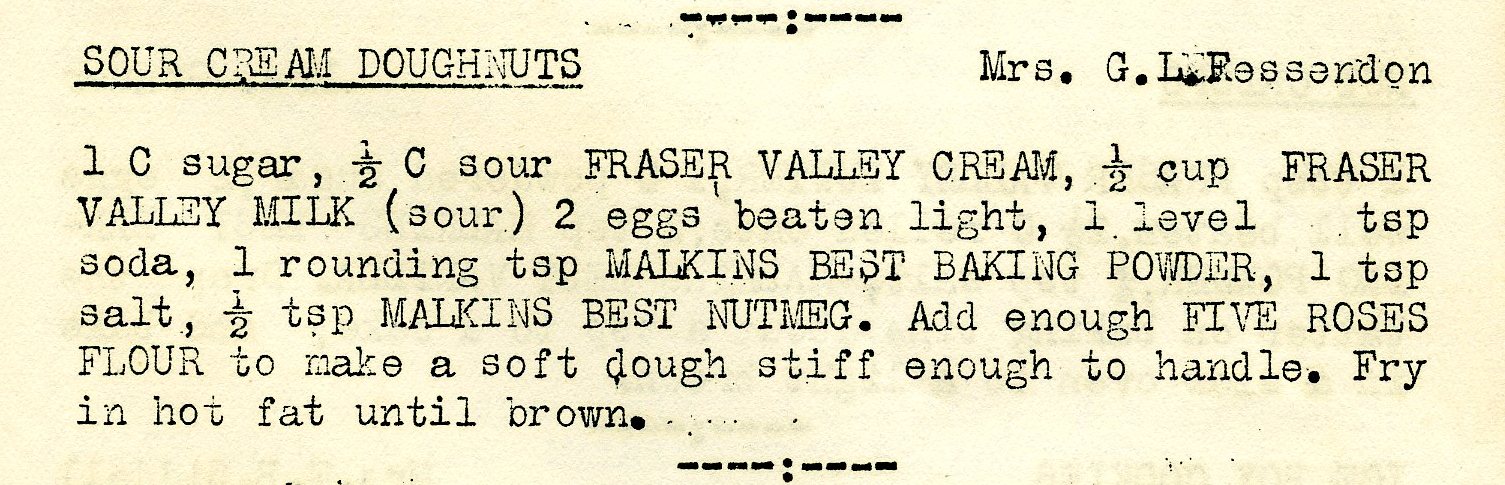
An old recipe for homemade sour cream doughnuts was recently discovered at the City of Richmond Archives in records of the Ladies’ Aid of Richmond United Church.

Cover of "Tested Recipes" published in 1930 by the Ladies Aid to Richmond United Church. City of Richmond Archives, Richmond United Church fonds, Series 5, File 3

Cover of “Tested Recipes.” City of Richmond Archives, Richmond United Church fonds, Series 5, File 3

The recipe was found in “Tested Recipes”, a book published in 1930 by the women’s group as a fundraising effort on behalf of the church situated at the corner of River Road and Cambie.

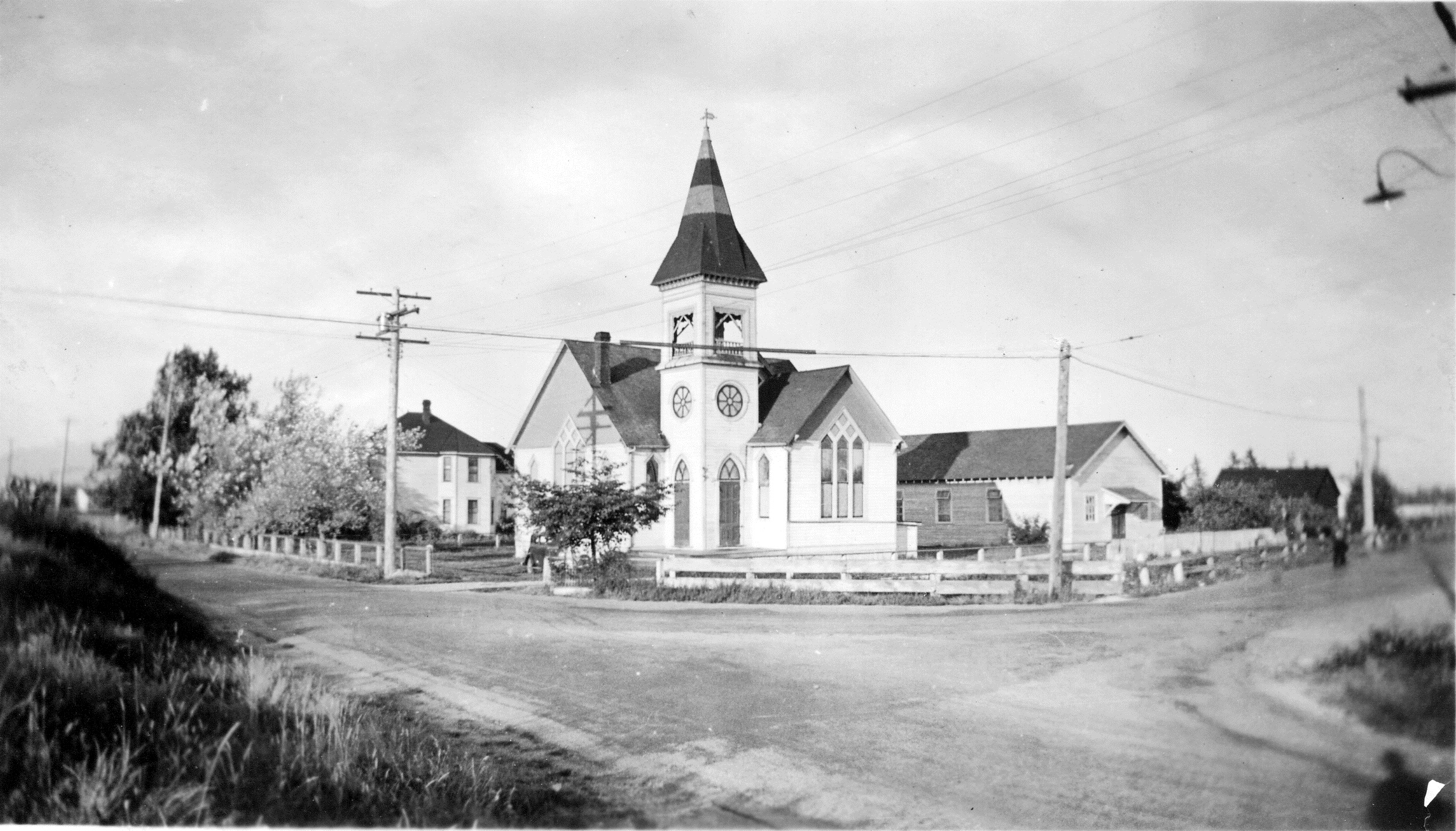
Richmond United Church at the corner of River Road and Cambie, ca. 1930. City of Richmond Archives Photograph 1985 39 104

Richmond United Church at the corner of River Road and Cambie, ca. 1930. City of Richmond Archives Photograph 1985 39 104

Constructed in 1891 as the Richmond Methodist Church and renamed the Richmond United Church in 1925 after church union, the building was later purchased by the municipality, moved to Minoru Park in 1967, and renamed Minoru Chapel.

Ad supplied by BC Electric Railway Company on inside of front cover of "Tested Recipes."

Advertisement on inside front cover of “Tested Recipes.”

The recipe book is a collection of old family recipes submitted by church members, the names of whom read like a who’s who of some of early Richmond’s most prominent residents.

Contributors included Mrs. H.A. McBurney, Mrs. R.P. Ketcheson, Mrs. E. Cooney, Mrs. W.G. Easterbrook, Mrs. J.W. Miller, Mrs. James Thompson, Mrs. Grauer, and Mrs. Mitchell among others.

The book was sponsored by various companies and includes advertisements for services and products of interest to those who would be using the recipes.


Recipe for Sour Cream Doughnuts on page 13 of "Tested Recipes."

Recipe for Sour Cream Doughnuts on page 13 of “Tested Recipes.”

The Friends of the Richmond Archives’ resident pastry chef and Board Director, Precilla Huang, decided to try out the recipe to gain insight into the culinary expertise and practices of homecooking in the 1930s.

A tasty plate of homemade doughnuts using the 1930 recipe. (Graham Turnbull photograph)

A tasty plate of homemade doughnuts, thanks to Friends of the Richmond Archives Board Director Precilla Huang and the 1930 “tested recipe.” (Graham Turnbull photograph)

The end result of Precilla’s work was delicious, a doughnut much less sweet than that of the present day, but rich in texture and taste.

(Note: “Doughnut” is the traditional spelling of the word and consistent with usage in the 1930s.  “Donut” is a modern-day spelling associated with the later, large-scale commercialization of the snack.)

Focus on the Record – Records of Early Policing

Richmond has had four distinct policing regimes, each documented in records held at the Archives: police constables appointed by Council, a small force regulated by a Board, the BC Provincial Police and lastly the RCMP.

Chief of Police Andrew Waddell in 1914. City of Richmond Archives Photograph 1985 206 1

Chief of Police Andrew Waddell in 1914. City of Richmond Archives Photograph 1985 206 1

The earliest police force consisted of a constable or constables appointed and administered by Town Council. An overview of this early development can be had by reading Council minutes and reports to Council from that period.  Other municipal records and reference material in the Archives provide reference for important events involving the police, including the murder of Chief of Police Alexander Main in 1900.

The oversight of policing activities was enhanced by the creation of two bodies separate from Council. The Board of Licence Commissioners was established in 1889 with the power to licence and inspect establishments such as hotels and saloons serving liquor.  Enforcement activities relating to this licensing were carried out by police constables. The Archives holds the minutes of the Board from 1894 to 1917, which tell a colourful if partial tale of Richmond’s early night life.

Report to the Board of Licence Commissioners, September, 1917. City of Richmond Archives MR 403, File BLC 1-1

Report to the Board of Licence Commissioners, September, 1917. City of Richmond Archives MR 403, File BLC 1-1

In 1915, Council established the Board of Police Commissioners to appoint and manage the police force. Chaired by the Reeve, the Board carried out a variety of administrative functions and received reports from the Chief of Police on crime and police actions and complaints from citizens with regard to law and order and police conduct. The Archives holds the largely hand-written minutes of this Board for most of its existence, until its dissolution in 1941.

Annual Report to the Board of Police Commissioners, 1916. City of Richmond Archives MR 404, File BPC 1-1

First page of Annual Report to the Board of Police Commissioners, 1916. City of Richmond Archives MR 404, File BPC 1-1

In November 1940 Council decided to hand over local policing to the BC Provincial Police. Although this decision marked the end of Richmond’s own police force, the story of policing in the municipality continues in other records held by the Archives.

Municipal records series 42 (1914-1988) includes a wide range of records created or received by the City concerning policing activities and services, and justice issues. Files in this series include monthly reports from the local detachment of the Provincial Police (1941-1950), as well as various reports from the RCMP from the time it took over municipal policing in Richmond in August, 1950.

Group photograph of RCMP Richmond Detachment personnel, including Police Magistrate R.C. Palmer, in the 1950s. City of Richmond Archives Photograph 2010 37 1

Group photograph of RCMP Richmond Detachment personnel, including Police Magistrate R.C. Palmer, in the 1950s. City of Richmond Archives Photograph 2010 37 1

[Note – this is an updated version of an article first published in the Fall 2013 issue of the Archives News]