Richmond’s Early Chinese Canadian Settlers: LAM Ching Ling and CHEW Gore

Clarence Sihoe 5 November 2025

Introduction

In late 2017, after almost fifteen years of research, I completed a book that explored the history of my mother’s family in Canada. Driven by curiosity and passion in equal measure, the work enabled all in our extended family to better understand our roots in this land and strengthen the bonds that keep us closely connected. It was satisfying to finally get the project done.

My maternal grandfather, YEE Clun, left his home village in Hoi-Ping (Kaiping) county, Kwangtung (Guangdong) province, China, and arrived in Victoria in September 1902. He paid the head tax of $100 to enter the country. Working first as a labourer, he eventually earned status as a merchant, owning and operating a number of restaurants and cafes and an import-export business in small towns and cities across Saskatchewan. This enabled him to bring my grandmother, ARNG Woon Goke, to Regina in late 1919, exempt from the head tax. There they raised a family of six children until their return to China in 1932. They reunited in Regina in 1941 and finally settled in Vancouver in the fall of 1947.

My journey to uncover these details led me down a countless number of trails: some productive, others complete dead ends. I arranged many conversations with my mother, aunts and uncle; organized a small part of our collection of family photographs; visited libraries and archives in B.C. and Saskatchewan; read dozens of articles and newspaper stories on the internet; and requested and received documents from various provincial and federal government agencies. Of great value early on were the materials held by the Vancouver Public Library Chinese Canadian Genealogy section. The records held by Library Archives Canada were also very useful, particularly the Immigrants from China database, and they continue to be an important resource for family historians and professional genealogists alike.

The year 2023 was recognized as an important date by many members of the Chinese Canadian community, for it marked the one hundredth anniversary of the passing of the Chinese Immigration Act of 1923. This federal legislation, commonly known as the Chinese Exclusion Act, more or less ended immigration of the Chinese people to Canada. There were few exceptions to this legal form of discrimination. For a quarter century until its repeal in 1947, this unjust and cruel law kept thousands of men living and working in Canada apart from their wives and children who remained in China. Some of these so called “bachelors” never reunited with their families, and they died alone in a country that may have welcomed them at first but then denied them a chance to fully participate or contribute towards the growth of this society. The Paper Trail to the 1923 Chinese Exclusion Act, an exhibit curated by Catherine Clement, explored this dark period in our history and was featured at the Chinese Canadian Museum, located in Vancouver’s Chinatown, for eighteen months that began on 1 July 2023. A digital archive of the documents displayed at the exhibition is held at UBC Library, Rare Books and Special Collections. https://rbscarchives.library.ubc.ca/paper-trail-collection

These historical facts have led me to think more about Richmond. I worked within its local government for almost three decades and I’ve resided here since 1991. My aunt, uncle, and cousins lived near the corner of No. 1 Road and Francis Road in the 1960s, but recently I began to wonder about the Chinese people who settled here over a century ago. Who was present when the Exclusion Act came into force in Richmond? The stories of the Chinese fish cannery workers and farm labourers have been documented, mostly single men who worked these seasonal jobs, and then perhaps retreated to Vancouver’s Chinatown during the wintertime. But what of the families who may have lived here? How many men and women were fortunate enough to stay together, earn a living, and raise a family on Lulu and Sea Islands? 

My research these days focuses on discovering the identities of these people, and I begin with LAM Ching Ling, proprietor of the Hong Wo Store in Steveston. His career as a general merchant, farmer, and labour contractor is well known, and has been highlighted in an informative and interesting post from May 2023, researched and written by John Campbell, Social Media Coordinator with the Friends of the Richmond Archives. https://richmondarchives.ca/2023/05/11/peace-together-ling-lam-and-the-hong-wo-store/  

To start my search, I visited the City of Richmond Archives last fall. Knowledgeable staff there pointed me towards an impressive number of municipal and community records available for consultation. These included Council minutes, voters’ lists, and directories. Most important was A Thematic Guide to the Early Records of Chinese Canadians in Richmond, prepared for the Archives by Claudia Chan in August 2011. It is an excellent summary of all the records pertaining to early Chinese Canadians held by the Archives at that time. Reading this led me to the biography files of some of the early Chinese pioneers of Richmond, LAM Ching Ling among them.

His connection to the fishing and farming industries was well documented, but more personal details about his life with family and community were scant. Using the array of genealogical resources now available, my goal is to begin adding extra layers of details to his biography, so that we may better come to know this important figure in the story of our City. I see this as the first in a series of similar stories about the other Chinese Canadian pioneer families of Richmond.


LAM4 Zoeng1 Ling6 (in Jyutping Cantonese romanization); LIN Zhang Ling (in Pinyin Mandarin romanization); LAM Ching Ling.

LAM Ching Ling was born on 1 August 1873 in Sun Wui county, Kwangtung (Guangdong) province, China.  Sun Wui is also known as SunWoy and as XinHui in Pinyin. The village where he is from has been written as Goo Chung, Goo Dung and Kwo Jung in various Canadian government documents.

Ling LAM (City of Richmond Archives Accession 2013 52.)

He arrived in Vancouver, B.C. in March 1890 aboard the vessel S.S. Abyssinia, and registered with the authorities on 7 March 1890. Prior to departure from Hong Kong, he had paid the $50 head tax to enter Canada.

His name was recorded in the General Register of Chinese Immigration as JUNG Ah Tuen and his entry is given the Ottawa serial number 6242, in row seventeen about two-thirds down the page.

The Register recorded various details about each individual; name, port, place and date of registration; number and date of issue of any certificates received; amount of head tax paid; sex; age; city or village, district, province of birth in China and last place of domicile; occupation; and the port and date of arrival and name of vessel on which the immigrant arrived.

LAM Ching Ling or JUNG Ah Tuen as he was then called, was listed as a “Canneryboy” and it’s notable that his height of five feet one inch was recorded and various facial markings such as moles and scars were listed under column nineteen, Physical Marks or Peculiarities. The Canadian government went to great lengths to identify and keep track of all these immigrant to the country.

General Register of Chinese Immigration page for LAM Ching Ling, serial no. 6242, http://central.bac-lac.gc.ca/.redirect?app=immfrochi&id=6242&lang=eng

During his lifetime in Canada, LAM Ching Ling was known by various names. These included JUNG Ah Tuan, JUNG Ah Leun, LAM Ling, LEM Ling, CHUNG Chong, LIM Chong Ling, Hong Woo LAM and Hong Wo LAM. He is listed as LAM Duck Hew on some documents issued to his children.

He was commonly referred to as LAM Ching Lam, which may be spelled in Jyutping as LAM4 Zoeing1 Ling6. (The numbers refer to the Cantonese language tones.) The Chinese characters for this name are shown on his Chinese Immigration C.I.9 travel certificate issued in 1927, and are read from left to right.

C.I.9 travel permit issued to JUNG Ah Luen in 1927 https://heritage.canadiana.ca/view/oocihm.lac_reel_t16601/382

On his grave marker at Mountain View Cemetery in Vancouver, his name written in Chinese characters can be spelled in Jyutping as LAM4 Dak1 Diu6. This may be his name taken after marriage. LAM is the first character of the column, Dak Diu are the third and fourth. The second character, Gong, is an honorific used to respectfully refer to the deceased male.

Grave marker of LAM Ching Ling, Mountain View Cemetery, Vancouver, B.C. C.Sihoe photograph, 2025.

 ZIU6, Zhao, Chew, Chiu, Chu, Jew

CHEW Gore was born on 9 April 1875, in Sun Wui (Sun Woy, Xinhui) county, Kwangtung (Guangdong) province, China. Some documents list her birth village as Sue Kai; others list it as Kwo Jung, the same village where her husband was born.

Photograph from LAM Chew See’s C.I.44 document issued in 1924. https://recherche-collection-search.bac-lac.gc.ca/eng/home/record?idnumber=254727&app=immfrochi&ecopy=t-16183-00109

She departed from Hong Kong aboard the vessel Empress of Japan and arrived at Vancouver in June 1899.  She was registered under her birth name JEW Gow.

General Register of Chinese Immigration page for JEW Gow, serial no. 30707. http://central.bac-lac.gc.ca/.redirect?app=immfrochi&id=30712&lang=eng

She had travelled to Canada with her husband, LAM Ching Ling, recorded this time in the General Register as LEM Ling, and their seven months old daughter, LEM Kim Fon. LAM Ching Ling had returned to China sometime in the late 1890s.

He was now classified as a merchant and head tax payments for himself and daughter LEM Kim Gon were later refunded. It would be expected that JEW Gow, being a merchant’s wife, would have been exempted from the head tax payment as well, but she was classified as a housewife upon entry and pays the $50 fee.

After marriage JEW Gow would often be referred to as LAM Chew Shee, meaning “a woman born of the CHEW clan and married to a LAM”. 

LAM Ching Ling and LAM Chew Shee had six children:

The eldest child and first daughter was Kim Fon, also known as Fanny. She was born in 1898, in China. She died in 1918.

The next five children were all born in Canada. Names are shown in English, Jyutping, and Pinyin romanization.

Mary (LAM4 Ping4 Ngoi3, LIN Pingxi) born, 31 October 1900, died 1990;

George (LAM4 Fuk1 Tin4, LIN Futian) born, 20 March 1904, died 1970;

John (LAM4 Fuk1 Coeng4, LIN Fuxiang) born in 1908, died 1922;

Jessie born on 24 October 1910, died in 1995; and

Dorathea (LAM4 Cai4 Mei5, LIN Qimei, ) born on 9 September 1916, died in 1947.

Mary LAM was born in Steveston. A doctor was present at her birth. LAM Duck Heu is named as her father and it is recorded that she is the second child born to CHEW Shee. Their address is given as 1452 East 11th Avenue in Vancouver.

Birth Registration certificate for Mary LAM. https://search-collections.royalbcmuseum.bc.ca/Image/Genealogy/f722893d-be21-43ab-bfc8-3248a82fad44 

An entry for the LAM Ching Ling family has been recorded in each Census of Canada for the years 1901, 1911, 1921, and 1931. (The microfilm records of these documents are often of poor quality, making the deciphering of the census taker’s handwriting difficult. Sometimes the handwriting itself is almost illegible. The names given are taken from the Ancestry.ca website, and often represent their researcher’s “best guess”.)

In the 1901 Census of Canada, LAM Ching Ling is listed as LING Lim, 28, living and working in Richmond, B.C. as a General Merchant. Named, as well, are his wife, Gem Ling, 26, and two daughters: Com Fung Lung, 2, and Ping Wye Ling, 1., lines 39-42. http://central.bac-lac.gc.ca/.redirect?app=census&id=33558608&lang=eng

In the 1911 Census of Canada, he is listed as HONGWO, Isac, 37, and residing at 9 Broadway E. in Vancouver. His family includes wife Laren, 35, and five children: daughters Mung, 12, Mary, 10, and Bessie, 8 months; and sons George, 7, and Charot, 2., lines 22-28.  http://central.bac-lac.gc.ca/.redirect?app=census&id=6818361&lang=eng 

Entry for the LAM Family in the 1911 Census of Canada.

In the 1921 Census of Canada, he is listed LING Lenn, 48, and residing at 605 Broadway E. in Vancouver. His spouse is Chee Ling, 46, and their five children are George, 17, John 13, Mary, 20, Jessie, 10, and Dora, 5., lines 44-50.  http://central.baclac.gc.ca/.redirect?app=census&id=66466013&lang=eng 

In the 1931 Census of Canada, he is listed as LAM Hongwo, 57, and living at 1452 East 11th Avenue in Vancouver. He is classified as a merchant working in a general store. Family members include wife Stell, 55, and four children: Mary, 28, Jessie, 20, George, 26, and Dora, 15., lines 42-47.  http://central.bac-lac.gc.ca/.redirect?app=census&id=85837223&lang=eng  

On 28 June 1924, in Vancouver, LAM Ching Ling, and his family, registered as per Section 18 of the Chinese Immigration (Exclusion) Act of 1923. Every person of Chinese descent or origin (i.e. immigrant or native-born) was required to register his or her presence with a government official. These were often local police officers or postmasters.  LAM Ching Ling was issued C.I.44 certificate number 52656. Note that he is referred to as CHUNG Chong.

http://central.bac-lac.gc.ca/.redirect?app=immfrochi&id=254954&lang=eng 

On this document, his family is listed as: wife LIM Chew Shee, 1 son LIM Fook Ten (George), 3 daughters LIM Ping Oy (Mary), LIM Chu Yen (Jessie), and LIM Tie Mee (Dora).  Daughter Fanny (Kim Fon) had passed away in 1918, and second son John in 1922.

http://central.bac-lac.gc.ca/.redirect?app=immfrochi&id=254727&lang=eng 

http://central.bac-lac.gc.ca/.redirect?app=immfrochi&id=254662&lang=eng 

http://central.bac-lac.gc.ca/.redirect?app=immfrochi&id=254664&lang=eng

http://central.bac-lac.gc.ca/.redirect?app=immfrochi&id=254658&lang=eng

http://central.bac-lac.gc.ca/.redirect?app=immfrochi&id=254660&lang=eng

The Canadian government implemented an expansive system of paperwork to record, track, monitor and control the movements of the Chinese people travelling to, from and within Canada. Upon arrival and after registration, a new immigrant would receive their head tax certificate, known as the C.I.5 or C.I.30 if exempted from payment, which served as the primary means of identification. If lost or destroyed, a C.I.28 was issued as a replacement.

JEW Gow’s C.I.5 certificate is replaced by C.I.28 certificate no. 12219, on 1 December 1924, although it had been endorsed as early as 28 June 1924. 

Page from the C.I.28 Register for JEW Gow, no. 12219. https://heritage.canadiana.ca/view/oocihm.lac_reel_t3486/710

On 13 June 1925, LAM Ching Ling’s C.I.5 certificate, is either lost or damaged, and is replaced by C.I.28 certificate no. 12350.

Page from the C.I. 28 Register for LAM Ching Ling, no. 12350. https://heritage.canadiana.ca/view/oocihm.lac_reel_t3486/711

During this time, any Chinese person wishing to leave Canada temporarily had to apply for a special travel document known as a C.I.9 certificate. On 7 July 1927, the LAM family received theirs for an intended trip to Seattle, Washington by CPR Local rail. On LAM Ching Ling’s C.I.9 no. 59670, his proper name is given as JUNG Ah Luen. https://heritage.canadiana.ca/view/oocihm.lac_reel_t16601/382

Note the lack of a signature on CHEW Gore’s document. https://heritage.canadiana.ca/view/oocihm.lac_reel_t16601/383

In the 1931 Census of Canada, LAM Ching Ling and his family are listed at 1452 East 11th Avenue, District 235 Vancouver Burrard, sub-district no. 52, Vancouver City, p.9. He is named as LAM Hongwo. Occupations are listed for each family member: LAM Hong Wo – merchant; his wife Shee – homemaker; Mary – teacher; Jessie – stenographer; George – laborer; and Dora – student.

LAM Ching Lam died on 20 August 1939. His obituary appeared in the Vancouver Daily Province, 21 August 1939. page 13.

The funeral procession was noted in the Vancouver Sun, 24 August 1939, page 12.

Services for LAM Ching Ling were described in the Vancouver Daily Province, 24 August 1939, page 24. Note the mention of a brother living in Steveston.

LAM Ching Ling is interred at Mountain View Cemetery in Vancouver and is recorded as CHUNG Ling Lam in its database. https://covapp.vancouver.ca/BurialIndex/PersonDetail.aspx?PersonId=d1c14bed-1f6c-420e-a290-2c63fbdcbc7e

LAM Chew Shee died on 20 February 1947.  Place of burial is Mountain View Cemetery, Vancouver, B.C. Her obituary appeared in the Vancouver Daily Province, 22 February 1947.

Most members of the LAM family are interred or commemorated at Mountain View Cemetery, in Vancouver, B.C. Photographs were taken on 22 March 2025.

Translation of the Chinese characters is approximately as follows. 

On the left side, four characters: Woman of the CHEW clan who entered the LAM household.

On the left side column: The grave of Mrs. LAM Dak Diu.

On the right side column: The grave of Mr. LAM Dak Diu

Frank Shong is the husband of Mary Mah.

Conclusion

The City of Richmond Archives has a significant number of records from the Hong Wo Store. These records, currently being cleaned by a conservator, will be accessible to researchers, possibly by the end of 2025. A preliminary review of some of these documents, as well as others, leads me to believe that LAM Ching Ling’s brother was involved in the store’s operation. That idea, the achievements of some of the children of LAM Ching Ling and CHEW Gore, and the stories of Richmond’s other pioneer Chinese Canadian families, will all be the subjects of posts in the future.

What’s in a Name – Richmond

The place now known as the City of Richmond is located in the traditional and unceded territory of the hən̓q̓əmin̓əm̓ (Hunquminum) speaking people. They lived on and moved throughout the area using the many natural resources available to support themselves and their culture.
The arrival of non-Indigenous settlers in the 1800s began changing the land into what we know today. Mostly farmers, they began the process of dyking and draining and the construction of roads. Eventually they organized and submitted a petition to the Lieutenant-Governor in Council requesting the incorporation of a municipality under the name of the Township of Richmond, allowing them to collect taxes to help pay for continued development.

Richmond, North Yorkshire was the first place to have the name. It was founded about 800 years before Richmond, British Columbia. Photograph from https://www.richmond.org/Visit.

Richmond is believed to be the most common place name in the world. There are at least 105 locations on the planet called Richmond, six in Canada including this one. The original Richmond was founded in 1071 in what is now Yorkshire by Count Alan Rufus on lands granted to him by William the Conqueror after the Norman Invasion of Britain in 1066. The name comes from Norman French, “Richemonte,” meaning “Strong Hill.” Count Alan built a Norman Castle on the banks of the River Swale and the town grew up around it. The area became the seat of the Dukes of Richmond whose descendants travelled around the world naming the places they found after themselves. Other places were named Richmond by people who had a connection with older Richmonds, spreading the name even further.

The naming of Richmond, British Columbia is one of those historic events in which the reason for choosing the name was not officially documented. We know when it took place and who the participants were but not the motive behind it. This is further complicated by there being a number of people involved who had a connection to other places named “Richmond.”

Hugh and Jennie McRoberts – Richmond, New South Wales, Australia

Hugh McRoberts is acknowledged to be the first non-Indigenous settler in what is now Richmond. He was born in Belfast, Ireland in 1814 and emigrated to Australia with his wife in the 1840s where his daughter Jennie was born. In 1849 he set off for North America and made unsuccessful attempts at gold mining in California and at Yale on the Fraser River.

Hugh McRoberts, BC pioneer and Richmond’s first farmer.
City of Richmond Archives photograph 1978 2 29.

After failing to make his fortune gold mining, he was awarded a contract from the Colonial Government to build a road between Yale and Boston Bar and a trail from New Westminster to the river mouth, earning enough to bring Jennie to British Columbia and to buy some land. Around 1860 McRoberts pre-empted 1600 acres on the Vancouver side of the North Arm and on Sea Island where he built a house and established a farm, built the first dykes in what is now Richmond and raised crops such as wheat, apples, plums, cherries, pears and potatoes and raised cattle.

A sketch of “Richmond View” by an admirer of Jennie McRoberts done in 1863. He described it as “a poor attempt to represent on paper one of the most lovely spots in B.C.”
City of Richmond Archives photograph 1987 30 6.

Before long he owned nearly half of Sea Island, which people of the day referred to as “McRoberts’ Island.” His daughter Jenny named the house he built at the farm “Richmond Place” and their farm “Richmond View” because it reminded her of “Richmond” New South Wales, near where she grew up. This was the first time that the name “Richmond” was associated with the place we now call Richmond.

Hugh McRoberts’ house on his Sea Island Farm, Richmond View. By 1862 Richmond View Farm was harvesting wheat and other crops for sale in New Westminster. The farm was acquired by Thomas Laing in 1894. City of Richmond Archives photograph RCF 23.

Hugh McRoberts had sold his farm by the early 1870s and moved to New Westminster where he had a dairy business. He passed away in 1883, “Leaving a long and interesting record as a pioneer, a good sturdy man of the best type,” in the words of early Richmond historian, Thomas Kidd. Jennie had married and moved to Victoria in 1864 so neither she or her father could be credited with influencing the original petitioners to name the new municipality Richmond, although they and their farm were well known, which may have had some bearing.

Hugh and Mary Boyd – Richmond, Yorkshire, England

Hugh Boyd was born in 1842 in the same part of Northern Ireland as Hugh McRoberts and came to British Columbia in 1862. He, like so many, made an unsuccessful attempt at gold mining in the Cariboo. Returning to New Westminster, he worked building the trail from New Westminster to the mouth of the Fraser River in association with Hugh McRoberts, the McCleery Brothers, Alexander Kilgour and J. Mackie. In 1866 he partnered with Alexander Kilgour and they homesteaded on Sea Island on property abutting Hugh McRoberts’ Richmond View Farm. The property was known as Rosebrook Farm.

This map of McRoberts (Sea) Island shows the locations of Hugh McRoberts’ Richmond View Farm and Hugh Boyd and Alexander Kilgour’s Rosebrook Farm.
City of Richmond Archives photograph 1997 42 4 56.

In 1873 Hugh Boyd married Mary Ann McColl, the daughter of Sgt. William McColl of the Royal Engineers in New Westminster. Miss McColl was born in the original Richmond in Yorkshire, England. On November 10, 1879, when Hugh Boyd and the 24 other petitioners signed the request for the incorporation of the Township of Richmond, they did so in the dining room of the Boyd’s house at Rosebrook Farm. Hugh Boyd was selected as the first “Warden” (Reeve) of the new Municipality and Council meetings were held in the Boyd’s dining room for the next year until the first Town Hall could be built.

Hugh Boyd, the first Reeve of the Township of Richmond. City of Richmond Archives photograph 1978 2 5.

The Boyds left British Columbia and returned to Ireland in 1887 where they lived until their deaths, he in October 1931 and she in January 1952 at the age of 97 years. They named their home in Bangor, Northern Ireland, “Richmond.” Mrs. Boyd maintained that Richmond was named in her honour. In a letter to Major Matthews, the City of Vancouver Archivist, in 1944 she said, “The name of Richmond was decided on as an honour to me, and the name of the town I was born in somewhere in Yorkshire; also for allowing my dining room as Council Chamber until a hall was built.”

Mrs. Hugh Boyd, nee Mary Ann McColl, whose dining room was used as Richmond’s Council Chamber for a year before the first Town Hall was built. Image cropped from City of Richmond Archives photograph 1987 49 1.

W.D. Ferris- Richmond, Surrey, England

William Douglas Ferris was born in Richmond, Surrey, England and immigrated to Eastern Canada where he lived for many years before moving west to British Columbia, settling in New Westminster. As Thomas Kidd said in his book History of Richmond Municipality, Ferris had “all the spirit of a pioneer” and in 1866 at the age of 51 years he took a farm on Lulu Island, moving there with his wife and family. In 1877, now in his sixties and feeling too old to continue farming, he sold his farm to J.W. Sexsmith and moved back to New Westminster where he served as a Justice of the Peace and was elected as Mayor in 1879.

The petition, handwritten by W.D. Ferris, asking the Lieutenant Governor in Council to incorporate the Township of Richmond. City of Richmond Archives image RCF 39.

He maintained an interest and friendships with the settlers on Lulu and Sea Islands and, although he was not eligible to sign the document, he drew up the hand-written petition urging the Lieutenant Governor in Council to incorporate the Township of Richmond. Thomas Kidd related that he “has a dim remembrance of being told at the time of circulation that Mr. Ferris had chosen the name of Richmond for the Municipality to commemorate the name of his own native place in England.”

W.D. Ferris in 1879 when he was Mayor of New Westminster. New Westminster Archives Item IHP 1874.

John Wesley SexsmithRichmond Township, Lennox County, (Upper Canada, Canada West) Ontario

John Wesley Sexsmith was one of the most influential people in Richmond’s early history. He was born on May 10, 1830 in Richmond Township, Lennox County, Upper Canada where he grew up, attended school and worked on the family farm. At age 25 he went into business, opening a dry goods, grocery and hardware store in the Hamlet of Selby with his brother and brother-in-law and running a cheese factory with a partner. He also became active in public affairs and was the Treasurer of the Township of Richmond, Lennox and Addington for 18 years. In 1876 he and his family moved from Ontario to British Columbia and purchased 160 acres from W.D Ferris on the North Arm of the Fraser in 1877.

John Wesley Sexsmith, Richmond Reeve, farmer, businessman and community leader. City of Richmond Archives photograph 1994 18 1.

In 1879, he and his son, Charles Garret Sexsmith, signed the petition for incorporation. There is little doubt that J.W. Sexsmith’s experience and leadership had a great bearing on the formation of Richmond. As a rural area with small pockets of population here and there under a single administration, Richmond certainly followed the Ontario model of the Township Municipality from the 1800s. Mr. Sexsmith’s 18 years of experience in the municipal government of Richmond Township before moving to BC must have made him a leader in the discussions around incorporation.

The Sexsmith family home on River Road with family members standing in front, ca. 1890. J.W. Sexsmith and his wife Alice Mary Tuttle Sexsmith on the right. City of Richmond Archives photograph 1999 8 6.

J.W. Sexsmith was the only one of the aforementioned people who stayed in Richmond and took a lifelong part in community and business life here. He served as the Reeve of the Municipality for four terms and was the first Postmaster. He helped build, support and preached at the Richmond Methodist Church (now Minoru Chapel). He was one of the first School Board Trustees and founded the North Arm School District in 1877, the Lower Mainland’s first, and founded and was first president of the Richmond Agricultural Society. In business he built and operated a cheese factory on his farm, was one of the partners in the construction and operation of the Provincial Cannery, operated a steamboat service between Richmond and New Westminster, and was a financial backer of the Easterbrook Flour Mill. As Reeve and as a private citizen Mr. Sexsmith led and supported many of the significant developments in Richmond’s history, including the first telephone, bridges connecting Lulu and Sea Islands to the mainland across the North and Middle Arms, the railway to Steveston and the supply of electricity. He retired in 1908 and lived the rest of his life in his home on River Road, passing away in 1920 after a long and productive life. Descendants of Mr. Sexsmith maintain he that named our Richmond after his birthplace.

The first Richmond Town Hall, located near the intersection of Cambie and River Roads, ca. 1888. As a School Trustee J.W. Sexsmith applied for use of the hall for school purposes. This image shows school children playing outside, including four Sexsmith family members.
City of Richmond Archives photograph 1984 17 77.

The Corporation of the Township of Richmond, British Columbia

It is difficult to conclude that any one person can be said to have named Richmond. There are twenty-five signatures on the petition requesting incorporation so, obviously, a suggestion was made and a consensus was reached and, ironically, these flat, boggy islands were given a name that means “Strong Hill”. On December 3, 1990, Richmond lost its longtime designation as a Township and became the City of Richmond, having grown from a small farming district of 200 to 400 people into a diverse, multicultural city of over 200,000.

Japan Town – Steveston in the 1930s

Richmond has a long and rich history of Japanese immigration and settlement. Various places around Richmond, Sea Island, Don Island and, in particular, Steveston were areas where Japanese immigrants lived, worked, raised families and contributed to the diverse cultural blend of our city.

Steveston looking west along Moncton Street from No.1 Road around 1940. The majority of the businesses along this street were operated by Japanese-Canadian entrepreneurs at the time. City of Richmond Archives photograph RCF 274.

Japanese immigrants (Nikkei) arrived in Steveston around the time that the English Cannery opened in 1882 and by the 1900s made up a large portion of the Steveston population. Mostly male and mostly fishermen, they were accommodated in bunkhouses built by the canneries. During the fishing season Japanese “Bosses,” who had control of twenty or thirty boats, would negotiate contracts with the canneries for them and take care of their needs such as food, clothing and other services in return for a percentage of their wages.

This image taken on November 22, 1936 shows members of the Japanese community gathered outside the Japanese Buddhist Mission on First Avenue to commemorate the ceremony of “Putting in the Buddha.” City of Richmond Archives photograph 1995 3 1.

Although the original intention of many of the men was to return to Japan after working in Canada, many decided to stay permanently. Some returned to Japan to find wives, others had their families back home arrange marriages with suitable women, the so-called “Picture Brides”. Bunkhouses were unsuitable for married couples, so canneries built small houses to accommodate families.

A group of Japanese girls pose for a picture in traditional May Day dress outside the Steveston Japanese School ca. 1926. City of Richmond Archives photograph 1978 1 36.

The Nikkei population grew, the men fishing and their wives working in the canneries and raising families. They diversified, expanding into boatbuilding, buying property, farming and starting businesses. People joined Faith communities, formed sports teams and created a rich community life.

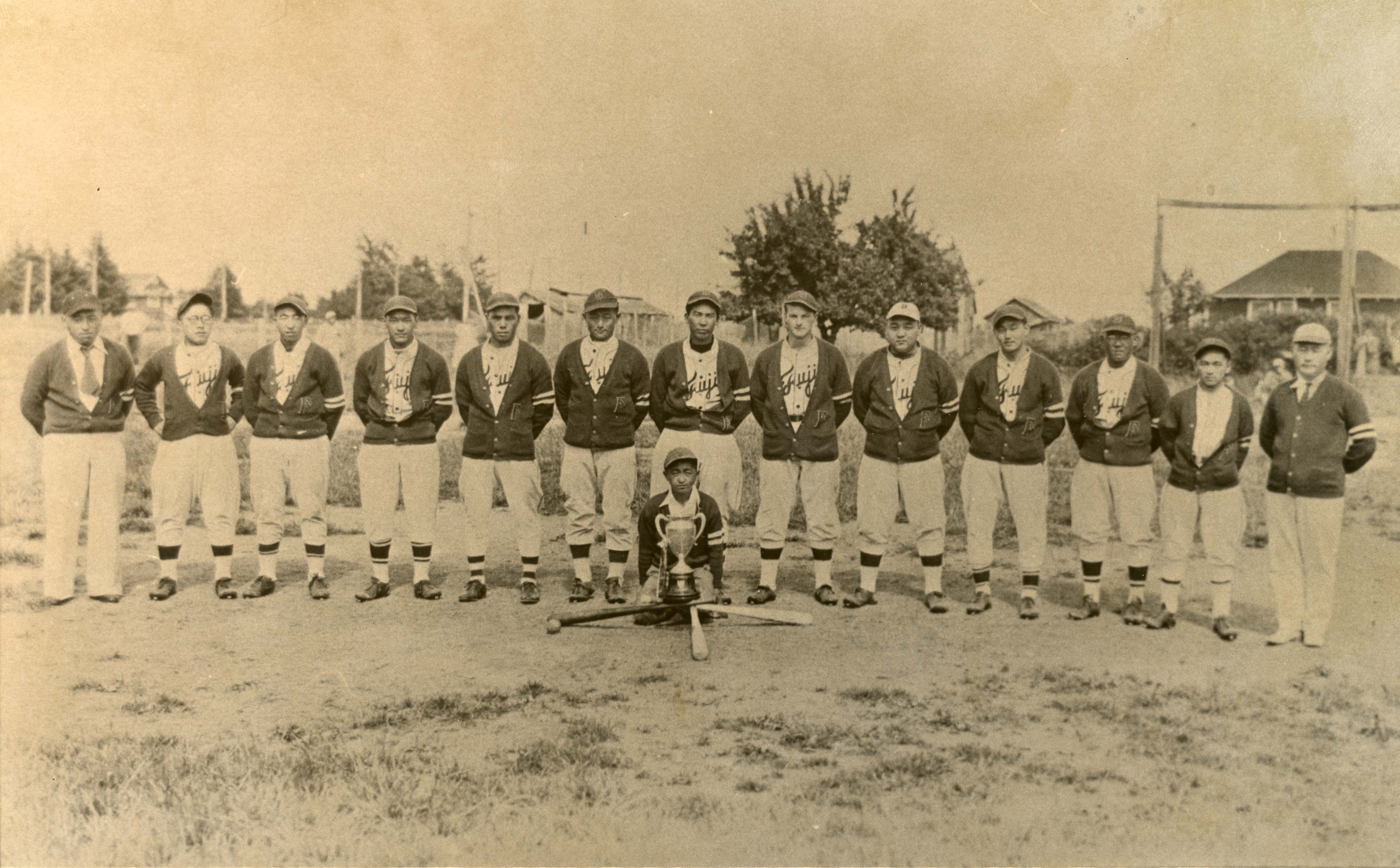
The Steveston Fuji baseball team played in the Vancouver Japanese League with the Asahi Giants, Powell Drugs and Union Fish teams. City of Richmond Archives photograph 1977 7 12.

Contending with discrimination and exclusion, The Japanese Fishermen’s Benevolent Society was formed in 1897 to protect the interests of the Nikkei fishermen and the community, A 1906 decision by the Richmond School Board to ban children of non-property owners effectively deprived most of the Nikkei children of an education and resulted in the construction of the Steveston Japanese School. To ensure that the health needs of the community were met, the Japanese Fishermen’s Hospital was built, Richmond’s first.

The Japanese Fishermen’s Hospital on No.1 Road in Steveston, ca. 1915. City of Richmond Archives photograph 2006 39 47.

By the 1930s the Japanese population had grown to account for two-thirds to three quarters of the total population of Steveston, approximately 3500 people. Nikkei owned businesses and stores of every description lined Moncton Street from No.1 Road to Third Avenue. Grocery stores, meat and fish markets, hardware and general stores, a bicycle shop, the River Garage, a billiard hall and clothing stores operated by Nikkei entrepreneurs could be found on both sides of the street. Five confectioneries (candy and chocolate shops) satisfied those with a craving for sweets.

The Mukai Confectionary stood at the corner of Moncton Street and No.1 Road and had a confectionary in the front, a pool hall in the back and ten bedrooms upstairs. It also housed a taxi business and had space used by a dentist who came to Steveston once a week. The building was lost in a fire sometime between 1942 and 1951 but the location is still known as Mukai Corner. City of Richmond Archives photograph RCF 272.

The density of the Japanese Canadian population in Steveston is very obvious when looking at the meticulous research done by Haruji (Harry) Mizuta who, using maps from the 1936 Waterworks Atlas of Richmond, marked the locations of Nikkei homes and businesses from the Scottish Canadian Cannery in what is now Garry Point Park to the Winch Cannery at the foot of No.2 Road. This is especially true with the map he marked as #30-2 1930s – Gulf of Georgia Cannery and Old Steveston Town – Steveston BC.

This map, created by Haruji (Harry) Mizuta illustrates the quantity of Nikkei homes and businesses, marked by blue and red dots, in Steveston during the Thirties. City of Richmond Archives Reference Files.

The growth of “Japan Town” came to a sudden halt with the forced relocation of Japanese Canadians from the Coast of British Columbia. Families were uprooted, stripped of their property and moved to areas where they had to start over and rebuild their lives, often in harsh circumstances. Steveston became a virtual ghost town with so many of its residents suddenly gone. In 1949 when Nikkei families were permitted to come back to the coast, those who decided to return rebuilt their lives and community again. Today the legacy of Japan Town is a cherished and honoured part of Steveston’s and Richmond’s history.

Haruji (Harry) Mizuta’s research shows some of the businesses and business owners along Moncton Street during the 1930s. City of Richmond Archives Reference files.

Keeping an Industry Afloat – Thomas Goulding’s Cork Mill

Anyone who has lived along the water in areas where the fishing industry operates is familiar with fish net floats. Picked up on beaches while beachcombing, strung on ropes to make ornamental fencing or to decorate the verandas of beach cabins, floats are an instantly recognizable symbol of life on the beach.

A man hauls in a gillnet fitted with cedar corks in this image ca. 1960. City of Richmond Archives photograph 1985 4 134.

Plastic floats have taken over the market since the 1950s, but before then fishing floats were almost exclusively made of cork or wood. The wooden ones were known as “cedar corks” and the only commercial supplier of them on the West Coast was Thomas Goulding who produced them in his Cork Mill at the Acme Cannery on Sea Island.

Surrounded by cannery housing, these three canneries dominated the south-west shore of Sea Island. At the bottom is the Fraser River Cannery, in the middle is the Vancouver Cannery and at top is the Acme Cannery where the Cork Mill was located. City of Richmond Archives photograph 1985 166 10.

The Acme Cannery was built in 1899, part of the boom in cannery construction during the late 19th and early 20th centuries to take advantage of the seemingly unlimited supply of salmon available in the Fraser River. In 1902 it was absorbed into the British Columbia Packers amalgamation. In 1918 it closed, but the buildings, net racks and moorage were maintained for the community of fishermen, mostly Japanese, who lived around it. In a small building on the west side of the cannery Mr. Goulding set up the cork mill. The building and all the equipment for the mill, the saws, the lathes, the reamer, the stringer and the tar vat were all hand-built by him with help from his Japanese neighbours.

Framed in red in this image, the cork mill is the small building visible next to the white wall of the Acme Cannery. Next to it are the net racks where the bundles of corks were hung to dry. Image cropped from City of Richmond Archives photograph 1985 166 10.

Work at the Cork Mill was seasonal. It sat idle during the fishing and canning season, operating only during the winter and spring. Western red cedar logs were supplied by coastal fishermen, found floating free or onshore in the Gulf of Georgia or possibly “liberated” from booms. The logs were cut into “cork bolts,” about four inches by four inches by four feet long.

Making the corks was fairly straightforward. The cork bolts were cut into blocks of either six or eight inches. A hole was bored through the centre of the cork which was smoothed and chamfered to prevent damaging the fishing net’s rope. The corks were then turned into their oval shapes on the mill’s lathes. A good day’s work could produce 2000 corks, ready for the next step in their production.

This map from the 1936 Waterworks Atlas shows the layout of buildings around the Acme Cannery. City of Richmond Archives image

Tom Goulding’s granddaughter, Doreen Montgomery Braverman, worked at her grandfather’s cork mill occasionally after school and described her part in the process. “The next step was to thread them onto twine in lots of ten. That was the job they sometimes let me do. A reef knot tied the twine together so the floats could be dipped into a vat of hot tar to preserve them. They dried on net racks next to the vat.”

Completed cedar corks were likely shipped out by boat, there being no road access to the mill. Distribution of the product was carried out by the various fishing companies, BC Packers, Nelson Brothers, J.H. Todd, Canadian Fishing Company, etc. The users of the corks were gillnet fishermen who would attach the floats to their nets using a crochet stitch. This was another job which could be done by young people, earning $15 per net, a job that could take several days.

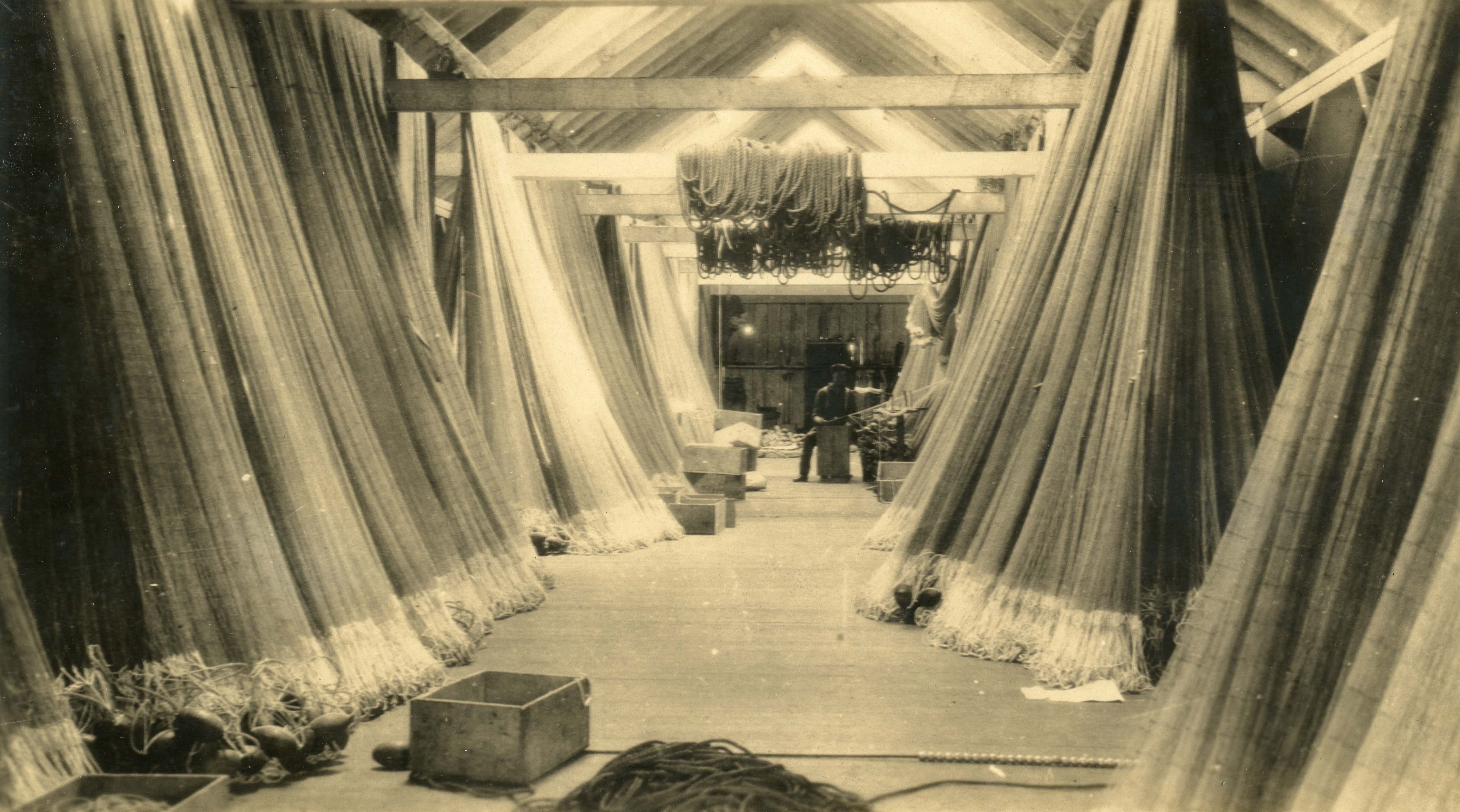
Nets hung in a net loft are fitted with cedar corks in preparation for the upcoming fishing season in this image, ca. 1930. City of Richmond Archives photograph 1985 4 124.

Running the mill required a number of workers. Fishermen, both Japanese and European, found and delivered cork bolts. The mill itself had a core group of workers. Gordy Bicknell was second in command at the mill. Alice Gillespie, Francie Edwards, family members, neighbours and friends rounded out the workforce. When the Japanese families were forcibly removed from the West Coast in 1942, the loss of the work provided by those neighbours caused difficulty in supplying cork bolts for the mill, but work continued.

By the 1950s the use of plastic foam corks was cutting into demand for the ones produced at the mill. Around 1954 an expansion of the Vancouver Airport resulted in a runway extension into south-west Sea Island signaling the doom of the small community and industries there. The land was expropriated by Crown Assets, houses were torn down or moved and the canneries were razed, along with the cork mill. The only evidence of their existence that remains are old pilings that once supported the canneries.

A salmon gillnet is supported by a net rack on a Steveston dock, its corkline fitted with modern plastic foam corks. City of Richmond Archives photograph 1985 4 2436.

See also https://richmondarchives.ca/2015/01/06/japanese-canadians-on-sea-island/

Peace Together – Ling Lam and the Hong Wo Store (同和)

Ling Lam 林德調 (City of Richmond Archives accession 2013 52.)

In 1890, a 17 year old boy arrived in Vancouver from China on the ship SS Abyssinia. In Vancouver, Chung Ling Lam* 林德調 studied English at the Chinese Methodist Church and worked in the canneries in Steveston. He started out in business by teaching himself how to bake bread and peddled buns door-to-door around Steveston. In 1895 he bought property and opened a store which became one of those places that embeds itself into a community’s collective memory.

Translating as “Peace Together” or “Living in Harmony”, this sign (to be read from right to left) was located on the wall inside the Hong Wo Store (同和) and is now one of four signs from the store in the Richmond Museum’s collection. (City of Richmond Collection 006.23.20)

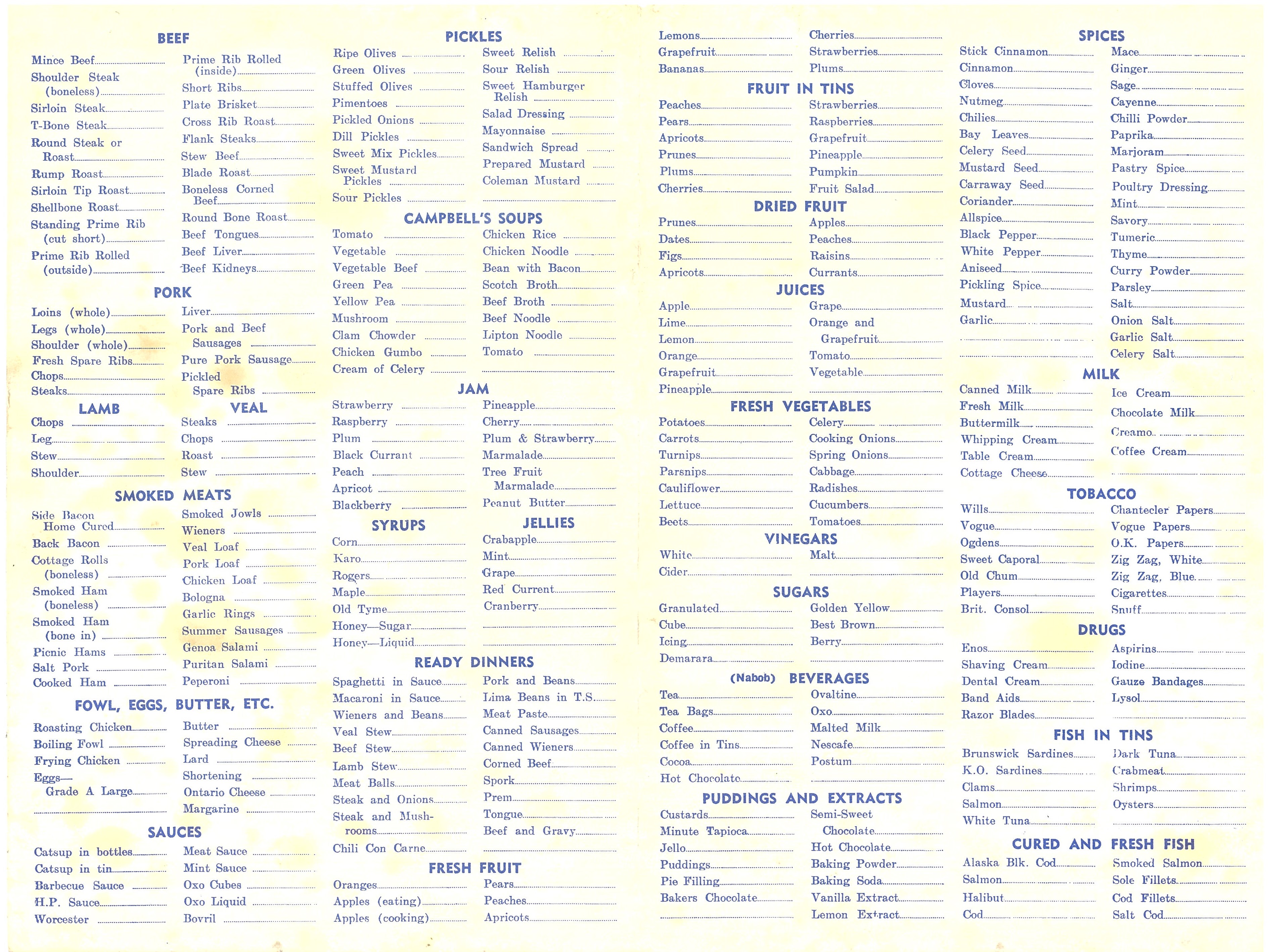
Ling Lam named his business Hong Wo, meaning “Peace Together” or “Living in Harmony”. Located outside the dyke near the foot of Trites Road and near the Nelson Brothers Cannery, the place was a true General Store. If you couldn’t get what you needed at the Hong Wo Store, you probably couldn’t get it anywhere. The building was located adjacent to a wharf where fishboats could tie up and get supplies before the next fisheries opening. To streamline the process an order form was developed and issued to the fisherman who could check off the items they needed and the order would be ready for pickup at the specified time. He sold provisions to fishermen, canneries, boatbuilders, farmers and the general public.

Filling out this order form would ensure that your order would be ready and waiting for you to pick up at the wharf behind the Hong Wo Store. (City of Richmond Archives accession 2013 46.)

The lot that Mr. Lam had built his store on was approximately 235 feet wide by 425 feet long (2.27 acres), and extended over the dyke to the high water line. Mr. Lam also acquired acreage north of that lot which was bordered on the north side by the CN Railway right-of-way and on the east by Trites Road (1.3 acres). Open fields to the north of the railway line (11.03 acres) became his farmlands, another arm of his business.

Property owned by the Hong Wo Company is outlined in red in this image cut from the 1936 Waterworks Atlas. Buildings are identified in the image including the pickle factory, greenhouses, bunkhouses and the store at the lower left. City of Richmond Archives image 1991 40 23 – Waterworks Atlas.
Nestled between cannery buildings, the Hong Wo property can be seen near the centre of this image from 1952. The roofs of Mr. Lam’s greenhouses can be seen near the CN Rail line and the pickle factory near Trites Road. Hong Wo and Company farmland is above the rail line. (City of Richmond Archives photograph 1997 16 92.)

Once Ling Lam had his retail and farming businesses running, he returned to China to get married. His wife, Chew Shee Lam 趙氏, arrived in Canada in 1899 and they lived in an apartment above the store. Around 1908 the store was destroyed by fire and the family moved into a cannery house until the new store was built. The Lam children walked three miles along the dyke into Steveston to go to school. With the business and farm prospering, Mr. Lam moved the family into a house in East Vancouver around 1914.

The Lam Family home in East Vancouver with the family standing on the front porch, ca. 1914. (City of Richmond Archives photograph 1986 17 1.)

To order stock for the store in the early days, Mr. Lam would ride a bike to New Westminster to his supplier’s offices. The order for the season would be delivered by boat to the wharf and shed behind the store. The bicycle was eventually retired when a telephone was hooked up in the store, one of the first in Richmond, and orders could be phoned in.

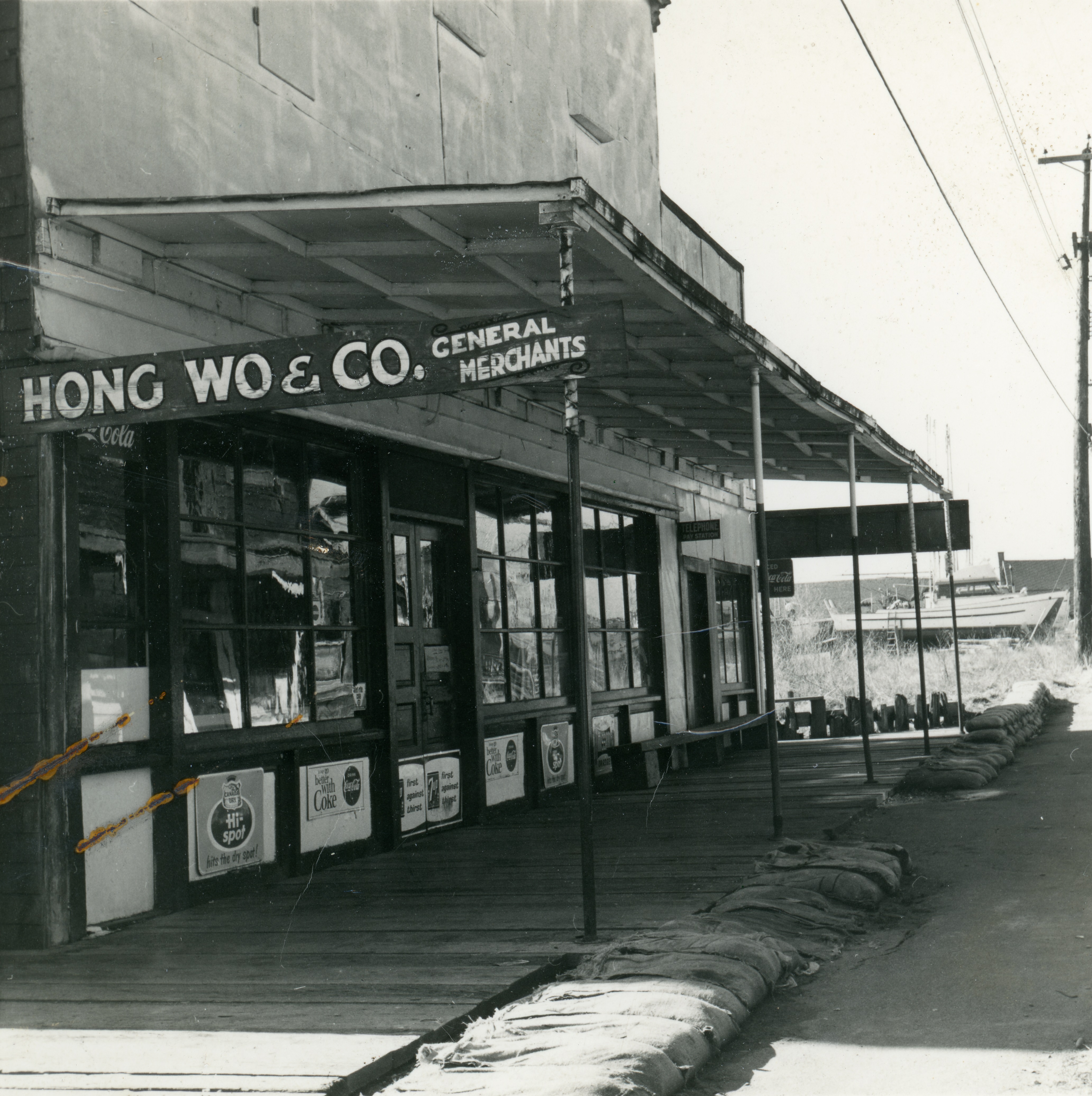
The Hong Wo Store was a place for people to drop by, have a chat and pick up what they needed. In this photo Jessie Lam Ross, the daughter of Ling Lam, visits with customers under the sign reading “Peace Together” or “Living in Harmony”. (City of Richmond Archives photograph 1987 22 179.)

Around 1914 Mr. Lam began to act as a labour contractor to two canneries, providing seasonal Chinese workers. He also employed the workers on his farms, supplying accommodations, food and a cook for a temporary crew of about 30 during the growing season and harvest. A full time foreman, assistant and truck driver were also employed.

The entrance to the Hong Wo General Store in 1969. The fishboat and cannery buildings in the background show its proximity to the water. (City of Richmond Archives photograph 2006 13 13.)
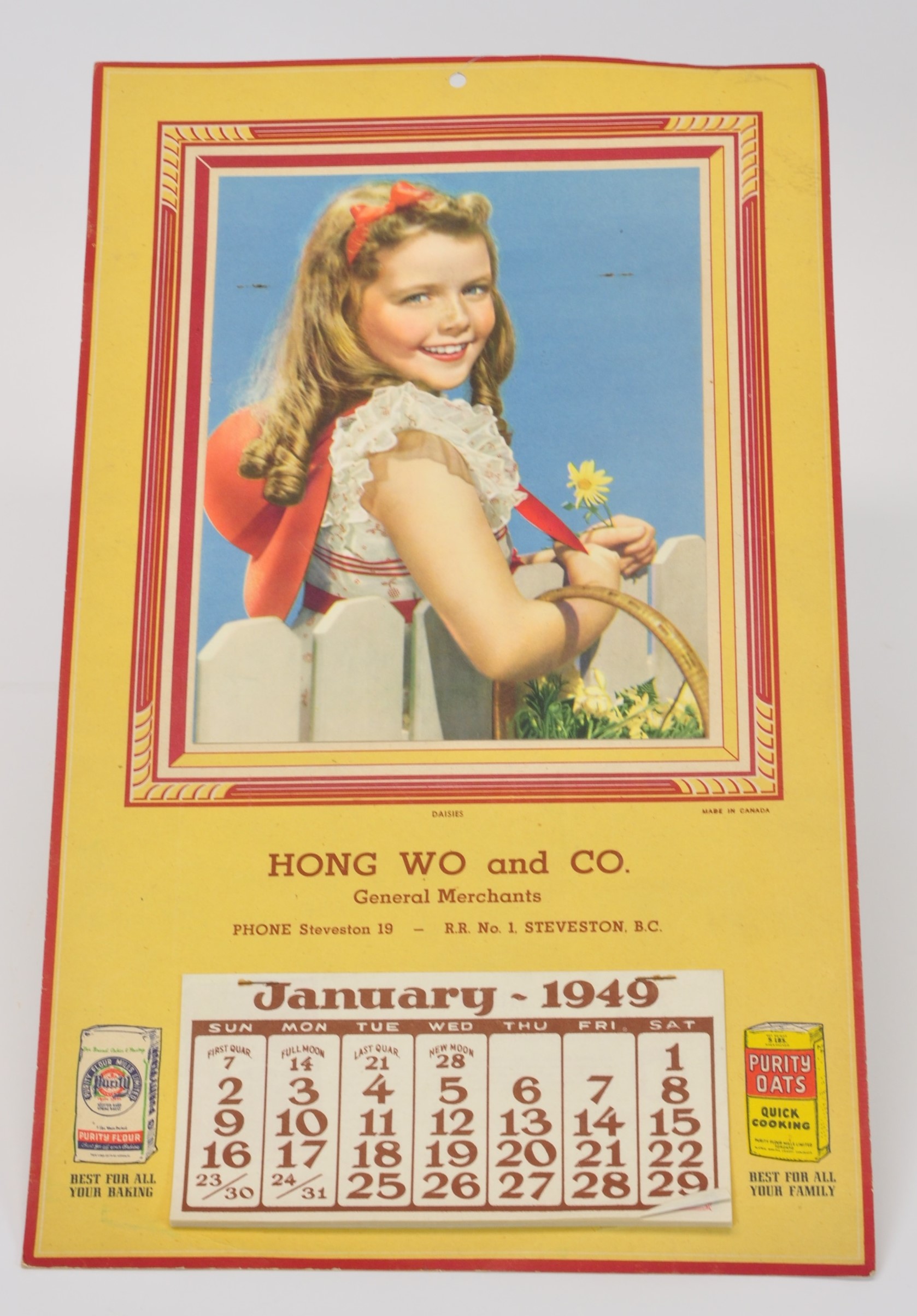
Like many businesses Hong Wo and Co. distributed calendars, like this 1949 example, to their good customers. (City of Richmond Collection 008.4.2)

During its peak, the farms owned by Mr. Lam produced tomatoes from about 30 greenhouses. Potatoes and beans were grown in the open fields along with a large crop of cucumbers for pickles. A complex of buildings was built on the lots south of the rail line. These included a pickle factory, complete with at least 20 eight-foot deep concrete vats for brining, storage buildings and greenhouses. Several bunkhouses were located on the property as well as a cookhouse with a large brick and metal wok and a building where barrels were assembled. Mr. Lam also invented a machine to sort cucumbers for dill pickles, a product which formed a large part of his farming business.

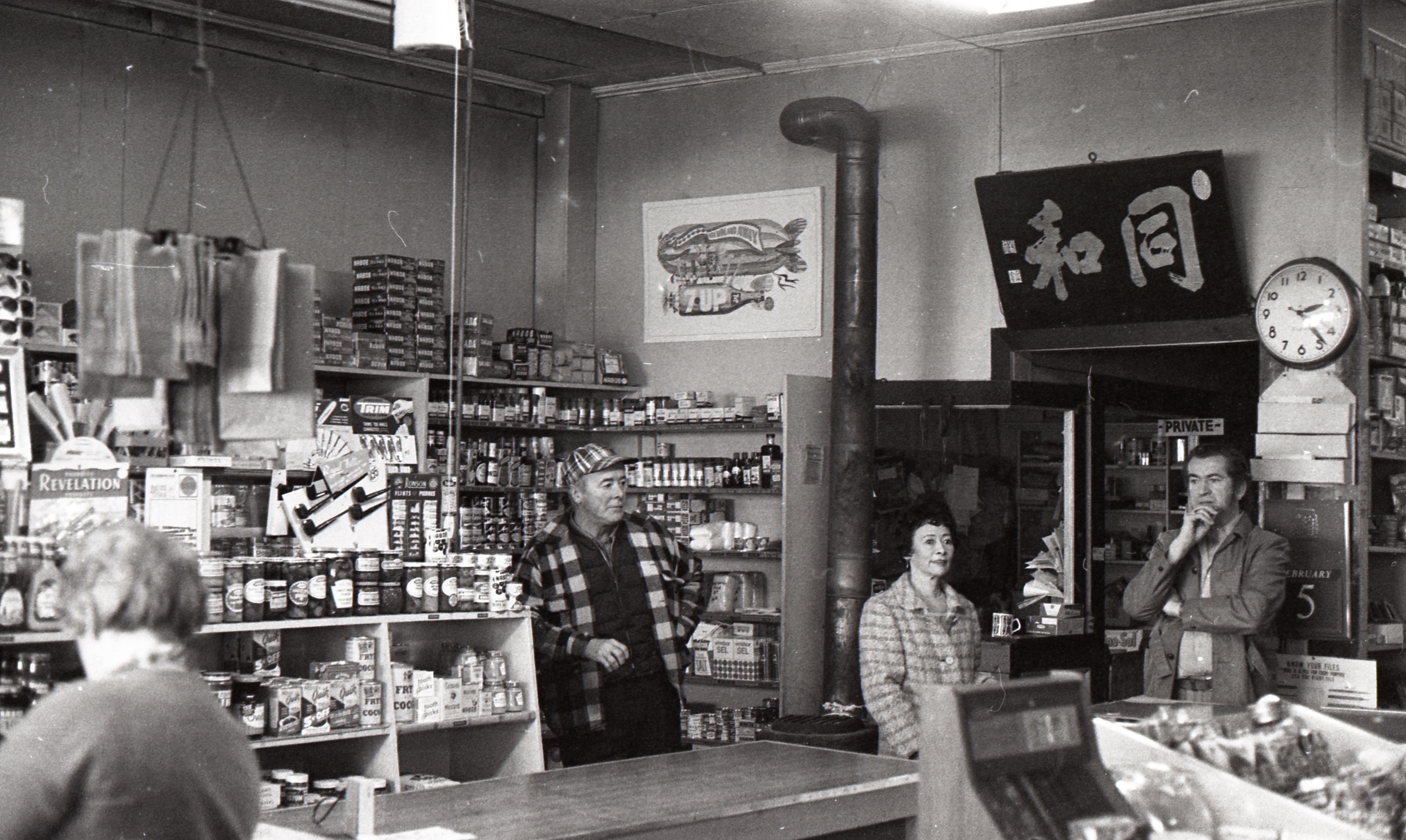
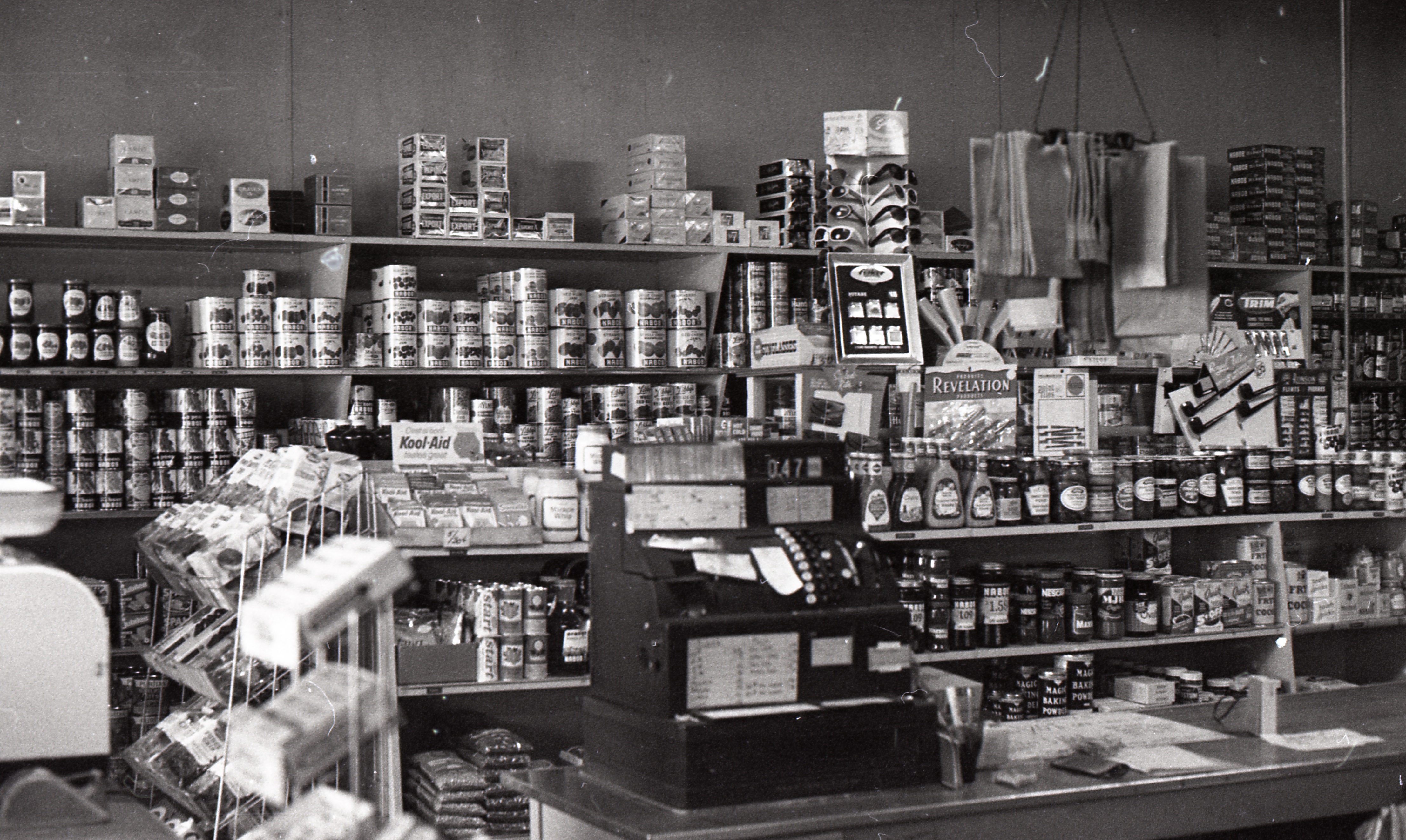
Work clothes, ice cream, instant mashed potatoes, Seven-Up and marine enamel all vie for space on the shelves of the Hong Wo Store. (City of Richmond Archives photograph 1987 22 171B.)

As reported by his daughter Jessie Lam Ross in a 1968 Richmond Review newspaper article, “He was a big name among the Chinese growers. He contracted with Empress, Royal City, Nalley’s, and other companies, and kept about 250 acres under cultivation in Steveston. Day and night he was on the go. He used to haul cukes in and pile them in huge stacks for the dill pickles.”

Looking west along the dyke path between the buildings on the Hong Wo and Co. property in 1967. The store is the last building on the left. (City of Richmond Archives photograph 1994 22 1.)

Ling Lam was also very active in Vancouver’s Chinese community, acting as the chairman of the Chinese Merchant’s Association, serving as an Elder in the Chinese United Church and starting the Chinese Farmer’s Association. He was known as a dedicated, principled, hard working man.

Some of Ling Lam’s buildings were still standing when this photo was taken in 1970. The pickle factory is the building on the far right. (City of Richmond Archives photograph 1987 22 152B.)

“I never saw him in work clothes,” his daughter Jessie remembered,” He always wore a blue serge suit and, in the summer, a shirt and tie and blue serge pants. He only took two holidays in his life, and then it was to go to California to look for seeds.”

Stock on the shelves at the Hong Wo Store. At its peak the store employed as many as 9 clerks. (City of Richmond Archives photograph 1987 22 180.)

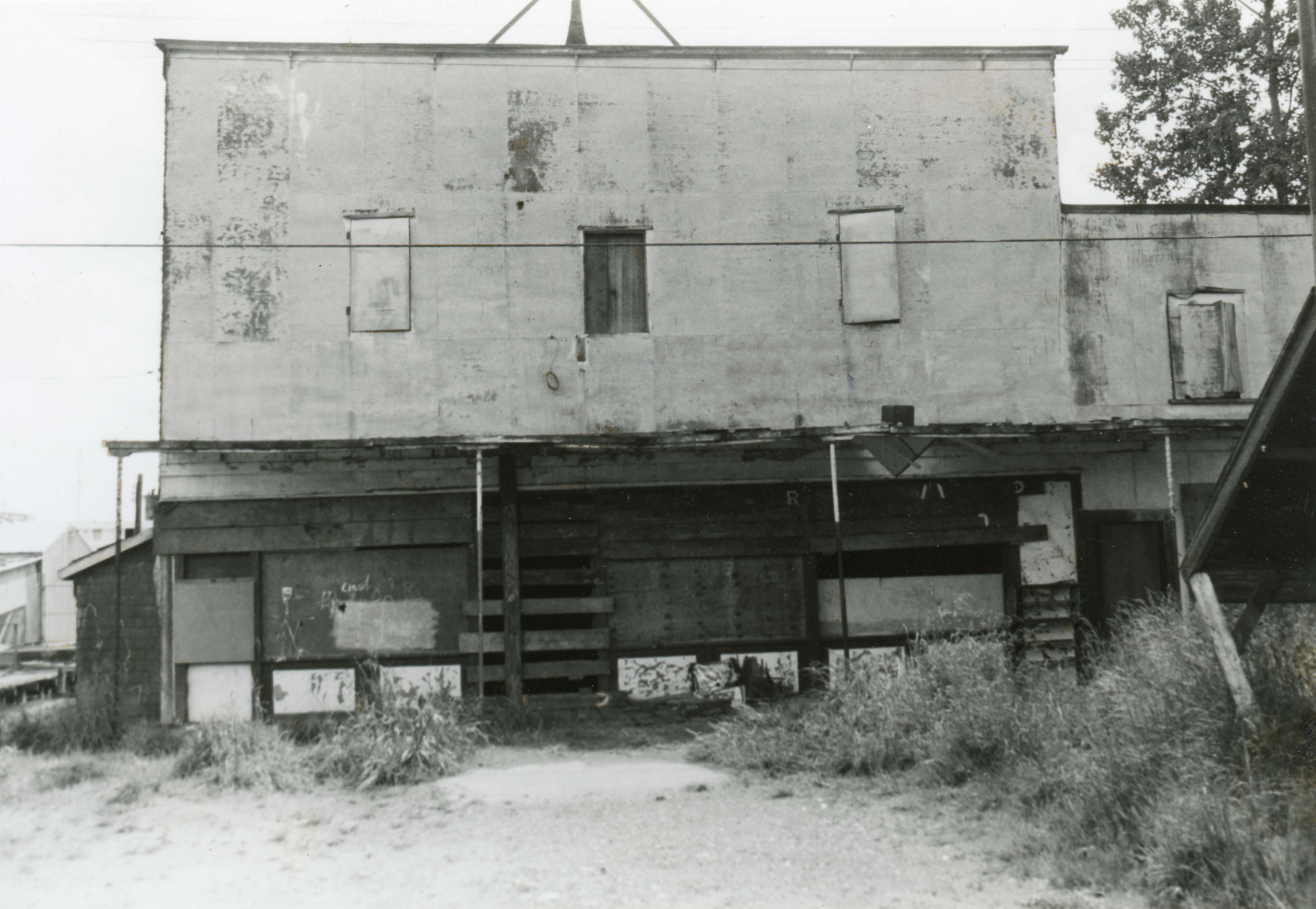
After Mr. Lam’s death in 1939, his son George Lam and daughter Jessie Lam Ross took over his business, operating his store until 1971. With the store’s closure the property and buildings on it began to deteriorate, causing concern for the owners of nearby cannery buildings after several fires had been extinguished by the Richmond Fire Department. Efforts by the Steveston Historical Society to have the Hong Wo buildings declared a heritage site proved to be in vain and the store and surrounding buildings were destroyed in 1977.

The Hong Wo Store in 1977, boarded up and nearing its demolition. (City of Richmond Archives photograph 1978 37 22.)

While the Hong Wo Store has been gone for nearly half a century its 75 years of service to industry and community make it one of the unique components of Richmond’s history. The store’s story and that of Ling Lam, a self-made man who built a thriving business from humble beginnings, are memorialized in a sign at the corner of Trites Road and Westwater Drive near the location of his pickle factory.

*This blog post follows Western conventions of naming with the given name preceding the surname.