What’s in a Name – Richmond

The place now known as the City of Richmond is located in the traditional and unceded territory of the hən̓q̓əmin̓əm̓ (Hunquminum) speaking people. They lived on and moved throughout the area using the many natural resources available to support themselves and their culture.

The arrival of non-Indigenous settlers in the 1800s began changing the land into what we know today. Mostly farmers, they began the process of dyking and draining and the construction of roads. Eventually they organized and submitted a petition to the Lieutenant-Governor in Council requesting the incorporation of a municipality under the name of the Township of Richmond, allowing them to collect taxes to help pay for continued development.

Richmond, North Yorkshire was the first place to have the name. It was founded about 800 years before Richmond, British Columbia. Photograph from https://www.richmond.org/Visit.

Richmond is believed to be the most common place name in the world. There are at least 105 locations on the planet called Richmond, six in Canada including this one. The original Richmond was founded in 1071 in what is now Yorkshire by Count Alan Rufus on lands granted to him by William the Conqueror after the Norman Invasion of Britain in 1066. The name comes from Norman French, “Richemonte,” meaning “Strong Hill.” Count Alan built a Norman Castle on the banks of the River Swale and the town grew up around it. The area became the seat of the Dukes of Richmond whose descendants travelled around the world naming the places they found after themselves. Other places were named Richmond by people who had a connection with older Richmonds, spreading the name even further.

The naming of Richmond, British Columbia is one of those historic events in which the reason for choosing the name was not officially documented. We know when it took place and who the participants were but not the motive behind it. This is further complicated by there being a number of people involved who had a connection to other places named “Richmond.”

Hugh and Jennie McRoberts – Richmond, New South Wales, Australia

Hugh McRoberts is acknowledged to be the first non-Indigenous settler in what is now Richmond. He was born in Belfast, Ireland in 1814 and emigrated to Australia with his wife in the 1840s where his daughter Jennie was born. In 1849 he set off for North America and made unsuccessful attempts at gold mining in California and at Yale on the Fraser River.

Hugh McRoberts, BC pioneer and Richmond’s first farmer.
City of Richmond Archives photograph 1978 2 29.

After failing to make his fortune gold mining, he was awarded a contract from the Colonial Government to build a road between Yale and Boston Bar and a trail from New Westminster to the river mouth, earning enough to bring Jennie to British Columbia and to buy some land. Around 1860 McRoberts pre-empted 1600 acres on the Vancouver side of the North Arm and on Sea Island where he built a house and established a farm, built the first dykes in what is now Richmond and raised crops such as wheat, apples, plums, cherries, pears and potatoes and raised cattle.

A sketch of “Richmond View” by an admirer of Jennie McRoberts done in 1863. He described it as “a poor attempt to represent on paper one of the most lovely spots in B.C.”
City of Richmond Archives photograph 1987 30 6.

Before long he owned nearly half of Sea Island, which people of the day referred to as “McRoberts’ Island.” His daughter Jenny named the house he built at the farm “Richmond Place” and their farm “Richmond View” because it reminded her of “Richmond” New South Wales, near where she grew up. This was the first time that the name “Richmond” was associated with the place we now call Richmond.

Hugh McRoberts’ house on his Sea Island Farm, Richmond View. By 1862 Richmond View Farm was harvesting wheat and other crops for sale in New Westminster. The farm was acquired by Thomas Laing in 1894. City of Richmond Archives photograph RCF 23.

Hugh McRoberts had sold his farm by the early 1870s and moved to New Westminster where he had a dairy business. He passed away in 1883, “Leaving a long and interesting record as a pioneer, a good sturdy man of the best type,” in the words of early Richmond historian, Thomas Kidd. Jennie had married and moved to Victoria in 1864 so neither she or her father could be credited with influencing the original petitioners to name the new municipality Richmond, although they and their farm were well known, which may have had some bearing.

Hugh and Mary Boyd – Richmond, Yorkshire, England

Hugh Boyd was born in 1842 in the same part of Northern Ireland as Hugh McRoberts and came to British Columbia in 1862. He, like so many, made an unsuccessful attempt at gold mining in the Cariboo. Returning to New Westminster, he worked building the trail from New Westminster to the mouth of the Fraser River in association with Hugh McRoberts, the McCleery Brothers, Alexander Kilgour and J. Mackie. In 1866 he partnered with Alexander Kilgour and they homesteaded on Sea Island on property abutting Hugh McRoberts’ Richmond View Farm. The property was known as Rosebrook Farm.

This map of McRoberts (Sea) Island shows the locations of Hugh McRoberts’ Richmond View Farm and Hugh Boyd and Alexander Kilgour’s Rosebrook Farm.
City of Richmond Archives photograph 1997 42 4 56.

In 1873 Hugh Boyd married Mary Ann McColl, the daughter of Sgt. William McColl of the Royal Engineers in New Westminster. Miss McColl was born in the original Richmond in Yorkshire, England. On November 10, 1879, when Hugh Boyd and the 24 other petitioners signed the request for the incorporation of the Township of Richmond, they did so in the dining room of the Boyd’s house at Rosebrook Farm. Hugh Boyd was selected as the first “Warden” (Reeve) of the new Municipality and Council meetings were held in the Boyd’s dining room for the next year until the first Town Hall could be built.

Hugh Boyd, the first Reeve of the Township of Richmond. City of Richmond Archives photograph 1978 2 5.

The Boyds left British Columbia and returned to Ireland in 1887 where they lived until their deaths, he in October 1931 and she in January 1952 at the age of 97 years. They named their home in Bangor, Northern Ireland, “Richmond.” Mrs. Boyd maintained that Richmond was named in her honour. In a letter to Major Matthews, the City of Vancouver Archivist, in 1944 she said, “The name of Richmond was decided on as an honour to me, and the name of the town I was born in somewhere in Yorkshire; also for allowing my dining room as Council Chamber until a hall was built.”

Mrs. Hugh Boyd, nee Mary Ann McColl, whose dining room was used as Richmond’s Council Chamber for a year before the first Town Hall was built. Image cropped from City of Richmond Archives photograph 1987 49 1.

W.D. Ferris- Richmond, Surrey, England

William Douglas Ferris was born in Richmond, Surrey, England and immigrated to Eastern Canada where he lived for many years before moving west to British Columbia, settling in New Westminster. As Thomas Kidd said in his book History of Richmond Municipality, Ferris had “all the spirit of a pioneer” and in 1866 at the age of 51 years he took a farm on Lulu Island, moving there with his wife and family. In 1877, now in his sixties and feeling too old to continue farming, he sold his farm to J.W. Sexsmith and moved back to New Westminster where he served as a Justice of the Peace and was elected as Mayor in 1879.

The petition, handwritten by W.D. Ferris, asking the Lieutenant Governor in Council to incorporate the Township of Richmond. City of Richmond Archives image RCF 39.

He maintained an interest and friendships with the settlers on Lulu and Sea Islands and, although he was not eligible to sign the document, he drew up the hand-written petition urging the Lieutenant Governor in Council to incorporate the Township of Richmond. Thomas Kidd related that he “has a dim remembrance of being told at the time of circulation that Mr. Ferris had chosen the name of Richmond for the Municipality to commemorate the name of his own native place in England.”

W.D. Ferris in 1879 when he was Mayor of New Westminster. New Westminster Archives Item IHP 1874.

John Wesley SexsmithRichmond Township, Lennox County, (Upper Canada, Canada West) Ontario

John Wesley Sexsmith was one of the most influential people in Richmond’s early history. He was born on May 10, 1830 in Richmond Township, Lennox County, Upper Canada where he grew up, attended school and worked on the family farm. At age 25 he went into business, opening a dry goods, grocery and hardware store in the Hamlet of Selby with his brother and brother-in-law and running a cheese factory with a partner. He also became active in public affairs and was the Treasurer of the Township of Richmond, Lennox and Addington for 18 years. In 1876 he and his family moved from Ontario to British Columbia and purchased 160 acres from W.D Ferris on the North Arm of the Fraser in 1877.

John Wesley Sexsmith, Richmond Reeve, farmer, businessman and community leader. City of Richmond Archives photograph 1994 18 1.

In 1879, he and his son, Charles Garret Sexsmith, signed the petition for incorporation. There is little doubt that J.W. Sexsmith’s experience and leadership had a great bearing on the formation of Richmond. As a rural area with small pockets of population here and there under a single administration, Richmond certainly followed the Ontario model of the Township Municipality from the 1800s. Mr. Sexsmith’s 18 years of experience in the municipal government of Richmond Township before moving to BC must have made him a leader in the discussions around incorporation.

The Sexsmith family home on River Road with family members standing in front, ca. 1890. J.W. Sexsmith and his wife Alice Mary Tuttle Sexsmith on the right. City of Richmond Archives photograph 1999 8 6.

J.W. Sexsmith was the only one of the aforementioned people who stayed in Richmond and took a lifelong part in community and business life here. He served as the Reeve of the Municipality for four terms and was the first Postmaster. He helped build, support and preached at the Richmond Methodist Church (now Minoru Chapel). He was one of the first School Board Trustees and founded the North Arm School District in 1877, the Lower Mainland’s first, and founded and was first president of the Richmond Agricultural Society. In business he built and operated a cheese factory on his farm, was one of the partners in the construction and operation of the Provincial Cannery, operated a steamboat service between Richmond and New Westminster, and was a financial backer of the Easterbrook Flour Mill. As Reeve and as a private citizen Mr. Sexsmith led and supported many of the significant developments in Richmond’s history, including the first telephone, bridges connecting Lulu and Sea Islands to the mainland across the North and Middle Arms, the railway to Steveston and the supply of electricity. He retired in 1908 and lived the rest of his life in his home on River Road, passing away in 1920 after a long and productive life. Descendants of Mr. Sexsmith maintain he that named our Richmond after his birthplace.

The first Richmond Town Hall, located near the intersection of Cambie and River Roads, ca. 1888. As a School Trustee J.W. Sexsmith applied for use of the hall for school purposes. This image shows school children playing outside, including four Sexsmith family members.
City of Richmond Archives photograph 1984 17 77.

The Corporation of the Township of Richmond, British Columbia

It is difficult to conclude that any one person can be said to have named Richmond. There are twenty-five signatures on the petition requesting incorporation so, obviously, a suggestion was made and a consensus was reached and, ironically, these flat, boggy islands were given a name that means “Strong Hill”. On December 3, 1990, Richmond lost its longtime designation as a Township and became the City of Richmond, having grown from a small farming district of 200 to 400 people into a diverse, multicultural city of over 200,000.

What’s in a Name – Brighouse

Brighouse is a name that has been associated with Richmond’s main retail and business district since the days before there was any retail or business done there. There is no question that the name Brighouse comes from Sam Brighouse, once the owner of the property on which City Hall and Minoru Park are now located but why did the area, part of Richmond’s City Centre, get and keep that name?

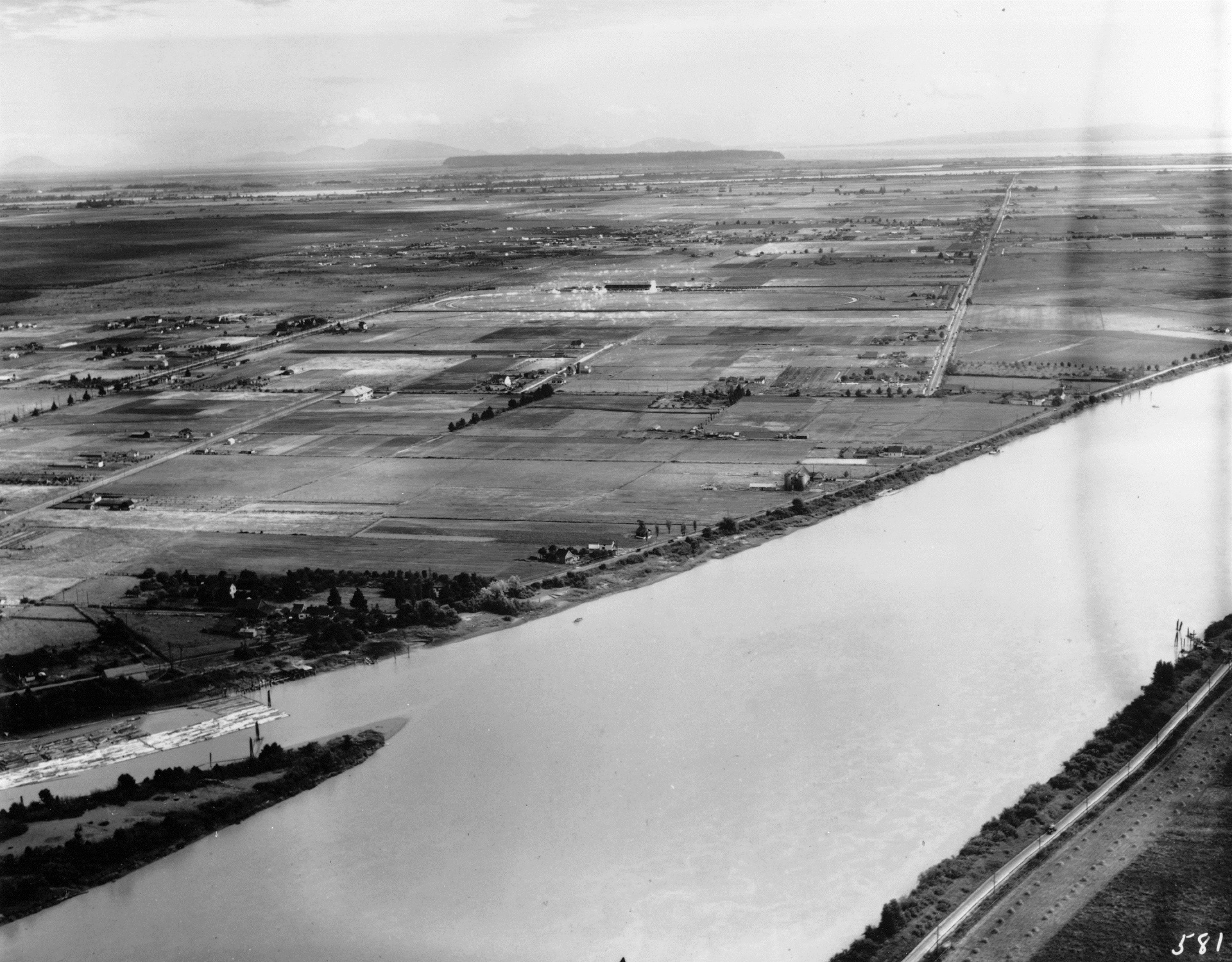
This 1976 aerial view shows most of the Brighouse lands, extending from Granville Avenue toward the river. The Brighouse subdivision can be seen at centre. City of Richmond Archives photograph 2008 36 3 79.

Samuel Brighouse, ca. 1860. City of Richmond Archives photograph RCF 32.

Samuel Brighouse was an prominent early settler, land owner, farmer and businessman in the Lower Mainland. He was born in Yorkshire in 1836 and at the age of 26 years sailed from Milford Haven with his cousin John Morton to New York and then to Panama, to San Francisco and then to New Westminster, a trip of almost two months.The two men made their way to the Cariboo gold fields and, finding prospects poor there, made their way back to New Westminster, making the trip both ways on foot.

Brighouse and Morton partnered with William Hailstone in November of 1862 and purchased 555 acres of land in what is now the West End of Vancouver, some of the most valuable land in the country today. The three men, who became known as “The Three Greenhorns”, built a cabin and spent a couple of years clearing trails and living on the property. In 1864 Brighouse, who had been looking at farmland in the Fraser Valley and speculated that it may become quite valuable, acquired 697 acres of land on Lulu Island, some preempted and some purchased from original preemptors. The property today is bounded on the east by No.3 Road, on the west by No.2 Road, on the south by Granville Avenue and on the north by the river.

This aerial view looking south, ca. 1925, shows a portion of the Brighouse property on the right, extending east to No.3 Road and south from the Richmond United Church to Brighouse Racetrack on the south. City of Richmond Archives photograph 1985 166 1.

Brighouse farmed crops and livestock on the property, building a successful operation and erecting the largest barn on the Fraser River. He purchased another property near New Westminster called Rose Hill, building a dairy farm there. He operated both of his ventures until 1881, when he leased out his farms and returned to his property on Burrard Inlet.

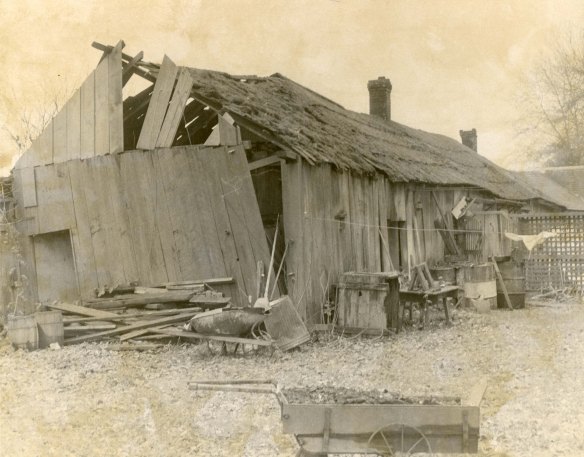
An old barn on the Brighouse lands, ca. 1973. City of Richmond Archives photograph 1977 16 13.

Brighouse was one of the signatories on the petition for the incorporation of  the Township of Richmond and he served briefly on Richmond Council in 1883, although he no longer lived there. He served two terms as one of the first Councillors in Vancouver. Sam Brighouse focused his attention on Vancouver and its development after leaving Lulu Island and made a fortune selling his property there after the arrival of the Canadian Pacific Railway. He retained a great deal of his wealth by never selling his Richmond farmland, instead leasing it to other farmers.

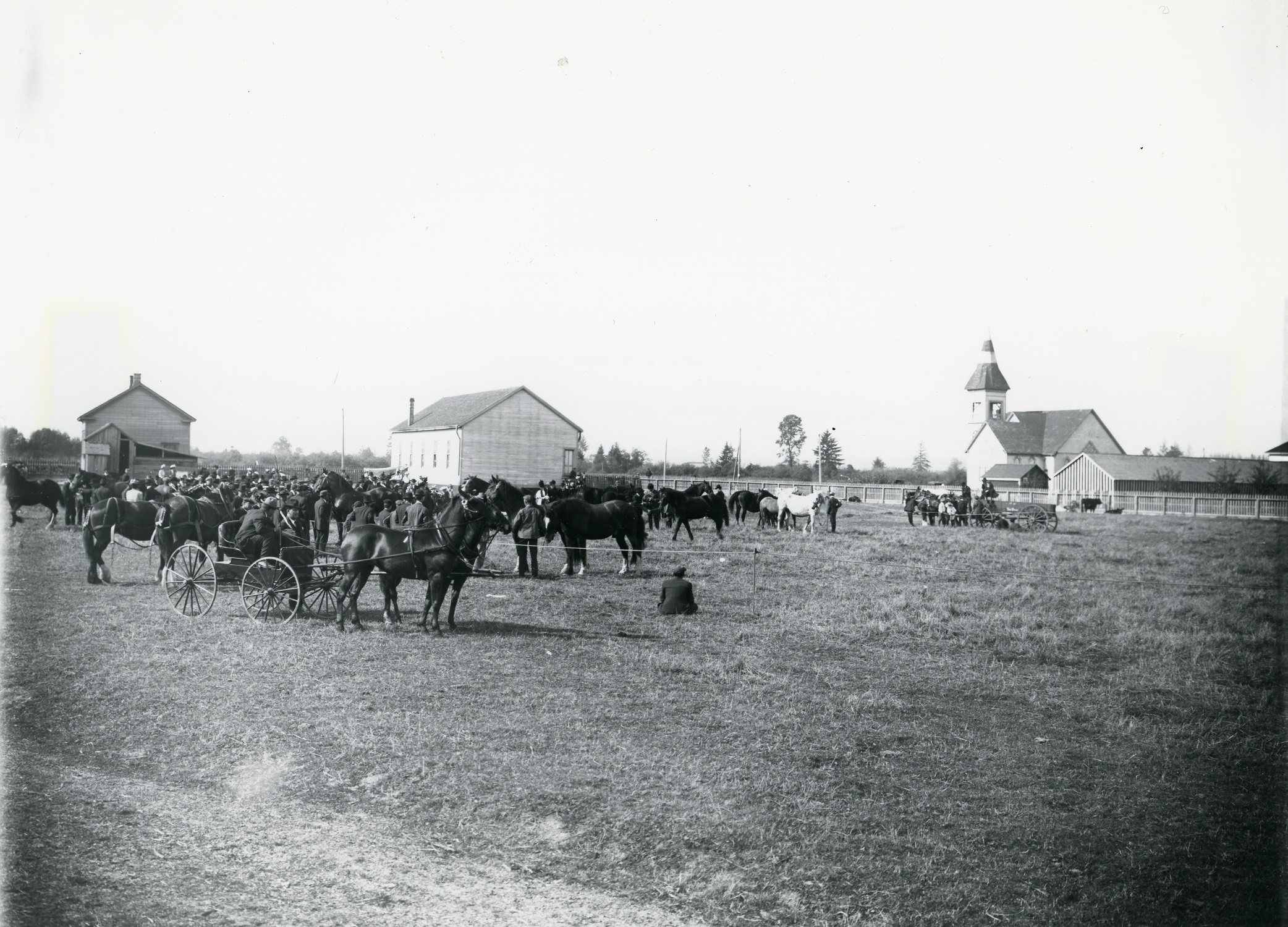
Richmond’s first Municipal lands were purchased from Sam Brighouse for $400 in 1880. Shown are the Town Hall, left, the Agricultural Hall, centre, and the Richmond Methodist Church, now Minoru Chapel, at its original River Road at Cambie location. City of Richmond Archives photograph 1977 9 18.

In 1880 Brighouse sold five acres of his Lulu Island property at the present intersection of River and Cambie Roads to the fledgling Corporation of the Township of Richmond where the first Town Hall was built. Sam Brighouse’s later life was marked by ill health and he returned to his native Yorkshire in 1911 where he passed away in 1913.

Michael Wilkinson Brighouse, Sam Brighouse’s nephew and Heir. City of Richmond Archives photograph 2001 9 3.

Brighouse was joined by his nephew Michael B. Wilkinson in 1888 who helped his uncle with the running of his farms as well as investing in canneries. He changed his name to Michael Wilkinson Brighouse, a condition of his uncle’s will, and became Sam’s heir. In 1909 Sam Brighouse sold a portion of his land to a group who built Richmond’s first racetrack, Minoru Park, named for the 1909 Epsom Derby winner. The track went out of business in 1914 with the First World War and the property was bought back by Michael Brighouse and reopened as Brighouse Park Racetrack in 1920.

Michael W Brighouse kept the Brighouse name in the public consciousness through his business and political activities. He served two terms as a Richmond Councillor in 1894 and 1895 and one term as Reeve in 1900. In 1919 he traded the five acres of land purchased from his uncle by the Township for four acres of land at the present City Hall site. Wilkinson Brighouse passed away in 1932, leaving the property to his heirs who sold it to the Corporation of the Township of Richmond in 1962. Until its sale, Wilkinson Brighouse and his heirs continued to lease out their farmland to local farming families such as the McClellands, Shaws, Fishes and Zellwegers.

The CPR train , “The Sockeye Limited”, at Steveston, ca. 1902. City of Richmond Archives photograph 1977 2 38.

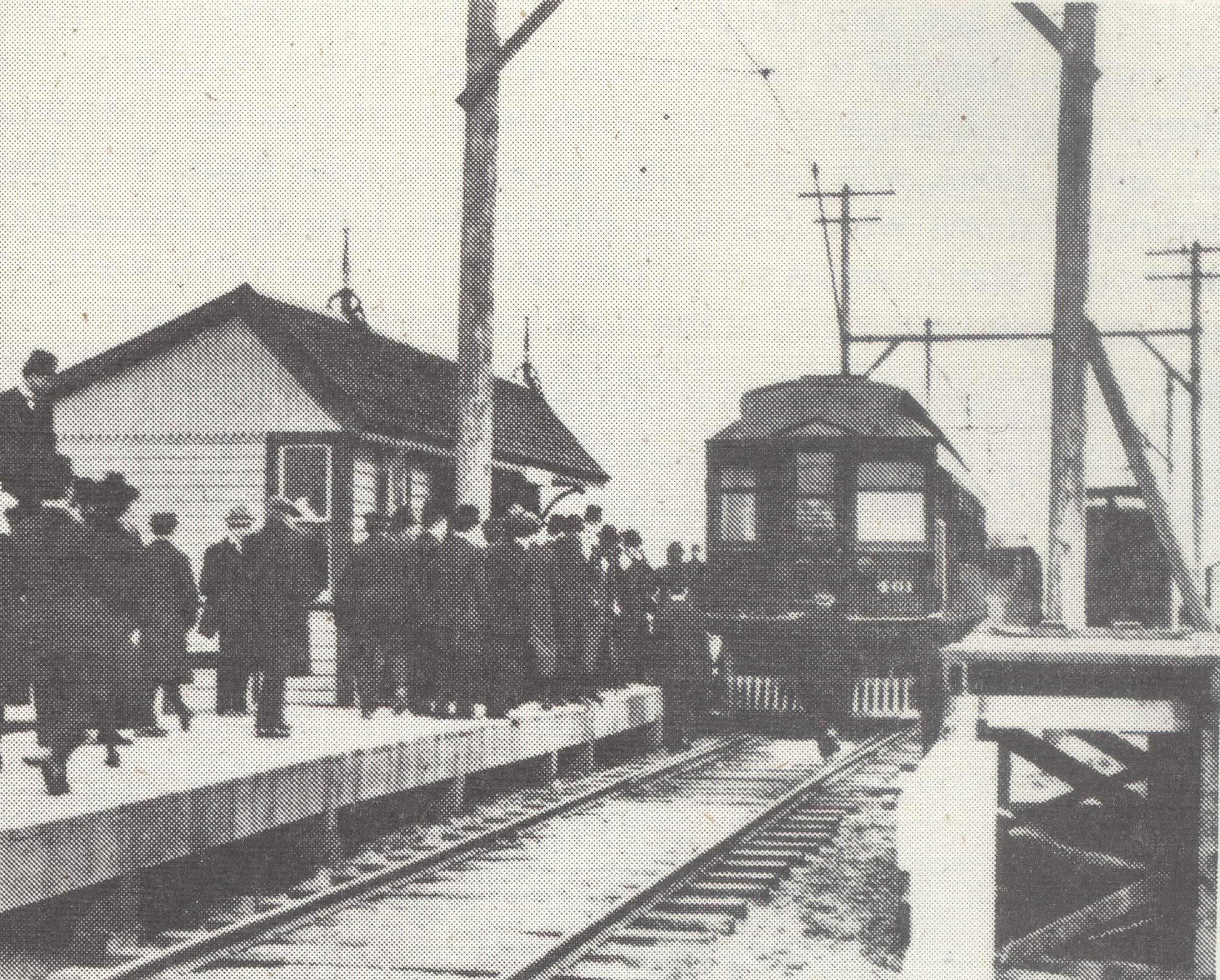
So the Brighouse name was very well known in Richmond throughout its early years, but how did that part of town retain the name over  the names of some of the other pioneer property owners in the area? One explanation is because of the Canadian Pacific Railroad and the construction of the Vancouver and Lulu Island Line, the “Sockeye Limited” in 1902. Eyeing freight and passenger revenues from the canneries of Steveston and the farms which dotted Lulu Island, the CPR built the railway from the depot in Vancouver to Eburne (Marpole), spanned the North Arm of the Fraser with a bridge and built an eight mile track to Steveston where they built a large train station. Along the line where it crossed a road, still a rarity in Richmond at the time, three smaller stations were erected. At No.2 Road “Lulu Station” was built. At No. 20 Road “Cambie” Station, named for Civil Engineer and CPR Executive Henry J. Cambie, was built. Where the track crossed No.3 Road near the southeast corner of the Brighouse property, owned by the man who had sold large amounts of his Vancouver property to the CPR and its officers, “Brighouse” Station was put up.

Brighouse Station, ca. 1909. Photograph from “Richmond, B.C., Brighouse District Self-Guided Historical Tour” (1992), City of Richmond Archives GP 614

It is often the case where railroad stations are placed, the surrounding area takes on the name of the stop and the Brighouse name was even further imprinted on the area in 1922 when the Brighouse Post Office was opened at the train station. By this time the second Richmond Town Hall had opened across No.3 Road from the station and its address became “The Corporation of the Township of Richmond, Brighouse, B.C.”.

Detail of an envelope showing the return address for the Richmond Town Hall, 1922. From the personal collection of H.S. Steves.

Businesses took on the name of the area and names like Brighouse Grocery, Brighouse Cafe and Brighouse Hardware let customers know their location and that they were near the tram station. As years passed Brighouse Subdivision was built on the old farm, served by Samuel Brighouse Elementary School. Brighouse Industrial Estates provided homes for large companies. Today the Richmond Olympic Oval occupies space near the river and condo towers rise where once Sam Brighouse built dykes to protect his farm.

The Brighouse Cafe, shown here before 1940, was one of a multitude of businesses, services, organizations and retailers that used and continue to use “Brighouse” in their names. City of Richmond Archives photograph 2001 10 3.

The name Brighouse has become synonymous with the commercial and administrative centre of Richmond and although the original train and tram station is long gone, a new Brighouse Station opened down No.3 Road from the original one in 2009 as the terminus of the Canada Line further connecting the name of Sam Brighouse to the history of Richmond.


What’s in a Name – Lulu Island

The City of Richmond is an island city, built on islands formed over millennia by the action of the Fraser River. The largest of these islands is Lulu Island, home to the great majority of the city’s population, farmland and industry. Even though it has been part of the Corporation of the Township of Richmond since 1879, people who were born and raised on the island will tell you that they are from Lulu Island, not Richmond, the name appearing on birth certificates, in telephone books up into the 1960s, in business names and even as an official mailing address through the 1950s. Where did this likeable if somewhat whimsical name come from?

colonel-moody-map-1860

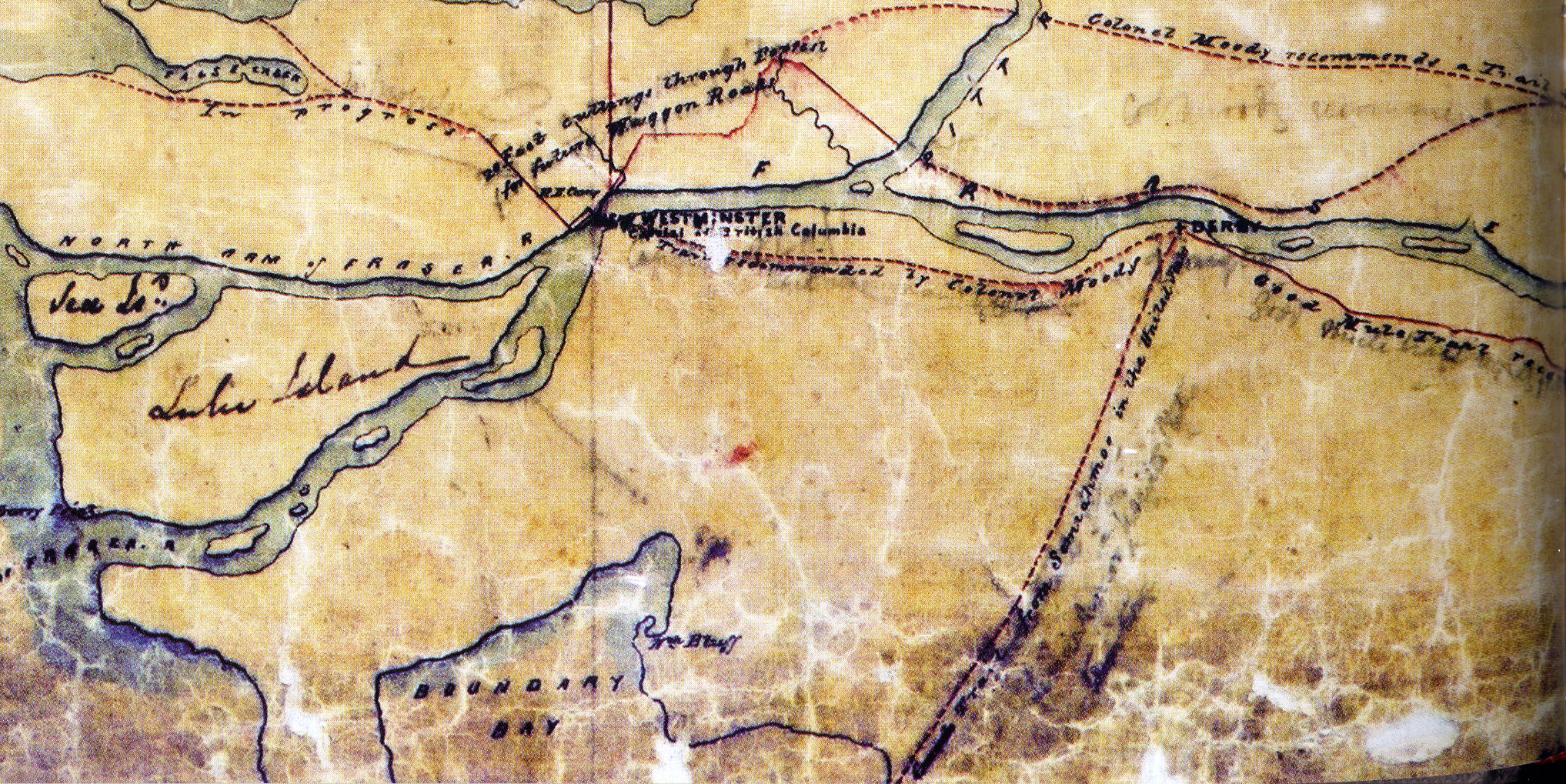
This map was sent by Col. Moody to BC Governor James Douglas and was dated June 29, 1860. It shows trails that were existing at the time, trails that were under construction and trails and roads that Moody recommended be built. It also shows the names of Lulu and Sea Islands, added at a later date in different handwriting. (City of Richmond Archives digital files)

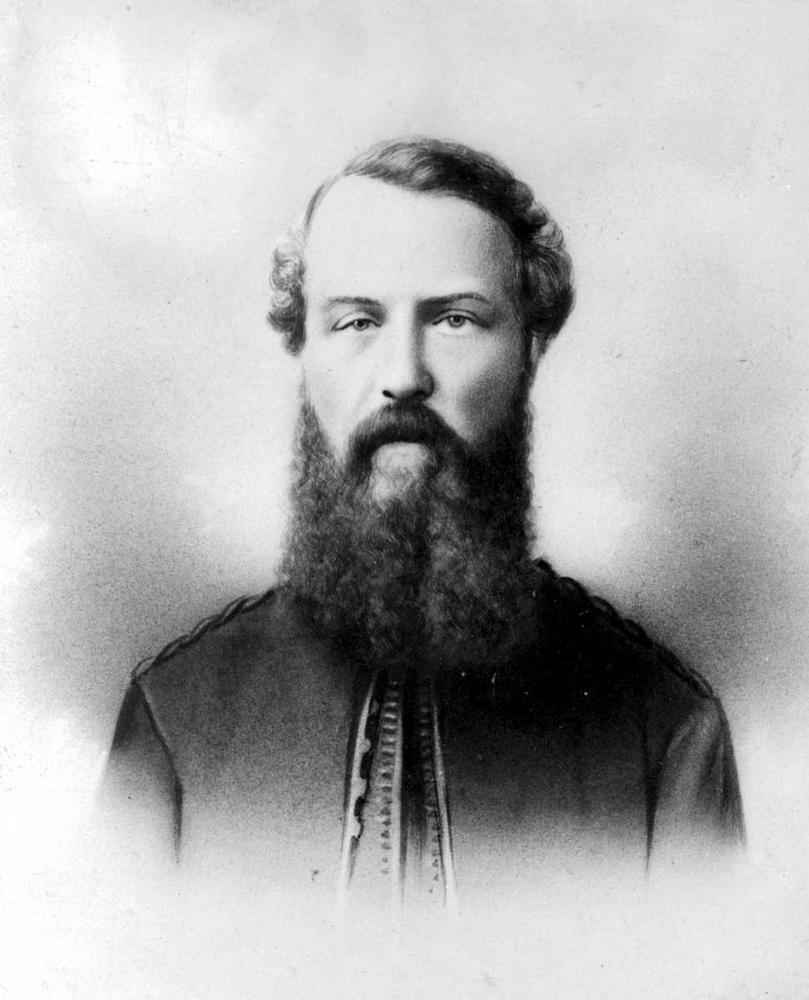
The person responsible for naming Lulu Island, and many other features of the Lower Mainland of British Columbia, was Colonel Richard Clement Moody, a pivotal figure in the history of British Columbia. Moody was made the Commander of the British Columbia detachment of the Royal Engineers in 1858 and was sworn in as the Chief Commissioner of Land and Works and Lieutenant-Governor of the Crown Colony of British Columbia in 1859. Under his command the Royal Engineers located and surveyed defendable town sites, surveyed country lands, built roads,  examined harbours, and reported on mineral deposits, fisheries and other resources. Although police work was not part of the detachment’s mandate, they also took on the task of ensuring that the rule of law was upheld in the fledgling colony.

a-01722_141

Colonel Richard Clement Moody, Royal Engineers, one of the most influential people in early BC history. (BC Archives photo A-01722)

Moody selected New Westminster as the site of the Colony’s capitol, mostly due to its strategic location on the north bank of the river, defendable from an attack from the United States and able to be resupplied from Burrard Inlet through North Road, which was also built by the Engineers. By 1858 the New Westminster town site had been cleared and the streets were not even finished being laid out before town lots were being sold. No frontier town would be complete if some enterprising individual did not open a saloon, and so Mr. J.T. Scott opened the Pioneer Saloon in New Westminster, to which he soon built an addition “in the shape of an extended wooden shack” and called it the Pioneer Theatre. Into this rough frontier town in 1860 came the Potter Dramatic Troupe, who were dropped off on Burrard Inlet and had to walk to New Westminster along the trail which would become North Road, carrying all their costumes and set materials with them. The company’s leader, John S. Potter, was a well-known figure in early American theatre, having opened theatres and managed dramatic companies in virtually every corner of the United States. From 1855 to 1865 he operated in the Northwest, from California to British Columbia, and from October 1860 to May 1863 he was the most important figure in theatre in Victoria.

1977-2-25

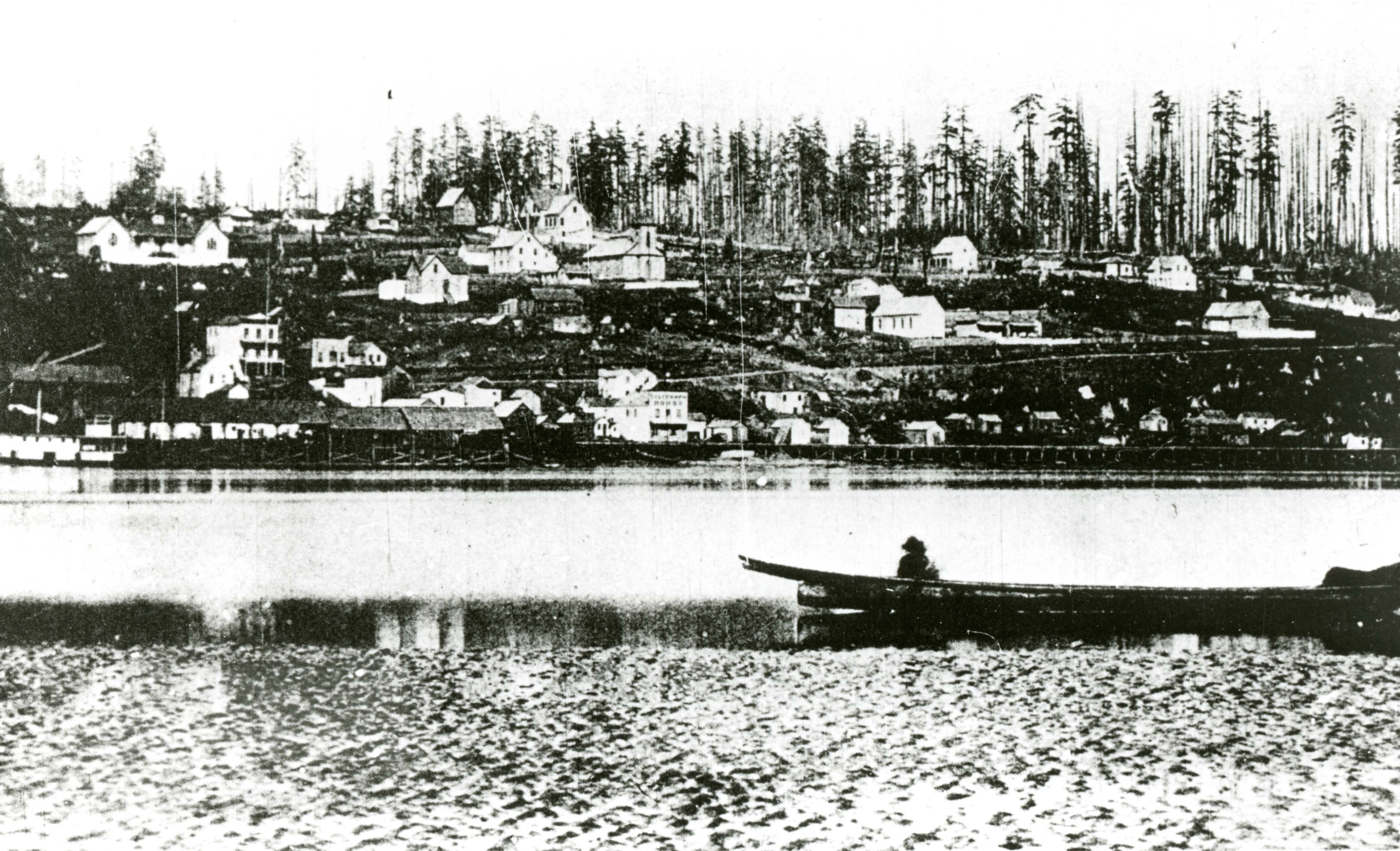
Moody’s capital, New Westminster, ca. 1864. A frontier town on the river. (City of Richmond Archives photo 1977 2 25)


bcolonist-1861-2-11

Travelling theatre troupes often had to operate on a shoestring budget. Potter was held in custody in Victoria for an unpaid bill of $250 he left in Sacramento. A benefit performance for the relief of his debt was held, featuring members of the Stark Theatrical Troupe as well as members of his own company, including Lulu Sweet, and her mother and father. (The British Colonist, Feb 11, 1861)

Travelling theatrical troupes in the frontier lived a rigorous and hazardous existence. They performed in some of the most primitive theatres one can imagine, in front of audiences consisting of pioneers who were starved for entertainment, often well lubricated at the saloon to which the theatre was often attached. The troupes lived temporarily in boarding houses and cheap hotels, often had to eat poor food and were subjected to the social prejudice that was associated with theatrical people, especially actresses, during that time period. Travel was usually difficult, time consuming, and all the equipment for the shows had to be carried with them, leading to standardization of sets and costumes. A company would carry several sets, painted on canvas, such as a landscape, a fancy interior, a plain interior or a street scene. Costumes would also be adapted to serve for many roles with little attention to historical accuracy. Even the actors would play stereotypical characters for which they had developed a talent for portraying, regardless of the age or gender of the person.

Potter’s troupe played in the Pacific Coast States and Washington Territory, appearing in Vancouver Washington, Portland Oregon and many small California towns. They also performed in theatres in San Francisco and in 1860 made the sea voyage to Victoria, where the troupe boasted about “Being composed of Fifteen Ladies and Gentlemen of acknowledged talent and respectability, they are enabled to present a better series of legitimate entertainments than ever yet attempted in this city.”

The star of Potter’s troupe was young Lulu Sweet, “The Beautiful Juvenile Actress, Songstress and Danseuse.” Lulu, who was born around 1844, was accompanied in her travels with the troupe by her mother, Mrs. E. Sweet who was also an actress, and her father, Dr. John D. Sweet, a physician. Starting around age 12 Lulu was a child actress in the San Francisco Theatre circuit, performing with a company of 27 “juvenile comedians.” She had joined the Potter troupe by 1860, traveling to the western states with them and then to Victoria, where they performed to good reviews for several weeks before taking the trip to New Westminster for a three week engagement. Music for the production was taken care of by the Royal Engineers Band and performances were attended by all the local dignitaries, including Colonel Moody, who was apparently quite a fan of Miss Sweet’s.

rcf-21_page-24

Lulu Sweet, ca. 1865, actress, singer and dancer who gave her name to Lulu Island. (City of Richmond Archives photo RCF 21)

The Potter Troupe played in Victoria and made three trips to New Westminster during their stay in the colonies. It was on the trip back to Victoria on the steamer Otter in January 1861 that Lulu Sweet asked Colonel Moody the name of the large island they were passing. He told her that it had no name and then exclaimed that he would name it after her, and Lulu Island it has been ever since. It appears that Moody had second thoughts about the name he had chosen. A map he sent to the Colonial Office that same year had the name “Lulu” overwritten with the name “Palmer”, most likely hoping to rename the island after one of his officers, Lieutenant Henry Spencer Palmer but Lulu Island it remained.


lulu1863

This photo of Lulu Sweet was taken in 1863 at a studio beside Maguires Opera House in San Francisco, a theatre in which she performed for many years. She never returned to BC after leaving Victoria, and never set foot on the Island that was named for her. (Image from the City of Richmond Biography Files)

Lulu Sweet and the Potter Dramatic Troupe left the colonies in 1863 and returned to San Francisco where she continued to act, sing and dance in venues such as Maguire’s Opera House. She was a successful actress whose name shows up in many playbills and newspaper ads for theatres in San Francisco through 1865 as well as later newspaper articles about the history of theatre in San Francisco. Around that year it appears that she married a Mr. Smith, had four children, later divorcing. She lived with her daughters in Burlingame, a suburb of San Francisco until her death in 1914.


What’s in a Name – Minoru Park

An oasis in Richmond’s City Centre, Minoru Park is home to a wide range of recreational and cultural facilities. Areas set up for a variety of field sports, a walking and running track, ice rinks and swimming pools, as well as museums, a library, archives, spaces for arts and crafts, senior’s facilities, etc. make the park a popular and well used part of life in our city. With the Japanese origin of the name Minoru, one might think that it connects to Richmond’s history of Japanese immigration, but in fact, the name comes to us from across the Atlantic Ocean.

Eida family-1

The Eida Family, clockwise from left, Tassa, Charlie, Claire, Kaiji and Minoru. (City of Richmond Archives photograph 2009 23)

Between 1906 and 1910, Colonel William Hall Walker, a wealthy Scotsman, was having a Japanese garden built at his estate, the Tully Stud near Kildare in Ireland. The gardens were laid out and built by Japanese master gardener Tassa Eida, who did such a magnificent job that the gardens remain a popular tourist attraction today. A successful breeder of race horses, Walker named one of his colts Minoru after the son of his gardener. In 1907, Col. Walker leased a half-dozen yearlings to King Edward VII, including Minoru.

The horse Minoru had a profitable career in the King’s colours, winning at Epsom as a two-year-old and, ridden by jockey Bertie Jones, winning the Greenham Stakes and the 2000 Guineas as a three-year-old. His greatest triumph was in winning the 1909 Epsom Derby for the King, the first time a reigning monarch had won the coveted prize. The horse came in fourth at the Doncaster St.Leger Stakes, missing a chance to win the British Triple Crown. Two more wins that year finished his year with five wins in seven starts.

2014 26 1

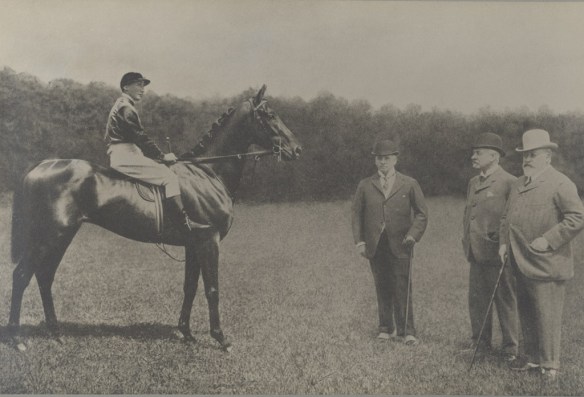
King Edward VII (R) with Minoru after winning the Epsom Derby in 1909. Bertie Jones is the jockey. (City of Richmond Archives photograph 2014 26 1)

In Richmond in 1909 a group of businessmen, Messrs. H. & T. Springer, Suckling, Lewis and Marpole, were building the Township’s first thoroughbred horseracing track on land they had purchased from Samuel Brighouse. In 90 days a mile-long oval, a grandstand, a clubhouse and a mile of barns were built at a cost of $75,000. In choosing a name for the track, they settled on the name of the horse that had just won the Derby for the King and Minoru Park Racetrack was born. Opening day at Minoru Park was attended by 7000 race fans.

2001 09 24

The Minoru Park Racetrack grandstand and clubhouse in 1909. (City of Richmond Archives photograph 2001 9 24)

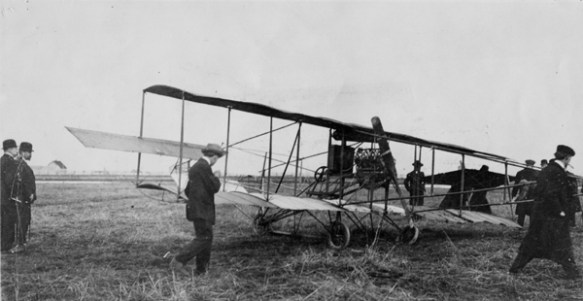
The track was used for many events in addition to horse racing. Minoru Park was used as a landing strip for aircraft, and was the location of the first flight by an airplane in Western Canada on March 25, 1910, the starting point for the first flight across the Rocky Mountains and the venue for air shows hosted by the Aerial League of Canada.

1978 15 18

On March 25, 1910 Mr. Charles K. Hamilton made the first aircraft flight in Western Canada, taking off in front of 3500 spectators at Minoru Racetrack. (City of Richmond Archives photograph 1978 15 18)

Automobile racing exhibitions were also held at the track, hosting well-known drivers like Barney Oldfield, Bob Burman and “Terrible” Teddy Tetzlaff and cars like the famous “Blitzen Benz” and the “Romano Special”. Polo matches were held in the middle of the track, temporary boxing rings were set up for fans of the pugilistic arts and community events, such as May Day celebrations, were held there as well.

1984 17 69

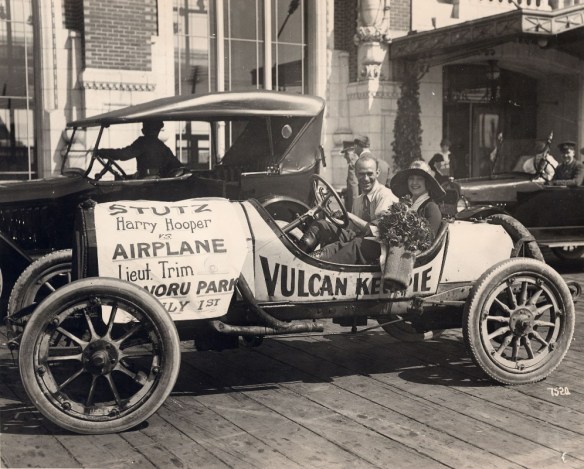
Racing driver Harry Hooper in the “Vulcan Kewpie” Stutz, accompanied by silent film star Priscilla Dean, raced against an airplane piloted by Lieut. G.K. Trim at Minoru in an event hosted by the Aerial League of Canada on Dominion Day, 1919. The event included lots of aerial stunts and wing walking. A house was erected in the middle of the track so it could be blown up by bombs dropped from aircraft, but exploded on its own, much to the amusement of the crowd. (City of Richmond Archives photograph 1984 17 69)

With the outbreak of World War I in 1914, Minoru Park closed until 1920 when it reopened and was renamed Brighouse Park. Brighouse Park Racetrack operated until 1941 when it closed for racing permanently, although it continued to be used as a training and boarding facility. The land was purchased by the British Columbia Turf and Country Club in 1945 and in 1958 the Municipality of Richmond purchased the property. The park reclaimed the name Minoru in 1960 to honour the long history of horse racing at the site. In 1962 the Mayor and Council purchased the Brighouse Estate, allowing the park to expand to its present size and develop into today’s complex of recreational parkland, buildings and services, a complex which is presently being upgraded with the construction of a new aquatic centre, sports facility and seniors facility.

This 1951 aerial view over the intersection of Granville Avenue and No.3 Road shows Brighouse (Minoru) Racetrack while under the ownership of the BC Turf and Country Club. Richmond Municipal Hall is on the corner in the same location as City Hall Today. (City of Richmond Archives photograph 1984 17 5)

This 1951 aerial view over the intersection of Granville Avenue and No.3 Road shows Brighouse (Minoru) Racetrack while under the ownership of the BC Turf and Country Club. Richmond Municipal Hall is on the corner in the same location as City Hall Today. (City of Richmond Archives photograph 1984 17 5)

Minoru the racehorse was retired to the Tully Stud in 1910 and in 1913 was sold to a Russian stud farm. The horse’s history after that is lost in the chaos of the Russian Revolution, although stories are told of Minoru being shot by an English officer to prevent him being abused by the Bolsheviks, or of a possible escape across Ukraine and Russia to the Black Sea and by ship to Turkey.

A print of Minoru from Vanity Fair, 1909. (City of Richmond Archives accession 2009 23)

A print of Minoru from Vanity Fair, 1909. (City of Richmond Archives accession 2009 23)

In 2009, in commemoration of the 100th Anniversary of the opening of Minoru Park, a bronze statue of Minoru was unveiled near the Richmond Cultural Centre. Created by artist Sergei Traschenko and donated to the City of Richmond by the Milan & Maureen Ilich Foundation, the statue was dedicated to the winning spirit of Richmond’s early pioneers of both Eastern and Western cultures and the men and women of the early thoroughbred racing industry in Richmond. The unveiling event was attended by many citizens and dignitaries, including Brian Eida, the son of Minoru (Jack) Eida who gave his name to a horse, which gave its name to a racetrack, which gave its name to a park.

The bronze statue of Minoru in Minoru Park. (City of Richmond Archives photograph)

The bronze statue of Minoru in Minoru Park. (City of Richmond Archives photograph)