Registered Trademark – Commercial Art from the B.C. Packers Collection

The City of Richmond Archives acquired a large number of records of British Columbia Packers Ltd. at the time of the closure of its head office in Steveston. Among the records transferred to the Archives were an extensive series of files relating to the application for, registration, and maintenance of trademarks used and administered by the company and its predecessor and related companies. The records include trademark registrations, correspondence, product packaging, and hundreds of different labels that were in use from 1890 to 1999. Shown in this posting are a few of the trademarked labels owned by BC Packers which illustrate some of the themes used in marketing salmon.
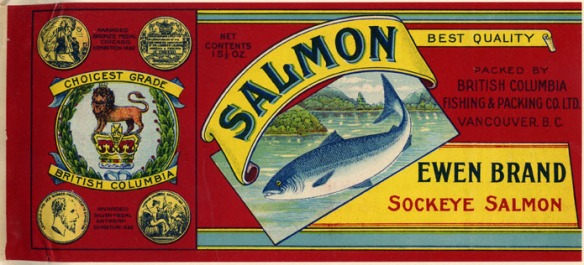
Alexander Ewen was a pioneer in the canning industry on the Fraser River. In 1902 he became the president and largest shareholder of a new firm, The British Columbia Packers' Association. Shown here Ewen Brand Sockeye Salmon label from that era.

Alexander Ewen was a pioneer in the canning industry on the Fraser River. In 1902 he became the president and largest shareholder of a new firm, The British Columbia Packers’ Association. Shown here is an Ewen Brand Sockeye Salmon label from that era.

From the earliest years of salmon canning, the graphics used on the labels tended to be colourful and eye-grabbing to attract the consumer. Some of the earliest labels were printed in Victoria by the Colonist.
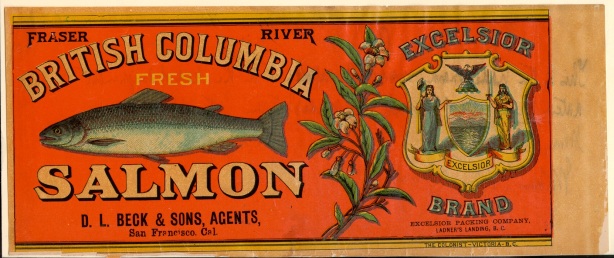
An 1891 Excelsior Brand salmon label. The cannery using this label was at Ladner's Landing, owned by E.A. Wadhams. The company shipped its product through its agents in San Francisco, D.L. Beck & Sons.

An 1891 Excelsior Brand salmon label. The cannery using this label was at Ladner’s Landing, owned by E.A. Wadhams. The company shipped its product through its agents in San Francisco, D.L. Beck & Sons.

Labels were sometimes printed and applied closer to the final market of the product, the cans being shipped “bright”, ie. without labels.
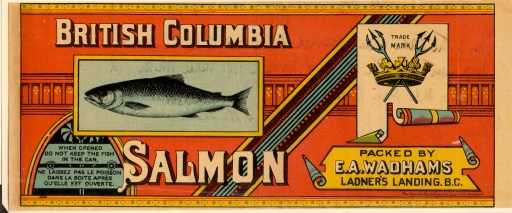
This label, also from 1891, was printed by the Canada Bank Note Co. in Montreal and included handling instructions in English and in French.

This label, also from 1891, was printed by the Canada Bank Note Co. in Montreal and included handling instructions in English and in French.

Trademarks had to be registered with the appropriate government department, in the case of Flagship Brand, the Department of Agriculture, Trade Mark and Copyright Branch in Ottawa. The registration document included a complete description of the label as shown below.
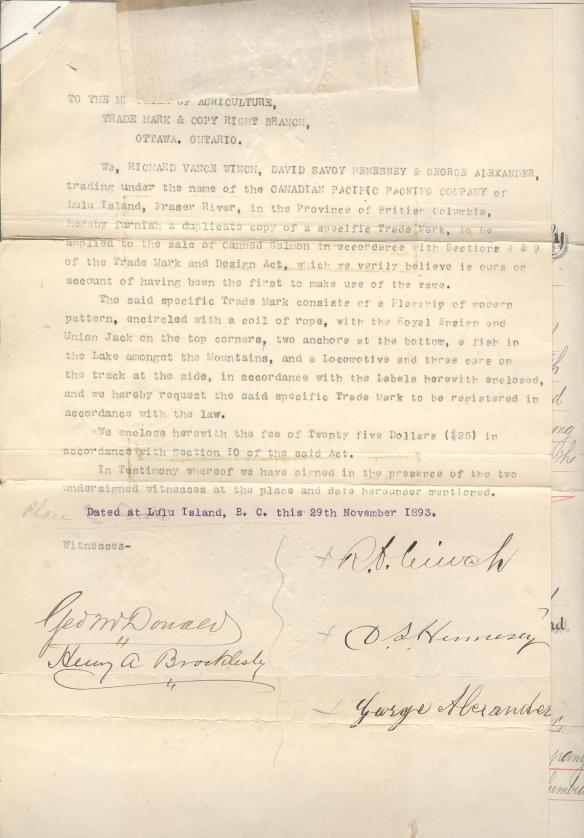
The trademark registration document for Flagship Brand Salmon, 1893.

The trademark registration document for Flagship Brand Salmon, 1893.

The Flagship Brand label was enticing on a number of levels. The “Flagship of modern pattern” and the Ensign and Union Jack made a patriotic connection to the British Motherland. The beautiful, wild British Columbia scenery showed the beauty of the land where the fish was caught, a wilderness tamed by the modern steam train on the right, all surrounded by a bright, eye-catching orange.
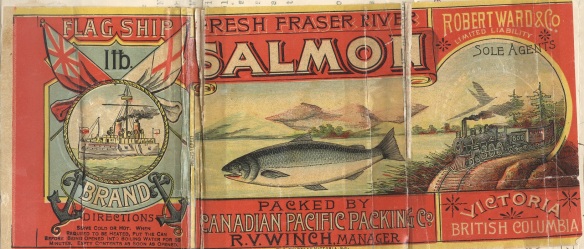
Flagship Brand, 1893.

Flagship Brand, 1893.

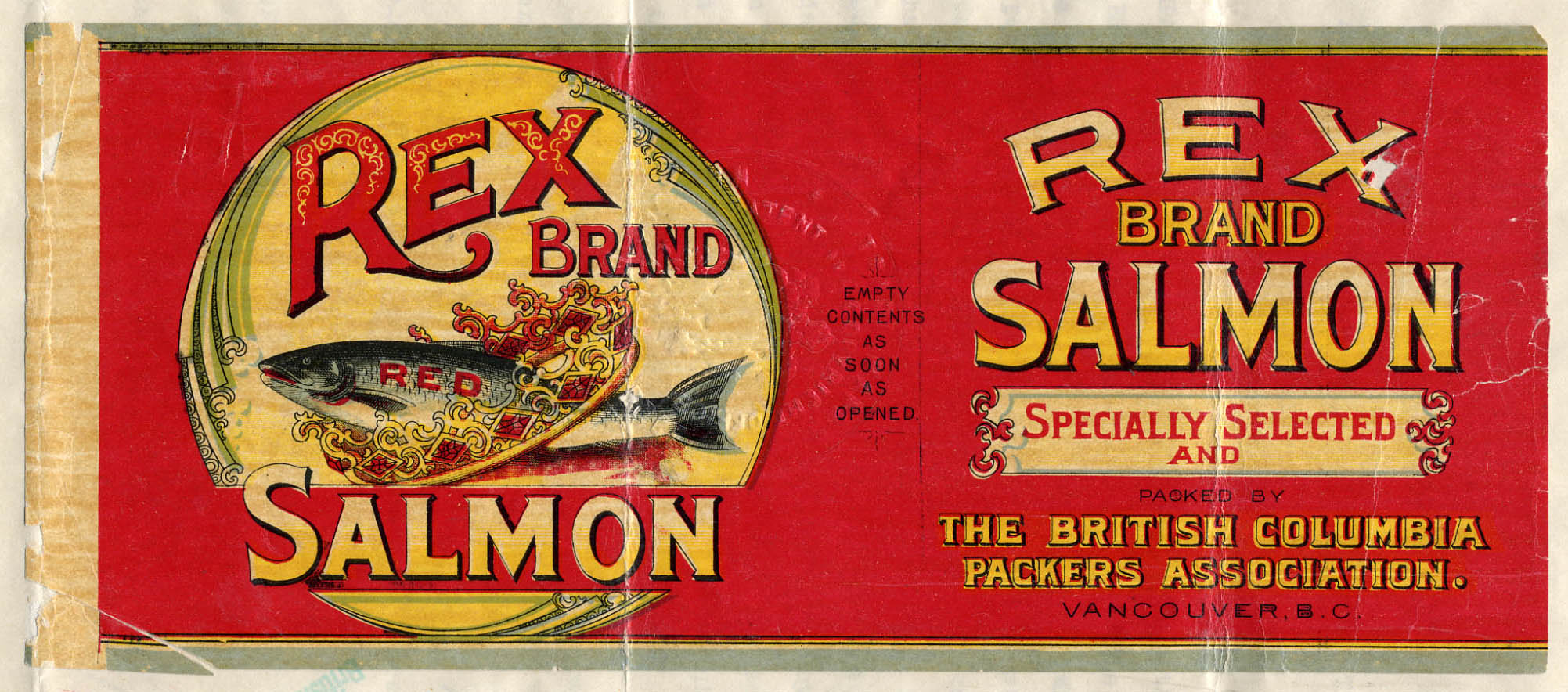
The majority of the BC fishery’s output was shipped for sale in Britain and nations of the British Empire, and as such, labels often carried some reference to the Monarchy or the Empire to encourage sale to patriotic shoppers. This could be done symbolically, as in Rex Brand, or directly with the words “British Empire Product” on the label, or in both ways.
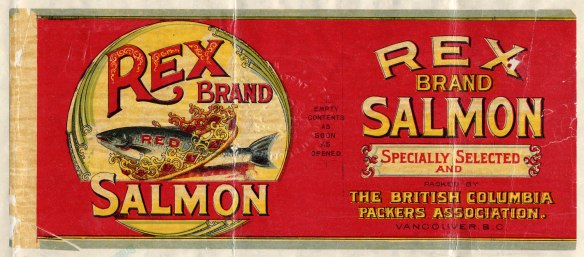
Rex Brand Salmon's trademark showed a salmon leaping through a crown.

Rex Brand Salmon’s trademark, ca. 1906, showed a salmon leaping through a crown. The brand was registered in Australia and New Zealand starting in 1905.
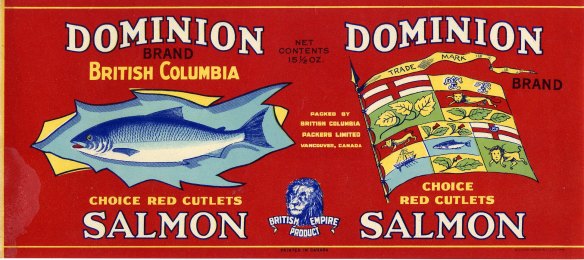
Dominion Brand Salmon labels bore the image of the British Lion with

Dominion Brand Salmon labels bore the image of the British Lion with “British Empire Product” written in a banner below. This image was seen on many BC Packers labels.
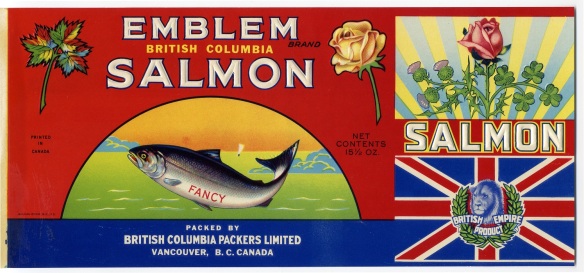
Emblem

Emblem Brand, first registered in 1903, also bore the British Empire Lion Logo, as well as a Union Jack and the floral emblems of the United Kingdom. Emblem Brand was registered in Canada, Australia, New Zealand, South Africa, India and France.

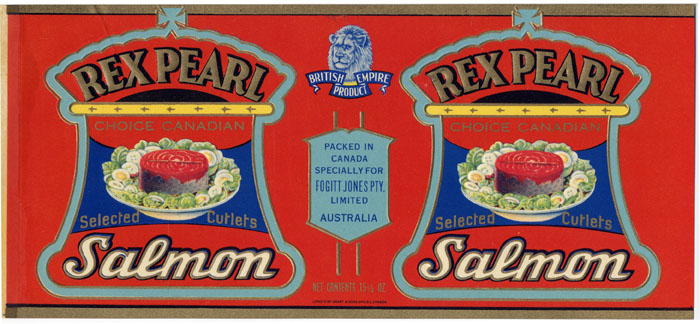
Products sold in other countries often had distinct labeling. Rex Pearl was a brand registered in Australia.
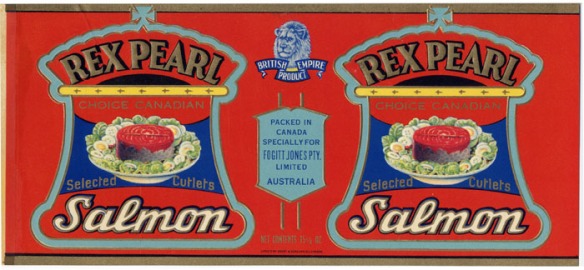
An Australian label for Rex Pearl Choice Canadian Salmon.

An Australian label for Rex Pearl Choice Canadian Salmon.

Trademarks had to be registered in all the countries where the products were sold. Cascade Brand was a registered trade mark in many countries, including the Netherlands, as shown below.
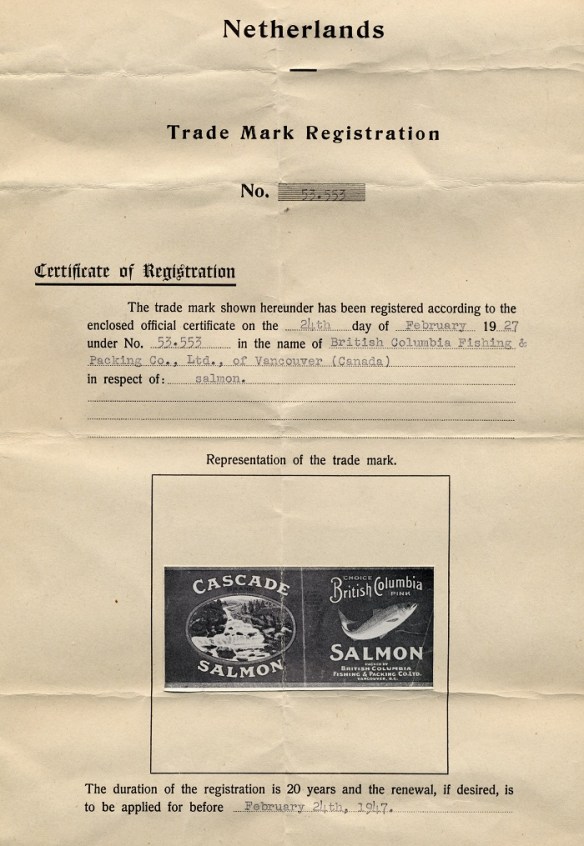
A Dutch Trademark Registration Certificate for Cascade Brand Salmon, 1947

A Dutch Trademark Registration Certificate for Cascade Brand Salmon, 1927

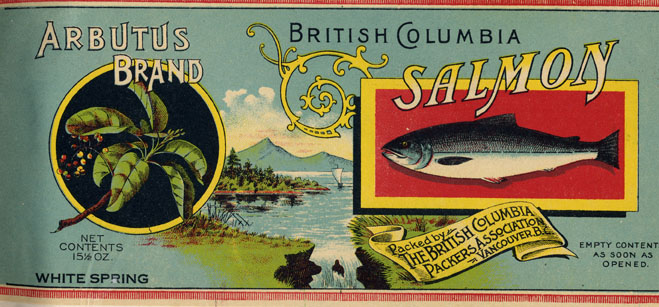
Labels were often thematic, trying to reach the consumer by appealing to their aesthetics. Many gave colourful representations of the magnificent scenery of British Columbia, sure to catch the discerning housewife’s eye as she did her shopping.
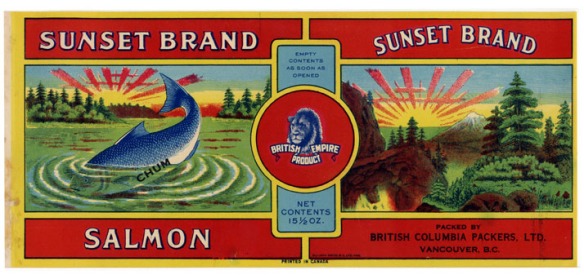
Sunset Brand Chum Salmon, with beautiful scenery.

Sunset Brand Chum Salmon, Trademark first registered in 1907, showing beautiful British Columbia scenery.
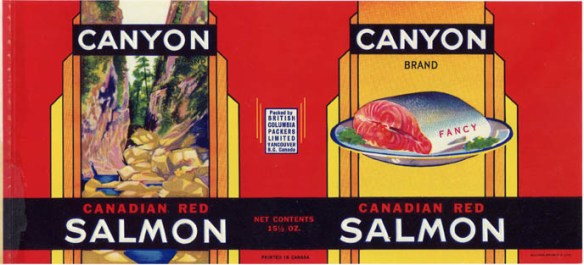
Canyon Brand

Canyon Brand Canadian Red Salmon, from the 1930s.
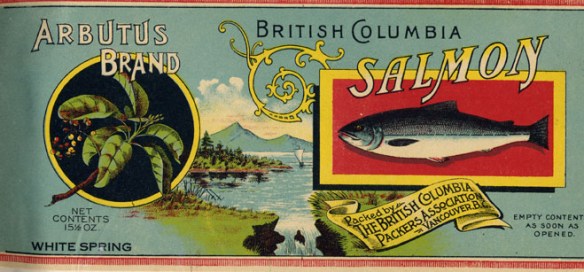
Arbutus Brand

Arbutus Brand White Spring salmon. Arbutus was first registered in 1906.

Occasionally, Canadian stereotypes were used to sell salmon. Nansen Brand in particular used scenes of ice and snow to represent the wild country that the fish came from. The brand was registered in Australia, New Zealand and Canada starting around 1918.
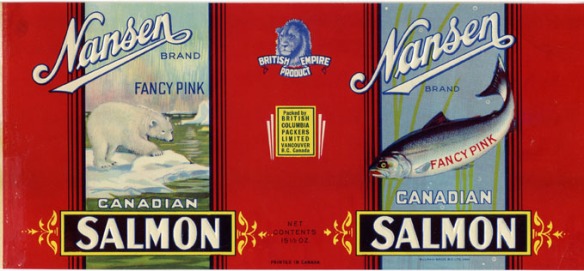
Nansen Brand with a polar bear on an ice floe.
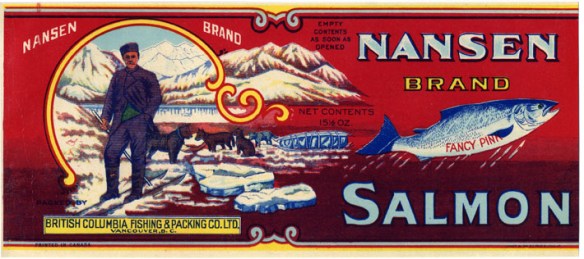
Nansen Brand with a polar bear on an ice floe.

Nansen Brand with dog sled and trapper

Nansen Brand with snowy scenery and a dog sled and trapper on skis.

Some labels attempted to evoke feelings of hearth and home and good times with friends. Examples include Dinner Bell, Household and Table Talk brands.
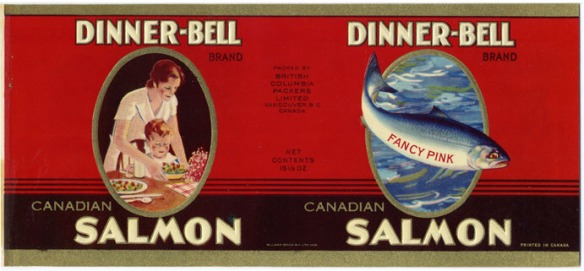
Dinner Bell Brand

Dinner Bell Brand Fancy Pink Canadian Salmon. Dinner Bell was registered in New Zealand from 1938 to 1951.
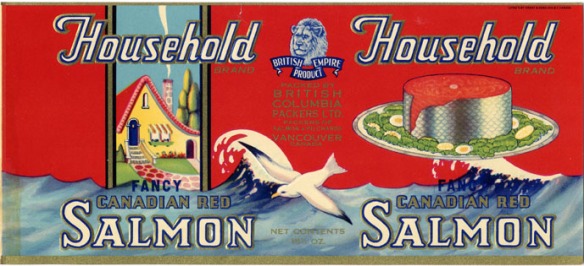
Household Brand Salmon

Household Brand Fancy Canadian Red Salmon, registered in Canada from 1919 to 1969.
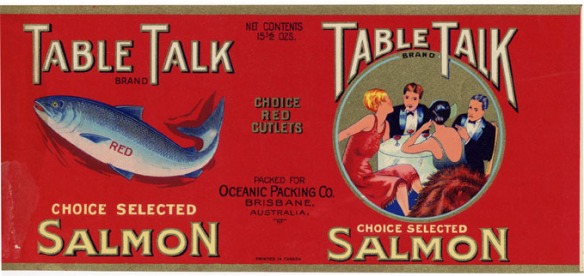
Table Talk Brand

Table Talk Brand Choice Red Cutlets.

Others used sports and other popular modern activities to promote the sales of their products.
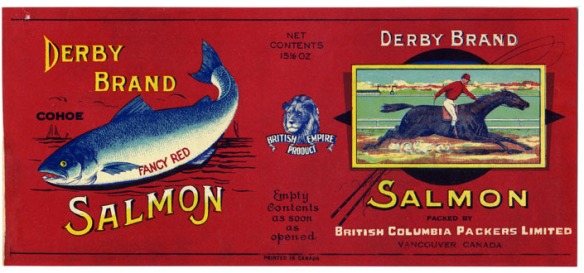
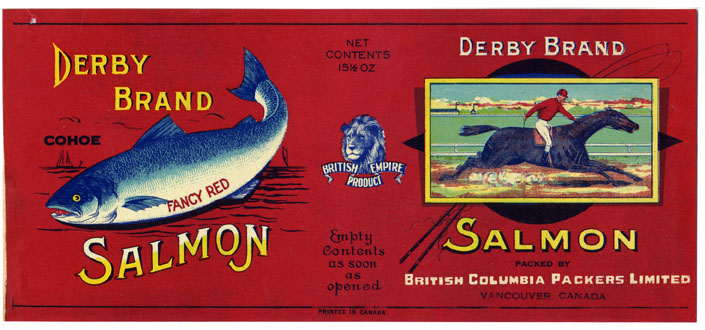
Derby brand for the horse racing fan

Derby brand for the horse racing fan, first registered in 1906.
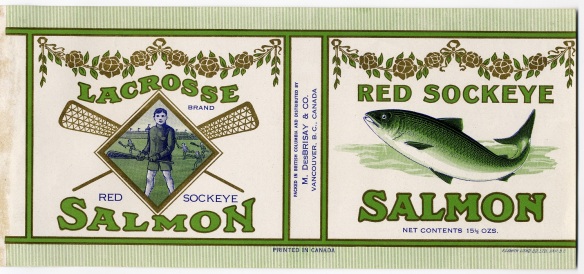
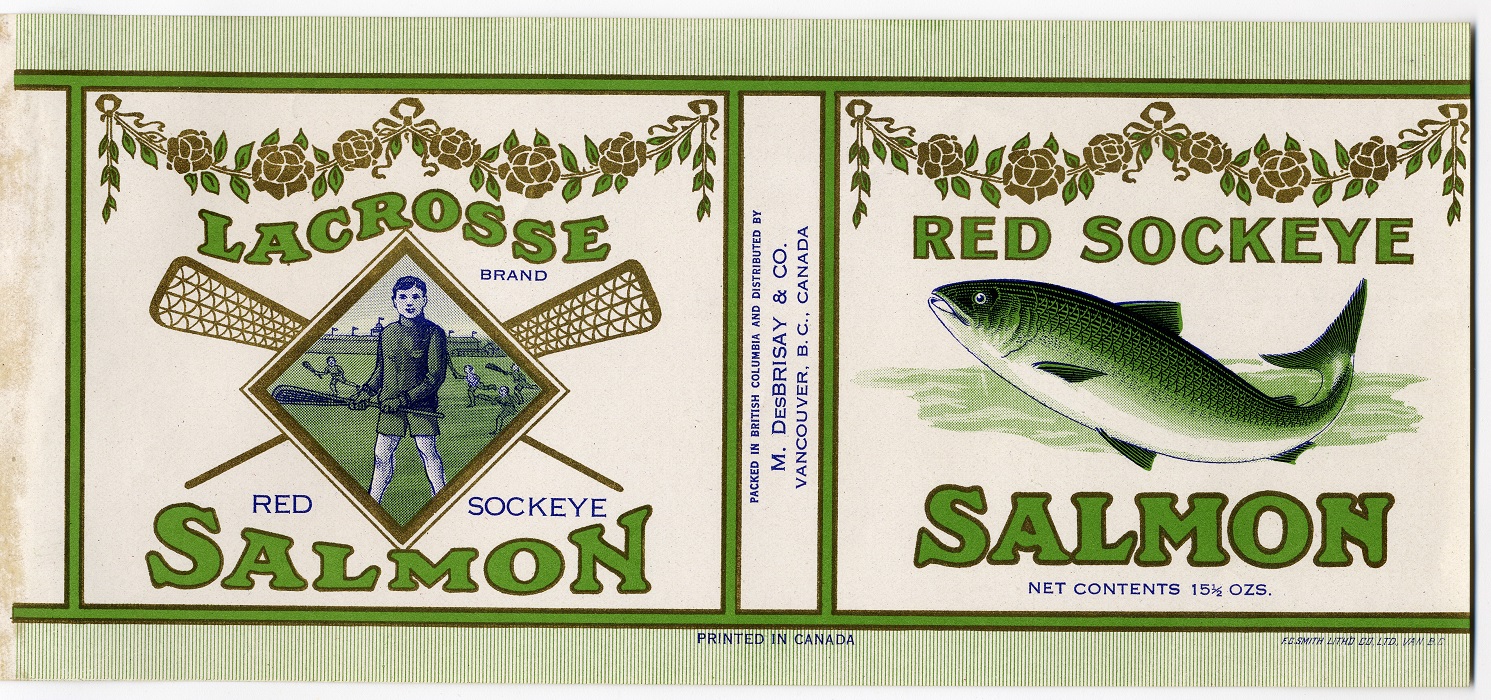
Lacrosse brand

Lacrosse brand.

Aviator Brand

Aviator Brand.

Of all the labels used to market salmon, the one with the longest history must be Clover Leaf. One of the best known brands, it was originally registered by a New York company in 1890, being transferred to the British Columbia Packers Association around 1908. The Brand was used on many varieties of canned goods such as vegetables and soups as well as the seafood products that it is best known for. The brand is still in use today, passed on from BC Packers, and can be seen in just about any supermarket.
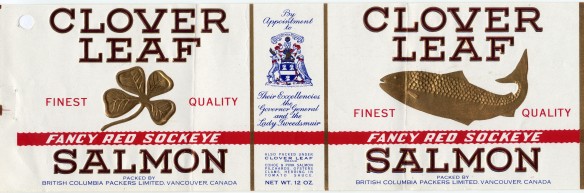
The Clover Leaf Brand is perhaps one of the best known and longest used trademarks from BC Packers.

The Clover Leaf Brand is perhaps one of the best known and longest used trademarks from BC Packers.

So, while BC Packers has gone and most of the trademarks controlled by it have vanished, one at least remains to remind us of the company’s long history of quality seafood production and its long connection to Richmond.
New at the Archives – Engineering Richmond

Part of an ongoing program to digitize historical images at the City of Richmond Archives are 980 slides taken by Richmond’s Engineering Department documenting a variety of major infrastructure projects in the municipality between 1969 and 1977. Highlighted here are just two projects from 1969: the construction of the Dinsmore Bridge and the Gilbert Trunk Sewer.

Dinsmore Bridge under Construction

Dinsmore Bridge under Construction, February 1969. (City of Richmond Archives Photograph 1988 123 461)

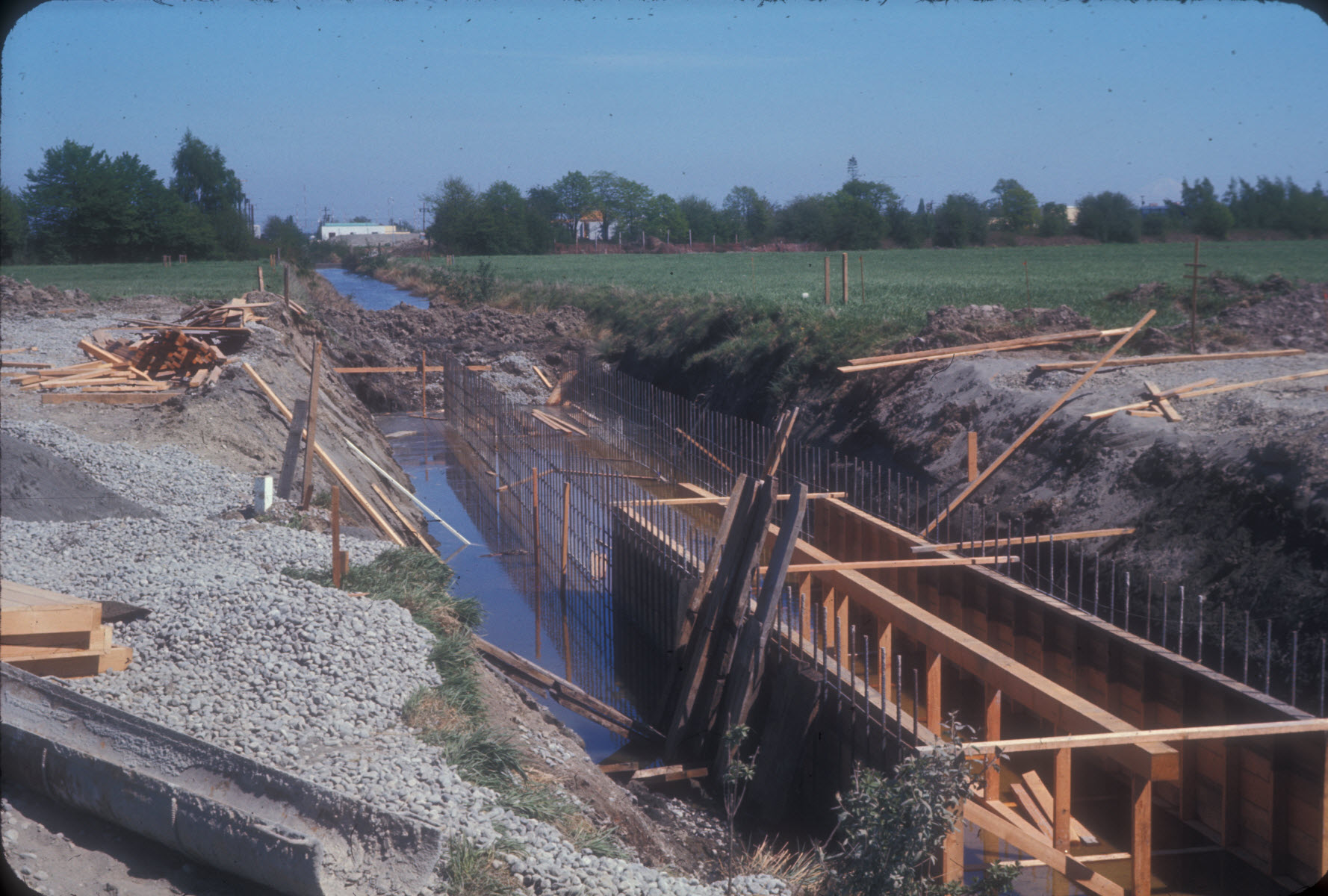
Before the opening of the bridge in 1969, the only connection between Sea Island and Lulu Island was the Moray Channel Bridge, built in 1957 to replace the old Middle Arm span of the Marpole Bridge. While the Dinsmore Bridge itself was built with funding from the Federal government, the approaches to the new bridge connecting Gilbert Road to Russ Baker Way were the responsibility of the municipal government. Part of the construction of the bridge approaches required the crossing of some of Richmond’s existing infrastructure, such as the Lansdowne Canal, as shown below.

Crossing for Lansdowne Canal

Construction of the Crossing for Lansdowne Canal from the Dinsmore Bridge. (City of Richmond Archives Photograph 1988 123 472)

Another major construction project in 1969 was the Gilbert Road Trunk sewer, designed to collect sewage from lateral feeder pipes extending east and west to transport raw sewage south to an outfall in the South Arm of the Fraser.

Gilbert Road Trunk Sewer - Laying  Pipe

Gilbert Road Trunk Sewer – Laying Pipe near Westminster Highway, March 1969. (City of Richmond Archives Photograph 1988 123 431)

The new sewage system was designed to replace an older patchwork of collectors and outfalls. Today, the Gilbert Road Trunk Sewer No. 2, a parallel system,  is under construction by Metro Vancouver.

Gilbert Road Trunk Sewer

The Gilbert Road Trunk Sewer – Looking North from Westminster Highway. (City of Richmond Archives Photograph 1988 123 430)

Before 1973, when the Lulu Island Wastewater Treatment Plant at the south end of Gilbert Road became operational, the pipe discharged untreated sewage directly into the south arm of the Fraser River near the foot of Gilbert Road.

Sewer Outfall - the launch

The Placement of the Gilbert Road Sewer Outfall at the South Arm. (City of Richmond Archives Photograph 1988 123 401)

Other Engineering Department activities documented by the recently-digitized group of photographs include dyking and drainage projects, traffic and intersection studies, and aerial surveying of fire halls, municipal buildings and parks and recreation areas.

From the Archives Kitchen – Hermit Cookies

Freshly-baked hermits, using Hettie London's 1902 cookbook. John Campbell photograph

Freshly-baked hermits, using Mrs. Charles London’s 1902 cookbook. (John Campbell photograph)

Imagine yourself in the kitchen of the farmhouse at London Farm in the early part of the last century, thinking about a nice treat for your cook to bake for the family. You go through your favourite cookbook and voila, you find a healthy, yet simple recipe for hermit cookies.

Cover of "Woman's Favorite Cook Book," published in 1902 and used by the London family. City of Richmond Archives reference file

Cover of “Woman’s Favorite Cook Book,” published in 1902 and used by the London family. City of Richmond Archives reference files

This is what Hetty London, wife of pioneer farmer Charles London, might have done using her “Woman’s Favorite Cook Book”, published in 1902, and found with old records of the London family now in the holdings of the City of Richmond Archives.

London Farmhouse, 1908. City of Richmond Archives Photograph 2009 16 75

London Farmhouse, 1908. City of Richmond Archives Photograph 2009 16 75

Charles London and his brother William purchased land in the South Arm district of Richmond in the 1880s, the area taking on the name of “London”. After their marriage, Charles and his wife Henrietta (Hetty) built their farmhouse, where they raised a family of eight children (three of whom died as infants.)  In 1978, the farmhouse was designated as a heritage site and the next year was purchased by the municipality to be restored as a heritage property.

London Farmhouse after restoration by the municipality. City of Richmond Archives Photograph 2009 16 13-4-3-1

London Farmhouse after restoration by the municipality. City of Richmond Archives Photograph 2009 16 13-4-3-1

The recipe for “hermits” found in Mrs. London’s old cookbook was particularly appealing to Precilla Huang, professional pastry chef and Board member of the Friends of the Richmond Archives, because it represented simpler times and the use of wholesome ingredients.

Recipe for Hermits from "Woman's Favorite Cook Book." City of Richmond Archives reference files

Recipe for Hermits from “Woman’s Favorite Cook Book.” City of Richmond Archives reference files

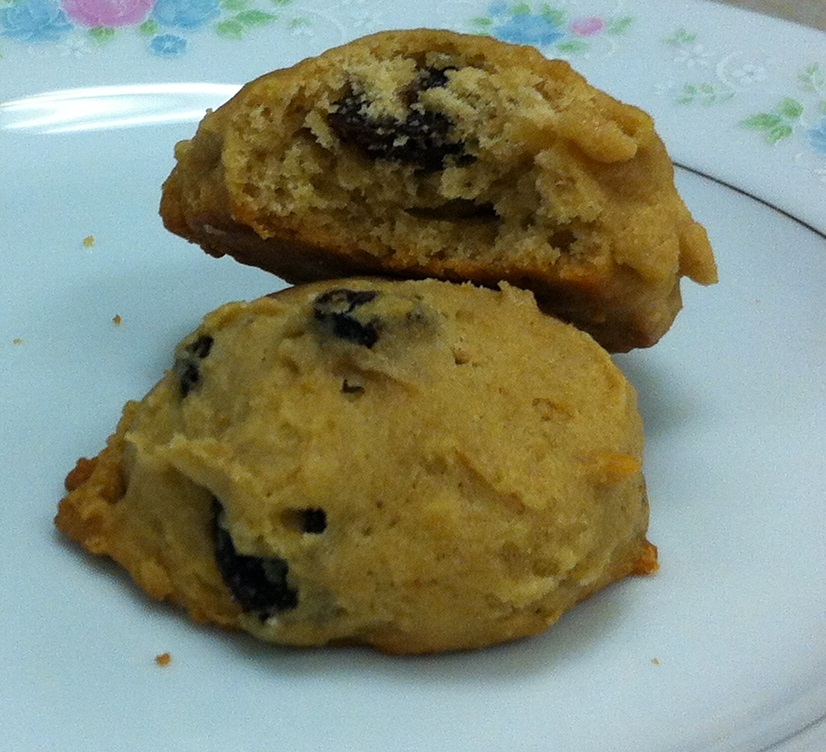
The result of Precilla’s baking was a tasty drop cookie, not too sweet but rich with buttermilk and lightly spiced with a hint of nutmeg.

A plate of hermit cookies hot out of the oven. (John Campbell photograph)

A plate of hermit cookies hot out of the oven. (John Campbell photograph)

Imagine the fragrance of the batch of cookies coming out of the oven, and the enjoyment they would have brought to the London family and guests.

Focus on the Record – Records of Taxation

Municipal governments in BC have the authority to tax property owners to pay for the costs of governance and local services.

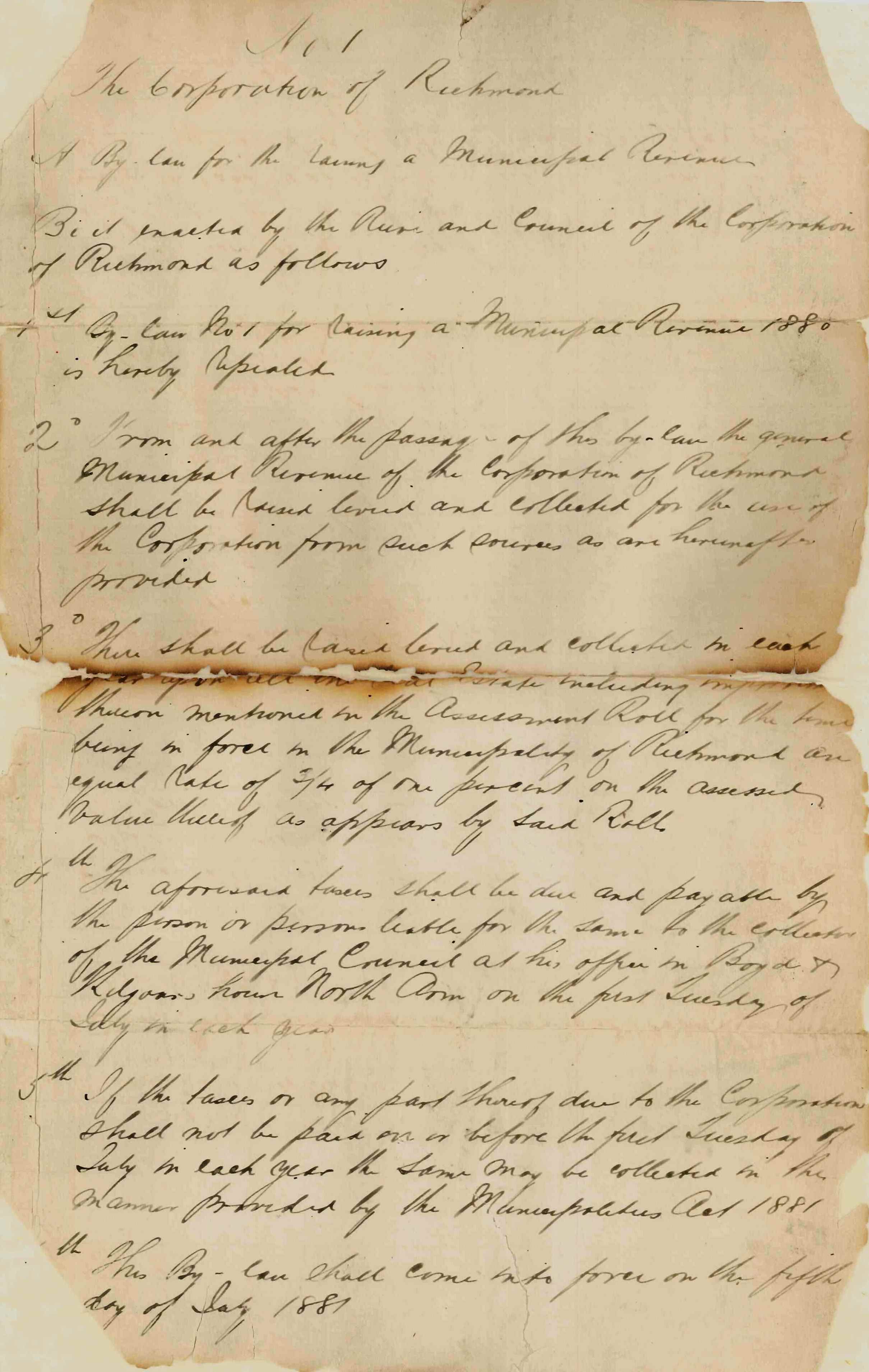
Bylaw 1 of 1881 - Bylaw to raise municipal revenue.

Bylaw 1 of 1881 – Bylaw “for the raising a Municipal Revenue.” (Note: document damaged in 1913 fire which destroyed Richmond’s first Town Hall.) City of Richmond Archives Bylaws

The City of Richmond Archives holds records of these activities carried out in Richmond dating back to the earliest years of the municipality. These include property assessment and the preparation of assessment and local improvement tax rolls, the collection of taxes, tax sales, and the hearing of taxpayer appeals.

Page from municipal Tax Ledger, 1887. City of Richmond Archives Tax Ledgers

Page from municipal Tax Ledger, 1887. City of Richmond Archives Financial Ledgers

The municipality was responsible for tax assessments until 1974 when the BC Assessment Authority was established. Tax assessment and collection rolls dating from 1905 are available on microfilm for research at the Archives.  From 1896 to1974 a Court of Revision for assessments sat to hear appeals from property owners. The Archives holds original minutes of these meetings.

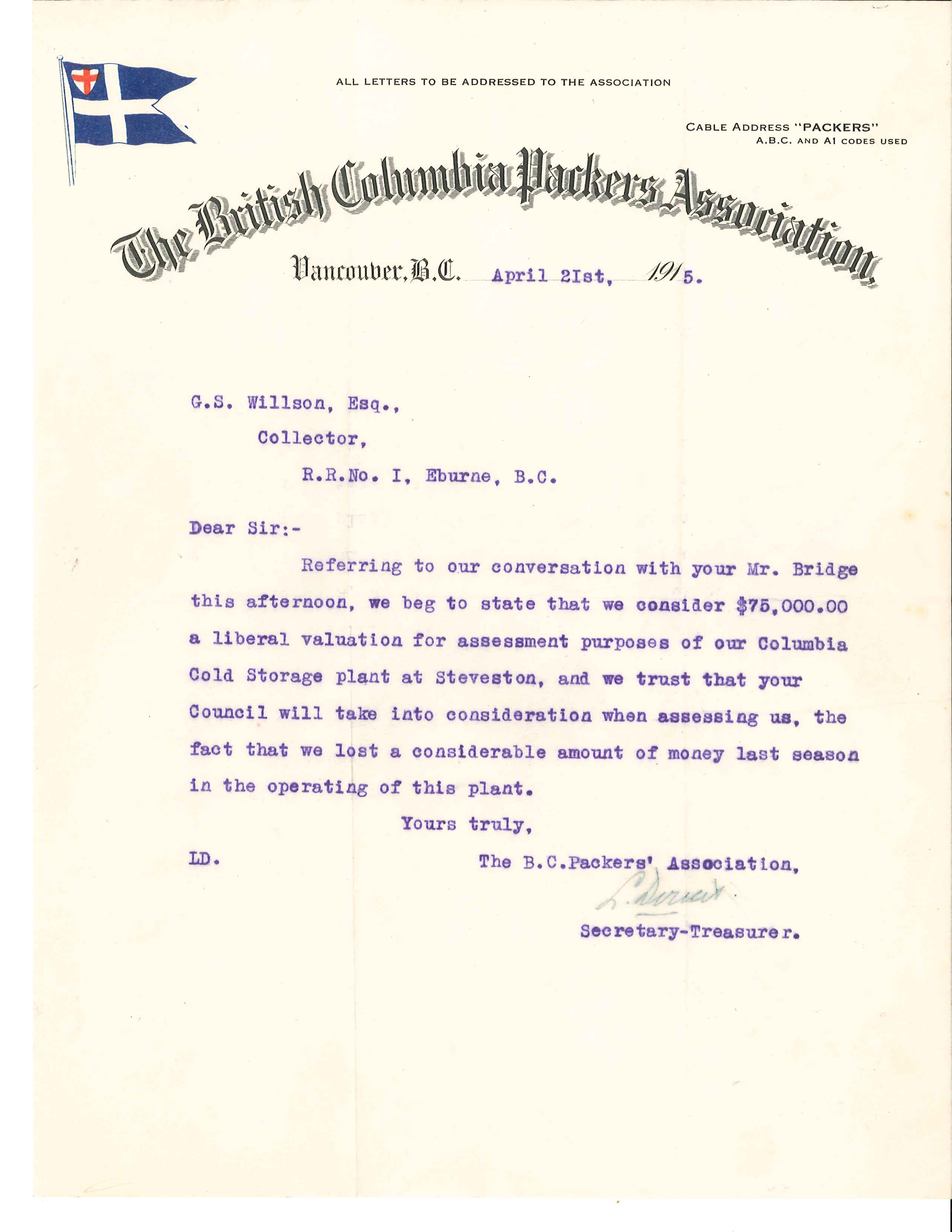
Letter from the BC Packers Association requesting change in tax assessment.

Letter from the BC Packers Association requesting change in tax assessment, 1915. City of Richmond Archives MR 2, File 5

Other records relating to taxation in the Archives’ holdings include early ledgers recording the collection of taxes and delinquencies, early Clerk’s Department correspondence files, files relating to tax sales and taxation policy, and photographs of buildings taken by the municipal Assessor.

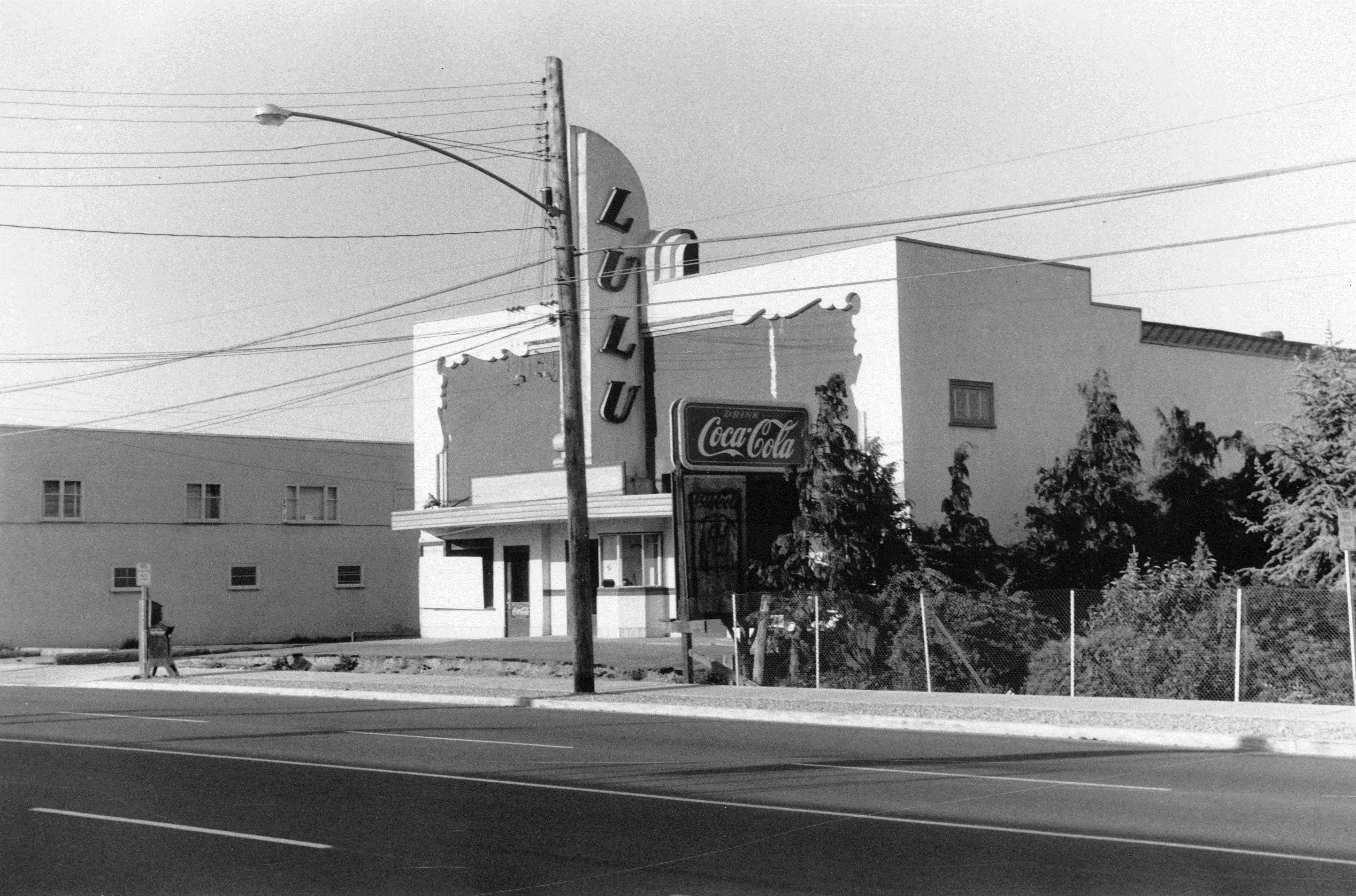
Assessor's photograph of Lulu Theatre, 1958. City of Richmond Archives Photograph 1988 18 31

Assessor’s photograph of Lulu Theatre, 1958. City of Richmond Archives Photograph 1988 18 31

[Note – this is an updated version of an article first published in the Spring 2013 issue of the Archives News]

Traffic Congestion in Richmond – Bumper-to-Bumper Through the Years

Traffic congestion has been a major topic of conversation among Richmondites from the early age of motor cars to the present day.

1988 95 1

Traffic on No. 3 Road, as viewed from the Ackroyd farm, ca. 1915. City of Richmond Archives Photograph 1988 95 1

Roads like No. 3 Road have always been problematic for traffic, witness Council minutes and resolutions like this: “Decision to place Danger Signs near the corner (curve) at the end of No. 3 Road on the River Road owing to two bad curves and congested traffic.” (June 25, 1923)

Traffic at Brighouse Park Race Track, 1921. City of Richmond Archives Photograph 1978 13 5

Traffic at Brighouse Park Race Track, 1921. City of Richmond Archives Photograph 1978 13 5

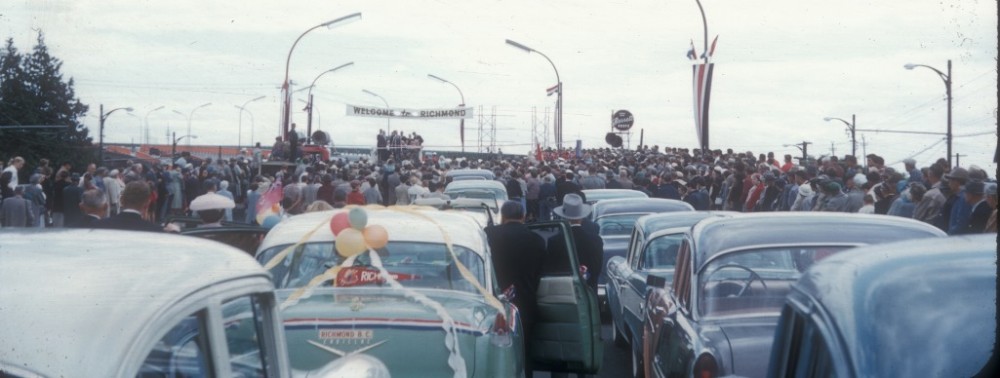
Special celebrations and events have always caused traffic congestion and parking problems.  From sporting events and May Day celebrations to horse racing fixtures at the two Richmond thoroughbred tracks, travel often meant long line ups and delays.

Line-up for the Ladner ferry on No. 5 Road, 1947. City of Richmond Archives Photograph 1997 16 19

Line-up for the Ladner ferry on No. 5 Road, 1947. City of Richmond Archives Photograph 1997 16 19

Richmond’s geographic location on islands in the Fraser River has always posed problems for traffic at river crossings.

Whether it be the ferry to Ladner or crossing the old Marpole and Fraser Street Bridges, bumper-to-bumper traffic was a normal component of a commuter’s day.

Bumper-to-bumper traffic on the Sea Island side of the Marpole Bridge, 1955. City of Richmond Archives Photograph 1997 42 3 145

Traffic congestion on the Sea Island side of the Marpole Bridge, 1955. City of Richmond Archives Photograph 1997 42 3 145

Here’s an account by Grant Thompson of the Sea Island Heritage Society of the problem of crossing the Marpole Bridge at rush hour in the 1950s:

“One of the results of these traffic jams was that both Lancaster Cres. and Catalina Cres. were turned into one-way streets south bound. During rush hour many drivers would race north down either street and then try to cut back onto Miller in the case of Catalina or back onto “Airport Highway” at the north end of Lancaster. Barricades blocked access to Miller Road at Wellington Cres. and at the lane on the east side of Sea Island School. Add to this the traffic from the Airforce Base on Miller Road and the traffic from Cora Brown on Grauer Road turning left onto the Bridge and you had one big mess coming from Sea Island.  Also contributing to this back up was traffic heading to the Lansdowne Race Track which backed up in old Marpole and also the traffic making a left turn cutting across the Air Port Highway to use the Bridgeport bridge and traffic coming from the west from Lulu Island merging onto the Marpole Bridge in front of Grauer’s store. Add to this the opening of the Marpole Bridge for boat traffic which happened often depending on which way the tide in the river was going. It was quite often 8 o’clock in the evening before the traffic eased off. The odd configuration of the street intersection didn’t help matters in Marpole. During these back-ups there were two Vancouver policemen detailed to directing traffic in Marpole. The parking lot at the ANAF club was always full; people would stop and have a few beer and wait out the rush hour. In fact it was much faster to walk the mile from Burkeville, go to the show at the Marpole Theater and catch the bus home after the movie. The Fraser Bridge was not much better as it also backed up for many of the same reasons.”

Construction tie-ups on No. 3 Road, 1985. City of Richmond Archives - Richmond Review Photograph 1988 121 - August 21 1985.

Construction tie-ups on No. 3 Road, 1985. City of Richmond Archives – Richmond Review Photograph 1988 121 – August 21 1985.

Modern transportation and traffic planning and the return of commuter rail to Richmond with the Canada Line have alleviated some of the earlier traffic nightmares.  Traffic congestion and its associated problems, however, still remain a major challenge for Richmond and other municipalities in the Lower Mainland.